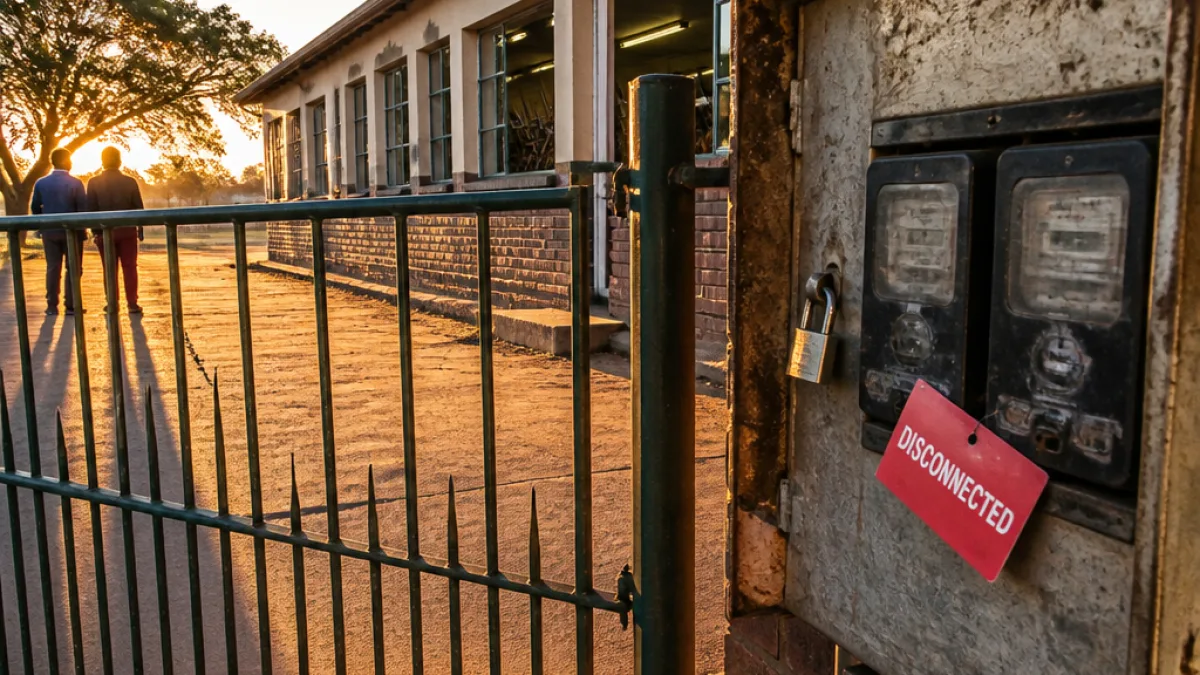
More than 8,900 school days were lost across Gauteng this year after about 240 public schools had electricity cut because of non-payment, the provincial education department has confirmed.
Extent of the losses and financial shortfall
In a written response to questions from the Democratic Alliance in the Gauteng Provincial Legislature, Education MEC Lebogang Maile said the province recorded a cumulative 8,925 school days lost in 2026 due to electricity disconnections. The affected schools were recorded as collectively owing R52.65 million to municipalities and other electricity service providers.
GDE spokesman Onwabile Lubhelwana confirmed the figures and said most of the schools continued to operate despite the power cuts, though some suffered disruption to technology-dependent teaching methods and security systems.
“The department didn’t maintain a central register showing schools’ outstanding debts, how long they had been outstanding, or why they remained unpaid,”
— a detail the DA highlighted in follow-up questions, which points to weaknesses in oversight and early-warning systems.
Impact on teaching and learning
Officials acknowledged that classrooms which rely on smartboards, computers and internet connectivity were particularly affected. The DA’s education spokesperson in Gauteng, Michael Waters, told the legislature the party plans to submit the latest legislative responses as additional evidence to the Public Protector in an ongoing complaint about electricity disconnections.
Waters said power cuts can disrupt teaching materials and administrative services, and may also compromise school security systems. While the department reported that most affected schools remained open, the loss of classroom time and the substitution of planned lessons with non-electronic activities will in many cases have knock-on effects for curriculum coverage and assessment readiness.
What the province has said
The Gauteng Department of Education attributed the disconnections primarily to non-payment by schools. It did not, in the legislative reply, provide a central list tracking which schools are in arrears, how long debts have been outstanding, or specific reasons for non-payment — a gap that the DA says hampers targeted intervention.
- Schools affected: about 240
- School days lost: 8,925 (cumulative)
- Amount owed: R52.65 million
| Measure | Figure |
|---|---|
| Number of schools with disconnections | About 240 |
| School days lost (total) | 8,925 |
| Total outstanding debt | R52.65 million |
Questions of oversight and next steps
The DA is calling for the department to improve financial oversight and introduce systems to identify and assist schools heading into difficulty before services are cut. Without a central register of arrears, it is difficult for provincial officials to prioritise interventions or to coordinate with municipalities and electricity providers to prevent disconnections.
Officials did not set out in the written response what immediate remedial steps will be taken to restore power where it remains cut, nor whether emergency funding or municipal relief arrangements had been considered for schools serving vulnerable communities. The department’s confirmation that most schools remained operational provides some reassurance, but it does not address the uneven impact on schools that rely heavily on electronic teaching aids.
Advice for affected communities
Parents and school governing bodies seeking clarity on the status of individual schools should contact their school principal or the GDE district office. Ward councillors and municipal customer service departments are the primary contacts when a school's electricity has been disconnected. Schools and parents can also request a breakdown of outstanding municipal charges and any payment plans that may be available.
As the legislature considers the DA’s supplementary evidence to the Public Protector, the issue raises wider questions about how schools in Gauteng budget for utilities, the support available to those that struggle to pay, and whether provincial monitoring can be tightened to prevent further loss of teaching time.
This developing administration issue goes beyond classrooms: it points to gaps across municipal and provincial systems that, unless addressed, risk repeating next academic year.
Reporting from Johannesburg.