
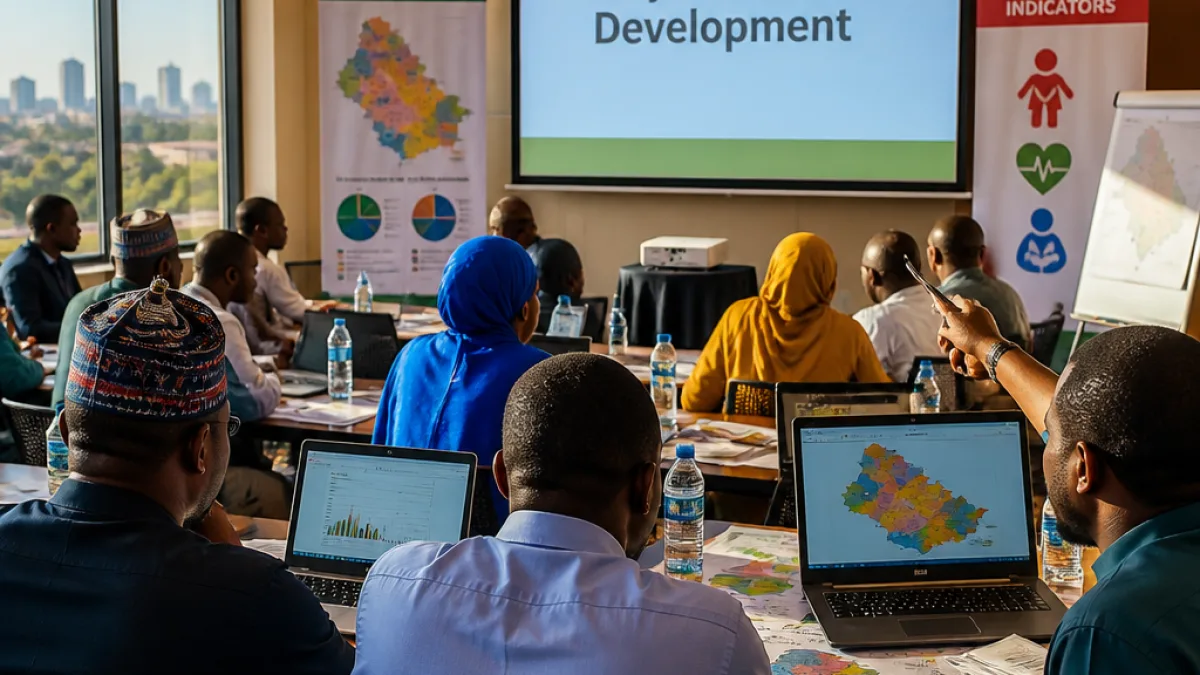
The Nigeria Governors’ Forum (NGF), together with the Federal Ministry of Budget and Economic Planning, the World Bank and the Human Capital Development Programme, has called on North‑West states to treat early childhood development (ECD) as a fiscal and developmental priority rather than a solely social service.
Workshop to shape 2027 budgets
The appeal emerged at a three‑day ECD Zonal Technical Consultation and Prioritisation Workshop held in Kaduna. Officials said outcomes from the meeting will feed directly into Kaduna State’s 2027 budget process and will guide funding decisions for agreed ECD interventions across the zone.
The Kaduna commissioner for budget and planning, Mukhtar‑Monrovia, told delegates the state sees ECD "as an economic decision rather than merely a social intervention" and intends to map agreed interventions to existing budget lines and Medium Term Expenditure Framework (MTEF) entry points.
"If we get this right in the first 2,000 days, we will not be budgeting for a crisis later," Mukhtar‑Monrovia said.
Focus on prenatal care, nutrition and early learning
Speakers highlighted a package of interventions spanning pregnancy to age five. Those identified as priorities included antenatal care, nutrition, responsive caregiving and early learning. According to the commissioner, investing in these areas will reduce future demand for remedial education and health services.
Officials argued that framing ECD as infrastructure would help sustain investment: healthier, better‑nourished children are more likely to become productive adults and contribute to broader economic development.
State‑specific plans and harmonisation
Yunus Tanko‑Abdullahi, spokesman for the NGF, described ECD as the foundation of Nigeria’s human capital development. He said the workshop aimed to support North‑West states to develop practical, state‑specific strategies for improving child outcomes from pregnancy through the first five years of life.
Delegates at the workshop included commissioners, permanent secretaries and representatives from the World Bank and other stakeholders. Tanko‑Abdullahi said variations in state needs make it necessary to develop plans that reflect local circumstances and priorities, while harmonising recommendations into a framework to guide implementation across the zone.
- Who convened the workshop: Federal Ministry of Budget and Economic Planning, World Bank, NGF, Human Capital Development Programme.
- Where: Kaduna, North‑West zone.
- Key focus areas: antenatal care, nutrition, responsive caregiving, early learning.
- Budget link: mapping interventions into budget lines and MTEF for 2027 planning.
Implications for policy and communities
Positioning ECD within budget frameworks and treating it as infrastructure shifts it from a peripheral line item to a strategic investment with linked performance expectations. For families in the North‑West, prioritising antenatal services, child nutrition and early learning could reduce long‑term costs associated with remedial interventions and ill health.
For provincial and municipal planners elsewhere, the Kaduna example offers a model: align ECD interventions with existing budget instruments, quantify expected returns in reduced demand for corrective services, and ensure monitoring and accountability mechanisms are in place.
| Intervention area | Expected short‑term outcomes |
|---|---|
| Antenatal care | Improved maternal and neonatal health indicators |
| Nutrition | Reduced stunting and malnutrition |
| Responsive caregiving | Better psychosocial development |
| Early learning | Improved school readiness and lower remedial needs |
Harmonising state plans into a regional framework can help channel donor and multilateral support where it will be most effective, proponents said. The World Bank’s participation underlines the international development community’s interest in linking early interventions to longer‑term human‑capital gains.
While the workshop concentrated on policy and budgeting, implementation will require coordination across health, education and social protection departments at state and local level, together with clear monitoring indicators to track progress in the crucial first 2,000 days of life.
As the North‑West states move from technical consultation to budget allocation, the test will be whether political will translates into sustained funding and service delivery that reaches the communities who need it most.












