
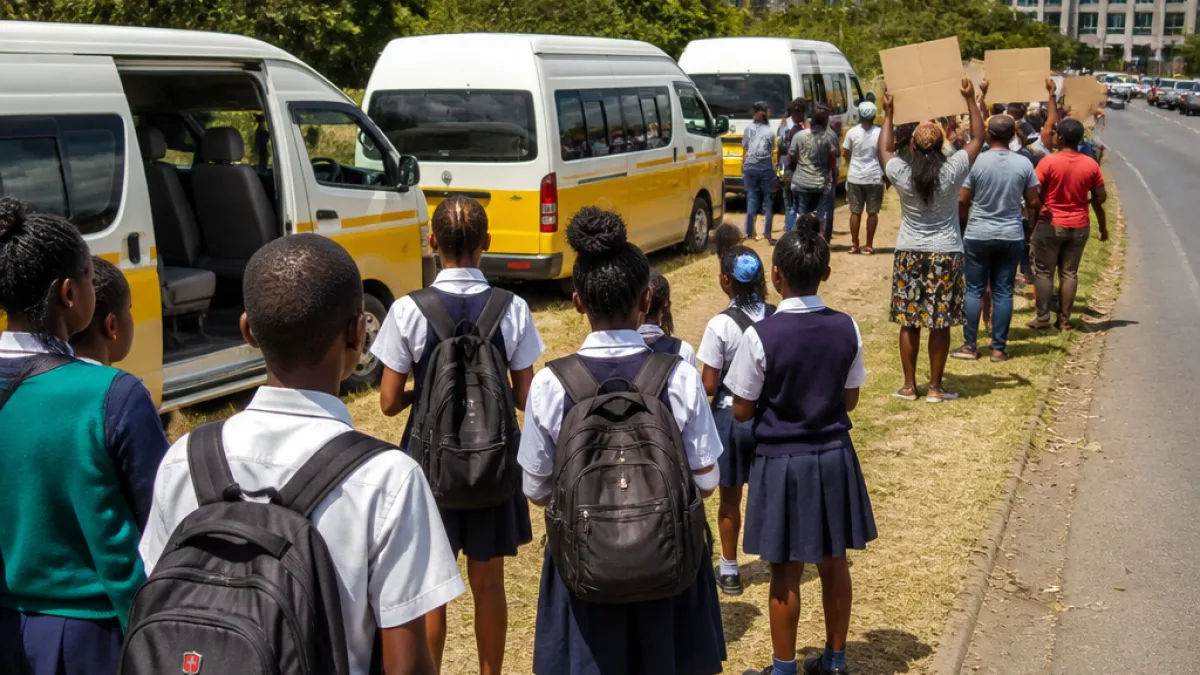
The Mpumalanga government has instructed officials to urgently resolve disruptions to scholar transport that followed the rollout of new contracts on 1 September, after learners in parts of the province were left stranded and communities staged protests earlier this month.
High-level meeting seeks rapid solutions
Provincial departments of Public Works, Roads and Transport and Education met at a high level on Sunday to assess the rollout and the problems that have emerged. The meeting was directed by Public Works, Roads and Transport MEC Thulasizwe Thomo and Education MEC Lindi Masina, and participants were told outstanding issues should be addressed before the end of the week.
"The meeting therefore adopted a coordinated and solutions-driven approach to address these challenges," the departments said.
The intervention follows complaints from several communities since the new contracting arrangements took effect. Although the departments said scholar transport is operating "normally" in most parts of the province, they acknowledged pockets of disruption that have left some learners without transport.
Where disruptions have occurred
Residents in the KaBokweni area reported that more than 200 learners in Spelanyane and Buyelani were left without transport for three days after a number of operators allegedly lost routes under the new system. On 4 September, community members barricaded roads with burning tyres to press the provincial government to intervene.
In Vukuzenzele near Delmas, parents and pupils staged a protest on 3 September, saying some pupils had been left behind and that buses were not completing designated routes.
Procurement and district scope
The procurement exercise covered scholar transport contracts across Mpumalanga’s three districts — Ehlanzeni, Gert Sibande and Nkangala — and the contracts were awarded for a five-year period, the departments said.
| District | Contract length |
|---|---|
| Ehlanzeni | 5 years |
| Gert Sibande | 5 years |
| Nkangala | 5 years |
The Department of Public Works, Roads and Transport reiterated that the contracts were awarded after a formal tender process and to operators who met the tender requirements. Nevertheless, the transition to the new operators has not been seamless in all areas.
Impact on learners and families
When scholar transport fails, the immediate consequences are lost learning time, safety concerns and additional costs for families who must arrange alternative transport. Rural and peri-urban communities are often the most vulnerable to schedule and route changes because they have fewer alternative transport options.
Parents contacted by residents expressed frustration that children missed classes when buses did not arrive, and community leaders have demanded clearer communication from provincial departments about route allocations and the identities of new operators.
What officials say and what to expect
The departments said the joint meeting adopted a "coordinated and solutions-driven approach" and directed officials to resolve outstanding problems by the end of the week. They also indicated that scholar transport is functioning normally in most areas despite the reported disruptions.
Provincial oversight will focus on ensuring contracted operators meet their route obligations and that any gaps in service are filled promptly. Officials will likely monitor operators' adherence to schedules and route coverage and engage with community representatives where complaints persist.
Practical information for parents and communities
- Parents who experience continued service gaps should document the incidents — dates, times and affected pupils — and lodge formal complaints with their school and the district office of the Department of Education.
- Community leaders should seek immediate meetings with local transport coordinators to clarify route changes and operator details.
- If a contracted operator fails to provide the agreed service, communities are entitled to demand remedial action from the provincial departments responsible for scholar transport.
As Mpumalanga moves through the week, education and transport officials will be under pressure to deliver concrete fixes for the affected learners. The province's ability to ensure reliable scholar transport is critical for protecting pupils' right to access schooling and for preventing further community unrest.
This story will be updated as officials provide progress reports on the interventions and as more information becomes available from affected communities and district offices.











