
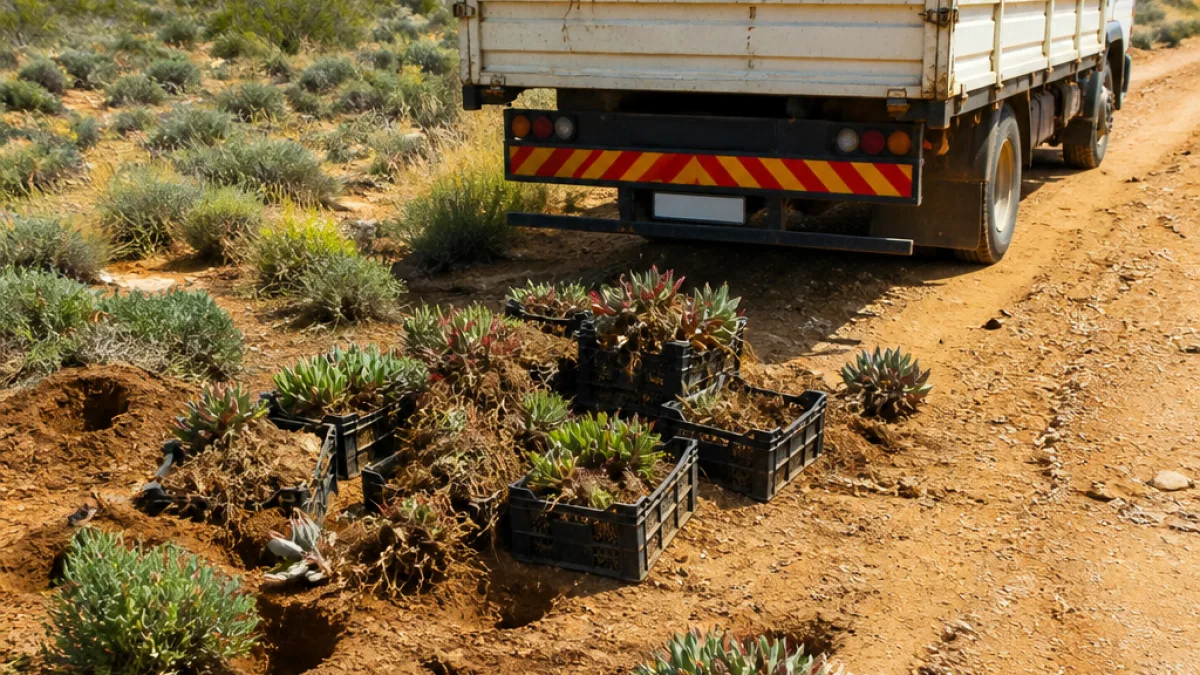
Authorities have seized roughly 2.5-million illegally harvested succulent plants in the Western Cape since 2018, but conservation agencies told the Western Cape provincial Parliament this week that seized numbers likely represent far less than the total taken from the wild.
Succulent Karoo under pressure
The Succulent Karoo, a recognised biodiversity hotspot spanning parts of the Northern and Western Cape and home to more than 2,000 endemic plant species, has been hit by intensive poaching in recent years. Presentations made to the Western Cape standing committee for environmental affairs by CapeNature, the South African National Biodiversity Institute (SANBI), the Department of Forestry, Fisheries and the Environment (DFFE) and TRAFFIC — the wildlife trade monitoring network — set out the scale of the problem and the challenges of mounting an effective response.
Figures from TRAFFIC indicate a surge in succulent poaching since 2019. According to DFFE enforcement chief director Frances Craigie, most of the plants are taken in the Northern Cape and then moved to the Western Cape for sale or onward transport.
Recent seizures and enforcement gaps
In the first half of this year alone (January to June), officials seized nearly 376,000 plants in 26 incidents, with the majority of those seizures occurring in the Western Cape. Craigie told the committee that policing in the Western Cape is more active and that informer networks are more developed there. She described the Northern Cape as having “serious capacity constraints” when it comes to countering the trade.
“Poaching is not only an environmental crisis but a ‘socio-ecological’ one, tying together biodiversity, rural poverty, and organised crime,”
David Newton, TRAFFIC programme office director for Southern and East Africa, made that assessment to the committee, linking the illegal trade to wider social and criminal dynamics.
Drivers and economics of the trade
Investigations and fieldwork by TRAFFIC show that local harvesters are often poor and that unemployment in rural communities is a consistent driver of poaching. Local collectors receive between R10 and R150 per plant, but some said they could earn more than R10,000 for a five-day collecting trip — sums that are significant in remote parts of the Northern Cape.
The succulents are sold on international markets, including China, South Korea, Japan and Germany, increasing the financial incentives for organised groups to source plants from the Karoo.
Enforcement, coordination and community dynamics
At the parliamentary briefing, national and provincial agencies discussed the need for a coordinated response. Agencies presenting included CapeNature, SANBI, DFFE and TRAFFIC. The emphasis was on aligning enforcement efforts, improving intelligence-led operations, and engaging communities to address the socio-economic drivers that channel local people into the trade.
- Seizures since 2018: ~2.5-million plants (Western Cape seizures recorded)
- Jan–Jun (this year): ~376,000 plants seized in 26 incidents
- Local collector earnings: R10–R150 per plant; some report >R10,000 over five days
What this means for the Northern Cape
The Northern Cape, as a primary source region, faces particular conservation and governance pressures. Habitat degradation from systematic removal of endemic succulents threatens the ecological integrity of the Succulent Karoo and undermines long-term livelihoods based on sustainable natural resources. The presentation to the Western Cape committee highlighted capacity shortfalls in the Northern Cape’s policing and intelligence networks, which hampers detection and interception of consignments before they reach exporters or middlemen.
| Item | Figure |
|---|---|
| Seized since 2018 | ~2.5-million plants |
| Seized Jan–Jun (this year) | ~376,000 plants (26 incidents) |
Officials said a multi-agency approach is required, combining law enforcement, environmental management, social development and international cooperation to choke off demand and dismantle trafficking networks.
How residents can help
Community members who suspect illegal collection or sale of succulents are encouraged to report incidents to local law enforcement or environmental authorities. Strengthening community reporting and providing economic alternatives to vulnerable residents were flagged by presenters as important elements of a long-term strategy to reduce poaching.
The Succulent Karoo’s plants are unique to our region. Protecting them will require resources, coordination and sustained attention from national and provincial authorities, local municipalities, and communities across the Northern and Western Cape.















