Young people turning experience into evidence
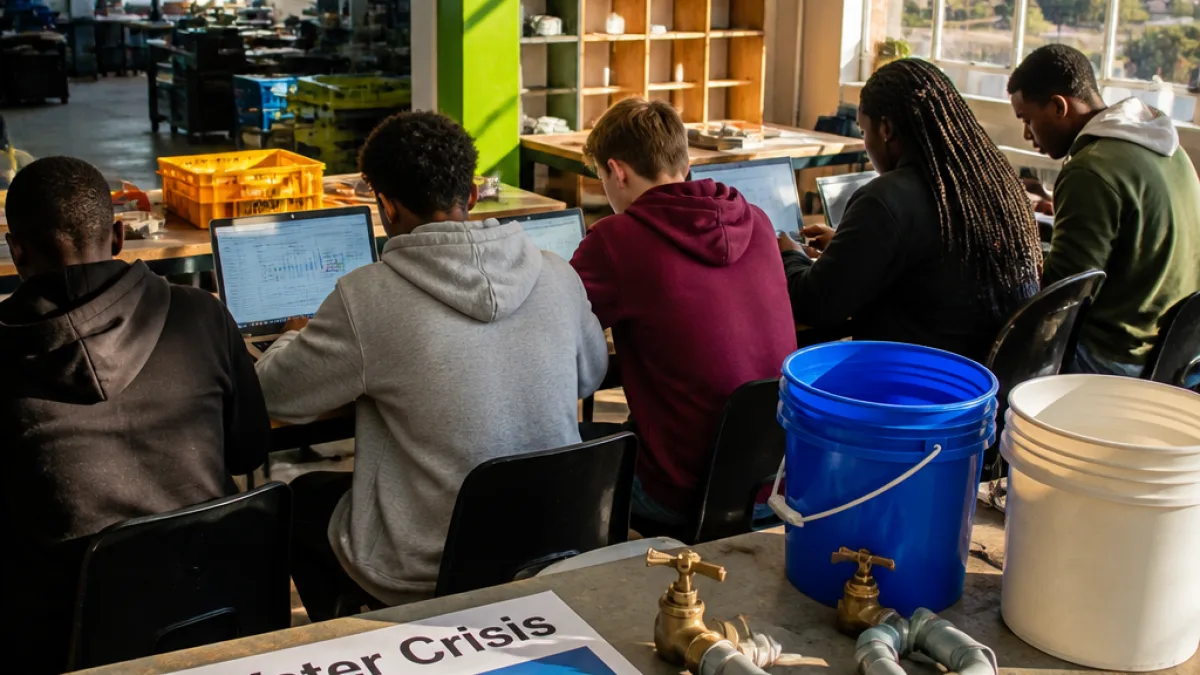
Twenty-five learners from two Makhanda high schools were given hands-on training in multimedia reporting to document how persistent municipal water outages are affecting their schooling, according to the original report. The two-day Digital Storytelling Workshop was held at the Rhodes University Community Engagement unit on 17 and 18 August and aimed to move participants beyond passive consumption of media to producing their own narratives.
The learners came from Andrew Moyake School of Excellence and Nathaniel Nyaluza Senior Secondary School. Facilitators included Brendan Williams and Thandi Matyobeni, supported by Thabang Selepe, the Innovation Lab manager at the community engagement unit, and volunteer Amanda Deke, the report said.
| Item | Details |
|---|---|
| Dates | 17–18 August |
| Participants | 25 learners |
| Schools | Andrew Moyake School of Excellence; Nathaniel Nyaluza Senior Secondary School |
| Facilitators & support | Thandi Matyobeni; Brendan Williams; Thabang Selepe; Amanda Deke |
From reading clubs to multimedia advocacy
The workshop built on existing weekly reading clubs run by one of the facilitators at both schools. Those clubs provided a platform for literacy, public speaking and engagement with contemporary social issues – skills organisers sought to extend through audiovisual and digital editing tools. The central objective was to encourage learners to identify pressing issues in their daily lives and articulate them from their own perspectives.
Participants selected a theme that directly affects their classroom experience:
“The Water Crisis in Makhanda and How It Is Affecting Our Academics.”
Through photography, audio recording, writing and editing, learners produced multimedia pieces documenting how municipal water interruptions affect:
- classroom attendance and concentration;
- school sanitation and hygiene facilities;
- overall academic performance and learner wellbeing.
The process aimed to strengthen critical thinking, teamwork and digital literacy, while offering a channel for youth voice in civic debates about local services. According to the original report, the initiative formed part of wider outreach by a local development and care centre to bolster literacy and youth participation across Makhanda.
Why this matters for Makhanda
Municipal water supply and the stability of basic services have a direct bearing on schooling. When toilets are out of service, or learners and teachers have to spend time securing water, the classroom loses valuable learning hours and hygiene standards drop — a problem that affects exam readiness and matric outcomes. By equipping learners with tools to gather and present evidence, the programme converts everyday disruption into material that can be presented to school management, ward councillors or the municipality.
Media produced by young people can perform several civic functions: it documents impact, centres youth experience in public conversation and can be used to push for practical interventions — from improved bulk supply measures to contingency plans for schools when outages occur. The report frames the workshop as building civic agency: participants not only learn technical skills but gain platforms to make systemic problems visible.
For the municipal authorities and school leadership, these learner-led projects offer a low-cost, locally rooted source of testimony about the consequences of water instability. For community organisations and NGOs, the outputs represent narrative material that can be used in advocacy, fundraising or in dialogue with technical departments that manage water services.
Organisers said the workshop was intended as part of ongoing engagement rather than a one-off event. If the learners continue to receive mentoring and access to editing tools, their work could form a continuing archive of lived experience during service interruptions — a resource for educators, civic groups and local government scrutiny.
School communities, ward councillors and service departments in Makhanda now have digitally recorded accounts that track how water outages translate into lost learning time and degraded school conditions. Whether those accounts prompt faster remedial action will depend on follow-up, amplification of the learners’ work and municipal responsiveness.