
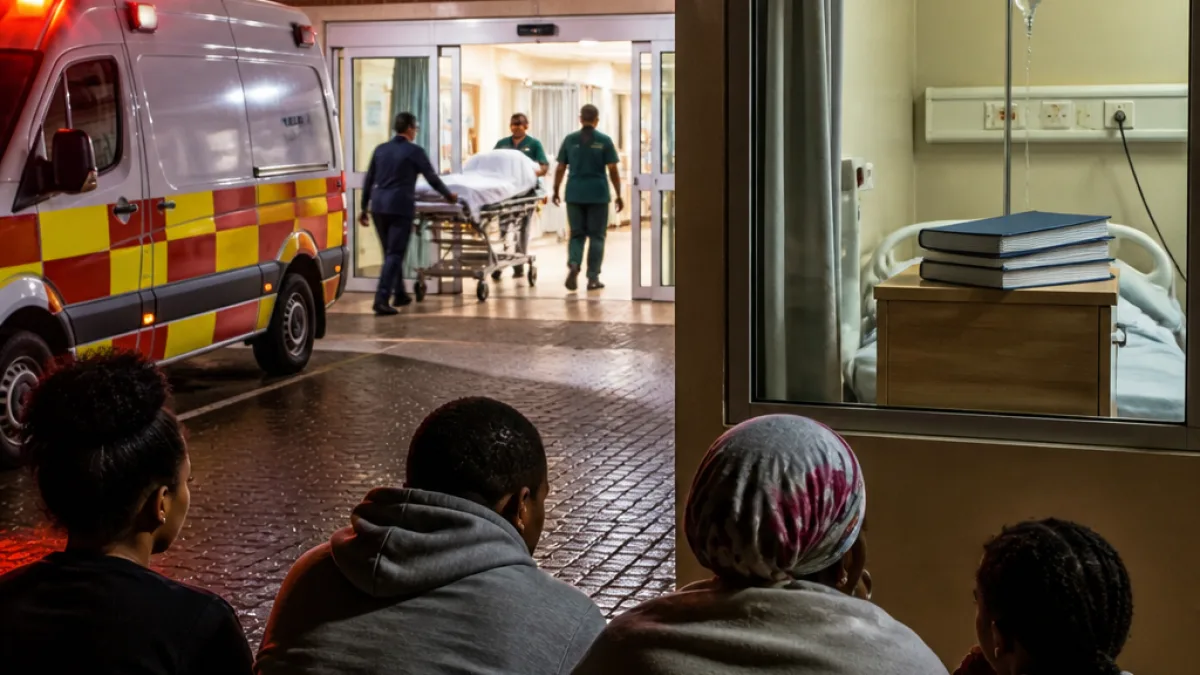
An 18-year-old matric pupil from the KwaZulu-Natal south coast is recovering after surviving an acute ischaemic stroke just weeks before her trial exams, hospital staff and family said. What began as facial drooping and slurred speech was quickly found to be a life‑threatening blockage in a major brain artery.
Rapid diagnosis and intervention at Shelly Beach Hospital
Jaden Jesson’s family initially believed she had been bitten by a snake when symptoms began. Emergency investigations at Shelly Beach Hospital revealed instead an acute ischaemic stroke caused by a clot that completely blocked a major cerebral artery.
Dr Fekade Gebremariam, who led the treatment, said swift action was essential to prevent permanent damage, paralysis or death. He performed an emergency suction mechanical thrombectomy, a procedure to remove the clot from the blocked artery.
"It was actually very severe. This [is a] young girl, I mean, she's very young. She can't even move her arms. She can't talk properly. She was drooling. She was in a state of shock, so it was actually very bad," said Dr Gebremariam.
Dr Gebremariam underlined the importance of the treatment window: such procedures are effective when performed within about four to eight hours of symptom onset. He said Jesson arrived at hospital roughly between three and a half to four hours after her symptoms began, placing her within the critical period for intervention.
From collapse to recovery: the first 24 hours
According to family reports, Jesson’s condition deteriorated quickly: facial droop progressed to left‑side paralysis and difficulty speaking. Paramedics and clinicians prioritised rapid imaging and decision‑making to determine suitability for thrombectomy.
Within hours after the procedure, she began to regain sensation and movement. By the time she was preparing for her biology practical and the start of her matric trial exams, her recovery had progressed enough for her to sit papers, the family said.
What this means for other young people
Strokes are often associated with older adults, but clinicians caution that they can occur in young people too. The case highlights two public‑health messages:
- Recognise stroke signs early — sudden facial droop, arm weakness and slurred speech are key warning signs.
- Time matters — timely arrival at a facility capable of neuroimaging and endovascular intervention can be life‑ and function‑saving.
Local doctors say that although young stroke is uncommon, awareness among families and emergency responders helps shorten delays to treatment.
Timeline (reported)
| Event | Reported timing |
|---|---|
| Symptom onset (facial droop, slurred speech) | Initial collapse |
| Arrival at Shelly Beach Hospital | Approximately 3.5–4 hours after onset |
| Thrombectomy window of effectiveness | About 4–8 hours after onset |
| Recovery | Regained movement and sensation within hours following procedure |
Practical information for families and schools
Medical staff urged anyone who sees sudden neurological symptoms to seek urgent care rather than waiting to see if symptoms pass. Schools and parents of matric pupils should be aware that acute medical emergencies can occur at any age and that prompt hospital assessment is critical.
Clinicians advise taking note of the following steps if stroke signs appear:
- Call emergency services immediately and note the time symptoms started.
- Do not wait for symptoms to worsen—early neuroimaging and specialist assessment determine treatment options.
- If possible, go to a facility equipped for stroke care and endovascular procedures.
Jesson’s recovery will continue to be monitored by her medical team as she prepares to complete her matric year. Her case serves as a reminder to communities across KwaZulu‑Natal that recognising emergency signs and acting without delay can save lives and preserve function.
Local health services reiterated the need for public awareness and timely access to emergency care; stroke services remain specialised, and early referral pathways are essential to improving outcomes.












