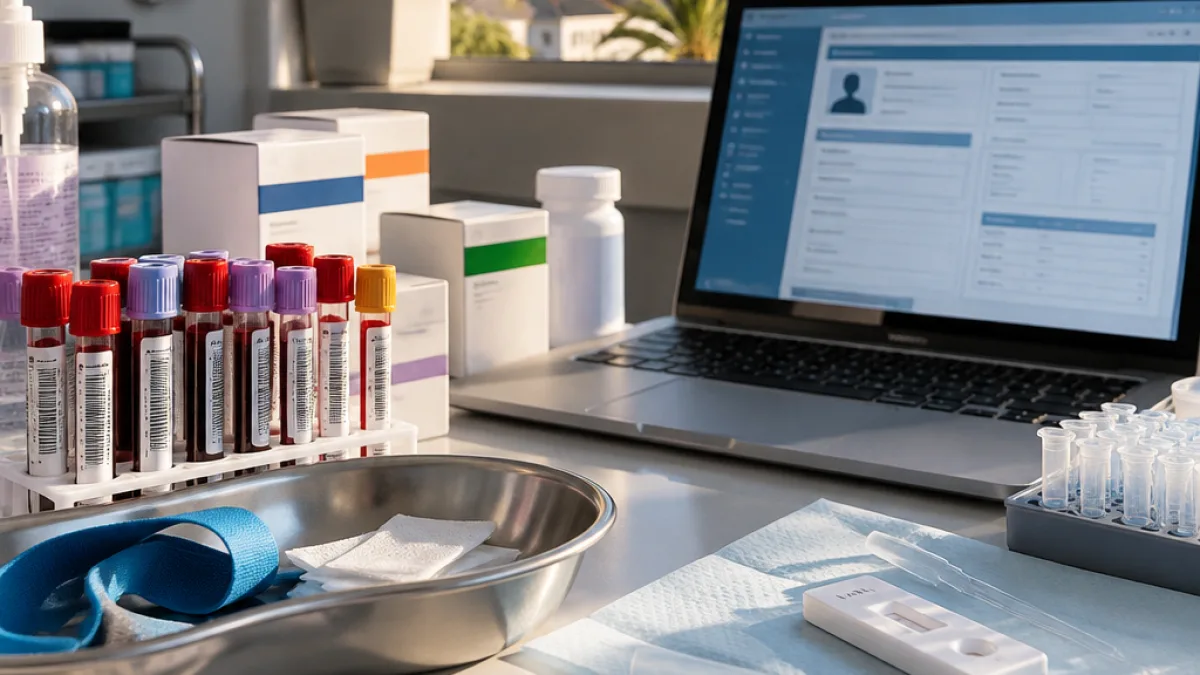
Healthcare companies are changing how medicines, preventative screening and specialist patient information are managed, with developments ranging from a global men’s health pharmaceutical reorganisation to expanded testing for gym members.
Androlabs changes corporate structure
Global men’s health pharmaceutical company Androlabs is restructuring its operations as it seeks to expand its product portfolio and international market access. The changes include the separation of sister company Simple Pharma from the wider group and the transfer of marketing authorisations for Androlabs’ main prescription products to dedicated legal entities.
The medicines affected are Testavan and Vitaros. Distribution across international markets will be handled by a newly created business called Labs Distribution, which will bring teams from Simple Pharma and Androlabs together within a single distribution structure.
The restructuring follows five years of commercial growth after Androlabs acquired Testavan and Vitaros from Ferring Pharmaceuticals. The company has also expanded its product offering, including through a new United Kingdom marketing authorisation for a Testavan 4.6 mg per actuation presentation.
As part of the transaction, parent company Tithonia Group has separated The Simple Pharma Company from the group. That business has been acquired by Tamrisa Access and will operate independently. The changes are intended to clarify the companies’ roles in manufacturing, marketing and distribution, while allowing Androlabs to continue focusing on its men’s health portfolio.
“We have proved the model – now we want to build on it,” said Charlie Bryant, chief executive and co-founder of Androlabs.
Screening partnership expands access to testing
In another development, personal training organisation Ultimate Performance has partnered with Emerald, a preventative healthcare platform registered with the Care Quality Commission, to offer gym members access to health screening and diagnostic services.
Under the agreement, Ultimate Performance members will receive 12 months of Emerald membership. The platform combines laboratory findings with information from wearable devices and a person’s medical history. The available information says each member is matched with a GP who provides ongoing clinical support, although further details of the service were not provided.
| Screening element | Details provided |
|---|---|
| Blood testing | Analysis of 124 biomarkers |
| Areas covered | Metabolic, cardiovascular, hormonal, inflammatory and organ-function markers |
| Additional information | Wearable-device data and medical history |
| Membership period | 12 months for participating gym members |
The range of markers is intended to provide a broad picture of a member’s health rather than focusing on a single condition. However, laboratory results require clinical interpretation and should be considered alongside symptoms, medical history and other assessments. People who receive unexpected results should discuss them with a doctor or clinic instead of trying to diagnose themselves.
Digital records for eating-disorder care
The roundup also identifies a dedicated electronic health-record platform for eating-disorder care from Qyire. The available material does not provide further information about the platform’s functions, the healthcare settings in which it will be used or the people it is designed to support.
Eating disorders can require coordinated care, making accurate and appropriately managed health information important for patients and healthcare teams. Any digital system used in this area must support clinical decision-making and protect sensitive medical information. Patients and families seeking help should contact a doctor, clinic or appropriate mental-health service for assessment and guidance.
Why these developments matter
Taken together, the announcements reflect different parts of a healthcare system under development: pharmaceutical companies are reorganising to manage international access to established medicines; preventative-care providers are combining blood tests with wearable data; and technology firms are developing specialist records systems.
These changes do not replace professional medical advice. Screening can identify information that needs further assessment, while medicines and digital records must be managed within appropriate clinical and regulatory frameworks. Anyone with concerns about symptoms, test results or treatment should consult a qualified healthcare professional rather than self-diagnose.