Durban — Lieutenant Colonel Deendadayalan (Deena) Govender, the Hawks officer who leads the KwaZulu‑Natal cash‑in‑transit task team, told the Madlanga Commission on 21 August 2026 that he believes he is being used to discredit KwaZulu‑Natal Police Commissioner Khehla Mkhwanazi and implicated sidelined police minister Senzo Mchunu in efforts to pressure him.
Allegations of coercion and threats
Govender’s evidence shifts attention to claims that police officers, drug dealers and politicians sought to have him say he acted on instructions from Commissioner Mkhwanazi in relation to police shootings. He told the commission he had been pressured and threatened with arrest, denial of bail and even poisoning if he refused to cooperate, according to reporting from the commission.
“It is my respectful view and submission that I am being used as a pawn to discredit Lieutenant General Mkhwanazi.”
His testimony follows the recent appearance of MP Fadiel Adams, which raised questions about an affidavit allegedly obtained by an investigator from the Investigating Directorate Against Corruption. Govender’s evidence adds a further, politically charged layer to proceedings at the Madlanga Commission.
How the episode unfolded
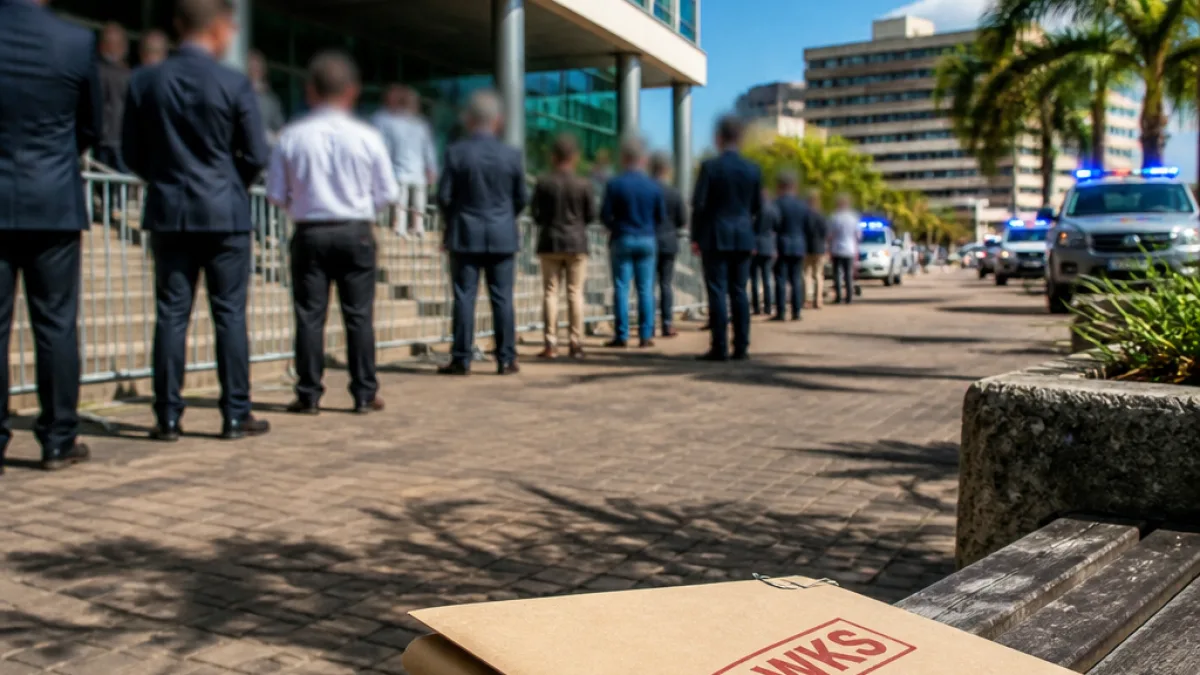
Govender said the episode began on 13 August 2026, when he was approached to attend an informal meeting outside the Independent Police Investigative Directorate (Ipid) offices in Durban. At that meeting, he said, he was told to "protect" himself by declaring before the commission that he had acted on Mkhwanazi’s instructions regarding police shootings.
The lieutenant colonel reported that he was told police officers, drug dealers and politicians wanted him to "throw him under the bus" — a phrase he used to describe pressure to shift blame onto Mkhwanazi.
Context: tensions within provincial policing
The allegations come against the backdrop of earlier claims by Commissioner Mkhwanazi that Senzo Mchunu, who has been placed on special leave, ordered the disbandment of the KwaZulu‑Natal Political Killings Task Team (PKTT). Mkhwanazi has said the move was intended to protect criminal syndicates; those claims have formed part of the commission’s broader inquiry into policing and political interference in the province.
Govender’s testimony therefore not only concerns individual conduct but feeds into larger questions about the relationship between political officeholders and senior police leadership in KwaZulu‑Natal.
Timeline
| Date | Event |
|---|---|
| 13‑Aug‑2026 | Govender says he was approached for an informal meeting outside Ipid offices in Durban and pressured to implicate Mkhwanazi. |
| 21‑Aug‑2026 | Govender gave testimony at the Madlanga Commission, alleging threats and that he was being used as a pawn. |
| Earlier in 2026 | Mkhwanazi alleged Mchunu ordered disbandment of the PKTT; Mchunu was placed on special leave. |
What this means for the commission and provincial politics
Govender’s allegations put renewed focus on whether political interference has affected investigations into politically linked killings and other serious crimes in KwaZulu‑Natal. If substantiated, the claims could exacerbate tensions between the provincial police leadership and political figures who have been accused of undermining certain investigative structures.
The Madlanga Commission, established to probe police conduct and related governance failures, is now confronting testimony that questions not only individual decisions but also the integrity of evidence being presented before it.
Questions still unanswered
- What evidence exists to corroborate Govender’s claim that he was threatened with arrest, denied bail and poisoned?
- Will the commission call other witnesses to verify the alleged meeting outside Ipid on 13 August?
- How will the allegations affect the status of Senzo Mchunu, currently on special leave?
At the time of his appearance, Govender framed his role as being manipulated to build a case against Mkhwanazi rather than to assist the commission’s search for facts.
The Madlanga Commission continues to sit. No new statements from Mkhwanazi or Mchunu were reported alongside Govender’s testimony; any response from their offices will be scrutinised for how it addresses the substance of these allegations.
As the inquiry proceeds, communities in Durban and across KwaZulu‑Natal will be watching closely for clarity on whether policing decisions have been shaped by improper pressure and whether those responsible, if any, will be held to account.
Reporting from Durban.