
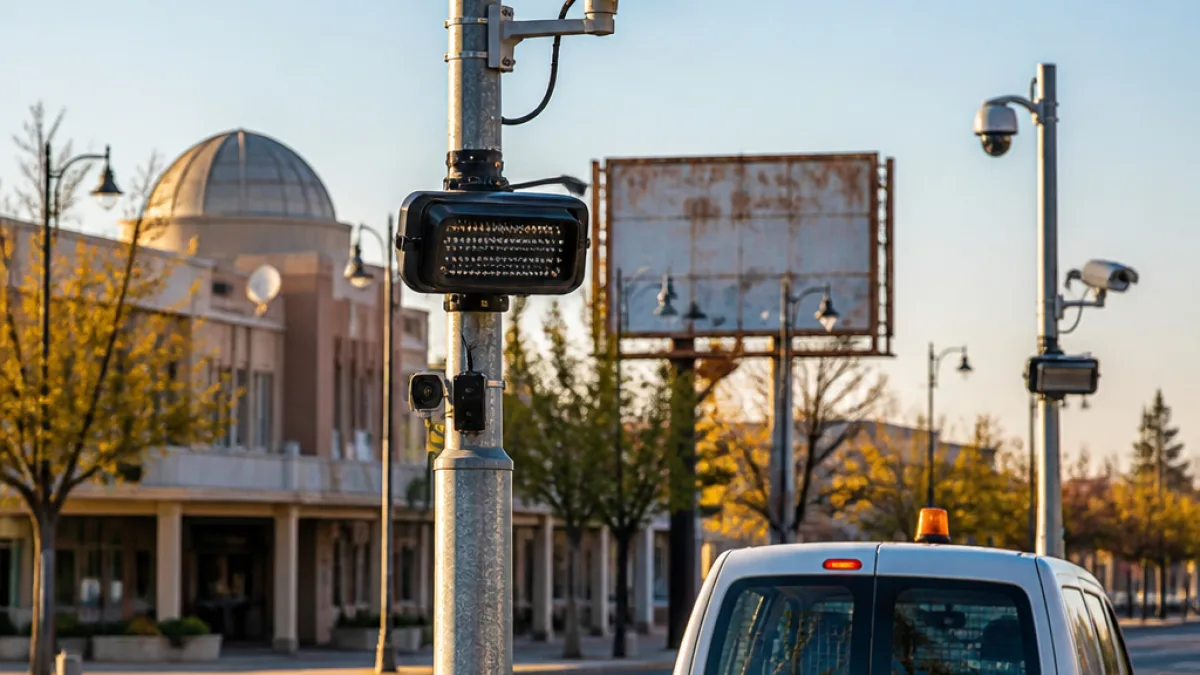
South African communities should weigh the privacy, oversight and public‑safety trade‑offs before expanding camera networks that can automatically record and archive movements, experts and recent investigations warn.
What the recent reporting found
A sweeping editorial and investigative reporting from the United States has renewed scrutiny of surveillance systems that combine high‑resolution video with automated licence‑plate recognition and artificial intelligence. The Electronic Frontier Foundation (EFF) reviewed more than 12 million searches logged by over 3,900 agencies and reported instances where searches targeted people involved in constitutionally protected protests or were sorted by ethnic background, the reporting said. A separate USA TODAY investigation revealed officers who repeatedly used camera systems to track acquaintances, including one case where an officer queried a system at least 335 times to follow an ex‑partner’s vehicle.
“Fleets of street cameras, combining high‑resolution video with artificial intelligence, generate detailed, archivable records of where people have been,” the editorial said.
The largest commercial supplier in that market, Flock Safety, has said it does not sell the data and is taking steps to limit abuse. Yet civil‑liberties organisations remain sceptical: the American Civil Liberties Union has launched a “Get the Flock Out” campaign calling for bans on such systems, arguing they amount to covert mass surveillance.
Why the debate matters here
The core concerns emerging from the US reporting are technical and institutional, and they translate readily to a South African context:
- Data accumulation: Automated systems create long‑term, searchable logs of people’s movements that can be repurposed beyond the original policing aim.
- Insider abuse: Access controls and audit trails are essential; the US reporting documented repeated, improper searches by law‑enforcement personnel.
- Lack of transparency: Many agencies deploy these technologies without clear public policies on retention, access and oversight.
Those are governance questions local municipalities, the SAPS and oversight bodies would need to answer before endorsing similar technology in the Free State or elsewhere.
Questions municipalities and police should ask
When considering automatic number‑plate recognition (ANPR) or camera networks, decision‑makers should require answers on several practical points. A minimal checklist would include:
- What specific public‑safety problem is the system intended to address, and is there evidence it will improve outcomes?
- Who owns and controls the data: the vendor, the police or the municipality?
- How long will data be retained, and who may query it?
- What audit and accountability mechanisms exist to detect and punish misuse?
- Are there independent privacy impact assessments and opportunities for public consultation?
International experience and potential safeguards
Countries and cities that have curtailed or regulated these systems offer practical models. Common safeguards include strict retention limits, mandatory audit logs with independent review, warrants or judicial oversight for historical queries, and explicit prohibitions on using the data for tracking lawful protest or profiling on the basis of race or ethnicity.
| Risk | Possible safeguard |
|---|---|
| Mass retention of movement data | Short, justified retention periods (days to weeks) |
| Improper internal searches | Independent audits, strict access controls, sanctions |
| Opaque vendor arrangements | Contracts requiring municipal ownership of data, disclosure clauses |
What citizens should expect
Community members have a legitimate interest in how surveillance technologies are used in their public spaces. Public consultation, clear policy documents, and accessible reporting on the scope and outcomes of camera deployments help build trust and reduce the risk of mission creep.
Debates in other jurisdictions show that the promise of improved detection and convenience must be balanced against the risk that an ever‑expanding archive of movements becomes a tool for intrusive monitoring. Where civil‑liberties groups have pushed back, the response has often produced clearer rules and stronger oversight, not simply a total rejection of technology.
Conclusion
Recent US reporting and the positions of civil‑liberties organisations underscore that ANPR and similar camera systems are not merely technical tools but governance challenges. If Free State municipalities and law‑enforcement agencies are considering these systems, they should adopt explicit policies on purpose limitation, retention, access and oversight before investing. Those safeguards will determine whether camera networks serve public safety or create new, hard‑to‑reverse forms of mass surveillance.