
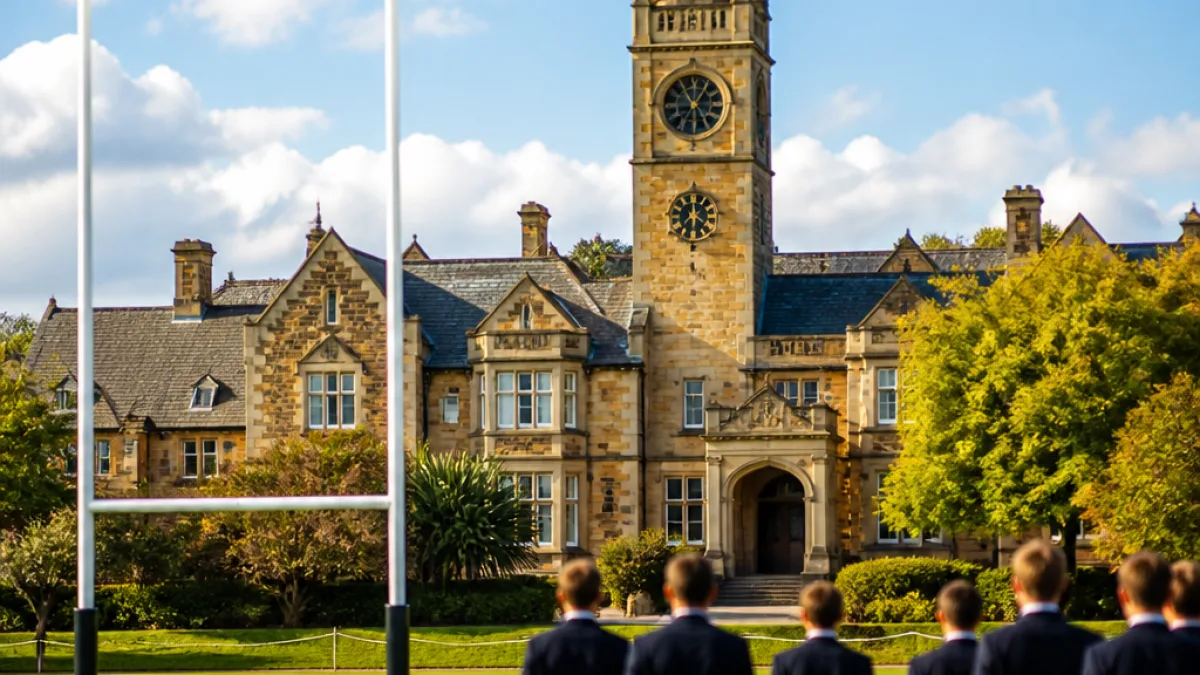
Historic school remains central to Bloemfontein's education and sporting identity
Grey College in Bloemfontein, founded on 13 October 1855, continues to be one of the city's most prominent educational institutions. Established under the influence of Viscount Alfred Milner as one of his so-called "Milner Schools", the all-boys public school occupies a 60-hectare campus and combines a long heritage with ongoing recognition for its sporting contribution at national level.
The school opened with Reverend Andrew Murray as its first headmaster. Over more than a century and a half, Grey College has gained a reputation for producing high-performing sportspeople and public figures. Among its notable former pupils are national sporting names such as Hansie Cronje, Ryk Neethling and Frans Steyn, and cultural personality Steve Hofmeyr. The institution has been described in reporting as a "Springbok factory", having produced nearly 50 senior national team rugby players for South Africa.
Grey College's campus contains several structures designated as South African National Heritage sites. These include the Main Building, Hamilton Hall, Murray House, Brill House and the original Tuck Shop, which served as a hospital during the Anglo-Boer War. The school's physical presence on the city's landscape also had a direct impact on higher education in Bloemfontein: in 1896 the school's alumnus and former president of the Orange Free State, Marthinus Theunis Steyn, addressed learners and voiced support for higher education in the city.
Steyn said he "envisioned a university for Bloemfontein" and supported the idea that Grey College should provide higher education.
Part of Grey College's grounds was later allocated to establish the University of the Free State, which materialised in 1904. The connection underlines how the school's land and civic role helped shape Bloemfontein's educational infrastructure.
Historically Grey College also functioned as a model of bilingual schooling in the province, with parallel instruction in English and Afrikaans while maintaining shared cultural and boarding facilities. In the early 21st century the school's profile received continental recognition: it was ranked first among African high schools by Africa Almanac in both 2003 and 2013, based on factors including quality of education, notable alumni and visibility.
The school's foundation as one of the group of Milner Schools links it to broader imperial-era education policy. Several other schools founded under that initiative remain active, including Pretoria High School for Girls, Pretoria Boys High School, Jeppe High School and King Edward VII School. For Bloemfontein residents, Grey College remains a symbol of long-standing educational traditions and a local source of sporting talent.
- Founded: 13 October 1855
- Campus size: 60 hectares
- Notable alumni: Hansie Cronje, Ryk Neethling, Frans Steyn, Steve Hofmeyr
- Heritage structures: Main Building, Hamilton Hall, Murray House, Brill House, original Tuck Shop
- Higher-education link: land allocated in 1904 for the University of the Free State
| Year | Event |
|---|---|
| 1855 | School officially opened |
| 1896 | Address by Marthinus Theunis Steyn advocating a university |
| 1904 | University of the Free State established on part of the school's grounds |
| 2003 & 2013 | Ranked first among African high schools by Africa Almanac |
For residents and stakeholders in Bloemfontein, the school's continued stewardship of heritage buildings and its role as a feeder of national sporting talent remain matters of local interest. The school's history intersects with the city's development: its grounds, alumni and buildings are woven into Bloemfontein's civic and cultural landscape.












