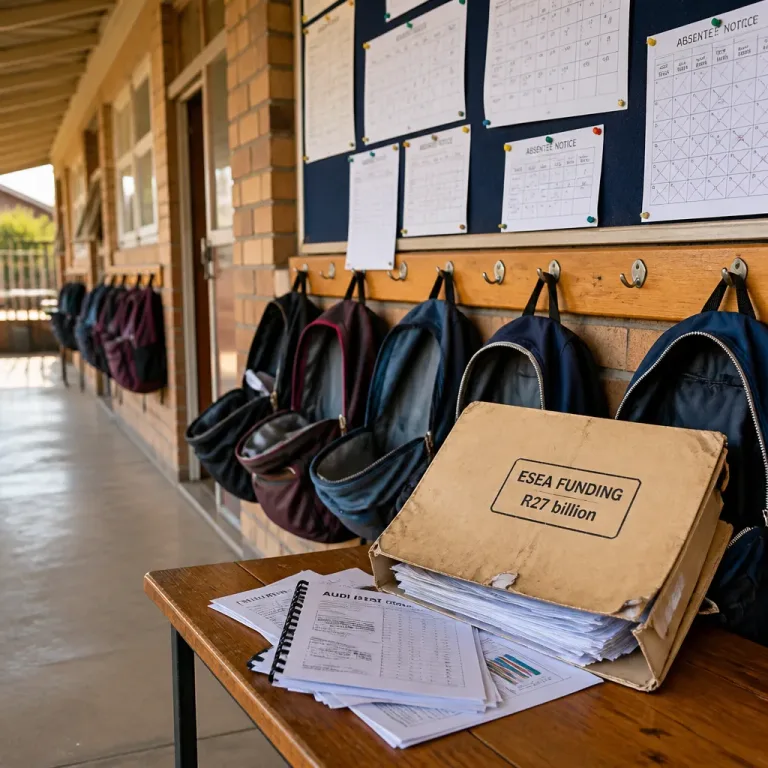

Johannesburg. Gauteng’s education department has warned schools across the province to move quickly to comply with new Value-Added Tax (VAT) rules that took effect on 1 January 2026. The changes, introduced through the Taxation Laws Amendment Act 5 of 2026, mean supplies by schools registered under the South African Schools Act are now VAT-exempt and many institutions will no longer be regarded as carrying on an “enterprise” for VAT purposes.
What the change means for schools
MEC Lebogang Maile urged principals, School Governing Bodies (SGBs) and those responsible for school finances to familiarise themselves with the new framework and take immediate action. “We call on principals, School Governing Bodies and those entrusted with the financial administration of our schools to familiarise themselves with these changes and ensure that their institutions comply. Good governance requires that every school understands its financial and statutory obligations and acts accordingly,” Maile said.
Key points from the department’s guidance and SARS’ stance include:
- Supplies by qualifying schools are exempt from VAT from 1 January 2026.
- Deregistration from VAT is not automatic; schools that remain registered as vendors must apply to SARS to be deregistered.
- While registered, schools must continue to submit the required VAT returns — these will generally be nil returns unless adjustments apply.
- Any VAT charged on supplies made on or after 1 January 2026 must be declared in the relevant VAT201 return.
- Schools must pay attention to “exit VAT” rules under Section 8(2) of the VAT Act, which may require accounting for VAT on certain goods and rights retained when a school exits the VAT system.
Practical steps for school finances
The department advises schools to take a structured approach to compliance. Officials said schools should:
- Review VAT records and determine whether VAT was charged on any supplies after 1 January 2026.
- Identify assets and other items that may trigger an exit VAT liability.
- Ensure all outstanding VAT returns and obligations are up to date while registration remains active.
- Apply to SARS for deregistration where applicable rather than assuming the process is automatic.
These actions are particularly relevant for schools that operate canteens, rent facilities, run fundraising activities with taxable supplies, or have previously claimed VAT on capital purchases.
| Before 1 Jan 2026 | After 1 Jan 2026 |
|---|---|
| Some supplies by schools could be subject to VAT; many schools operated as VAT vendors. | Supplies by schools registered under the South African Schools Act are exempt from VAT; many schools will cease to be VAT enterprises. |
What to declare and when
Where a school charged VAT on supplies from 1 January 2026 onwards, SARS requires that VAT to be declared in the relevant VAT201 period. If a school subsequently issues a credit note and refunds the VAT to the recipient, the school may make the appropriate adjustment in line with SARS requirements.
Governing bodies and school finance committees will need to work with their auditors or tax advisers to establish whether:
- the school should remain registered while it settles outstanding obligations,
- an application for deregistration is appropriate immediately, or
- an exit VAT calculation is required for retained assets.
Why this matters to parents and school communities
For parents, the immediate impact may be small if schools properly adjust accounting and billing practices. But unclear handling could cause temporary confusion where fees, extras or services were previously invoiced with VAT. SGBs should communicate changes to parents to avoid misunderstandings and ensure transparency in school finances.
The department’s notice places administrative responsibility squarely on school leadership and SGBs. The message is simple: exemptions do not erase obligations overnight — schools must actively manage their VAT status and remain compliant until SARS formally processes deregistration.
Officials advising schools include the Gauteng education department’s finance teams and SARS; schools are urged to seek professional tax advice where necessary to interpret the exit VAT provisions and to complete deregistration applications correctly.
Contact information and deadlines — the department emphasised that schools must act as soon as possible, review records and submit any required VAT returns while registrations are still active. Schools that need clarity should approach their auditors, tax advisers or contact SARS for specific guidance on deregistration and exit VAT procedures.
This development follows national tax law changes enacted in the Taxation Laws Amendment Act 5 of 2026 and affects all schools registered under the South African Schools Act across Gauteng.