
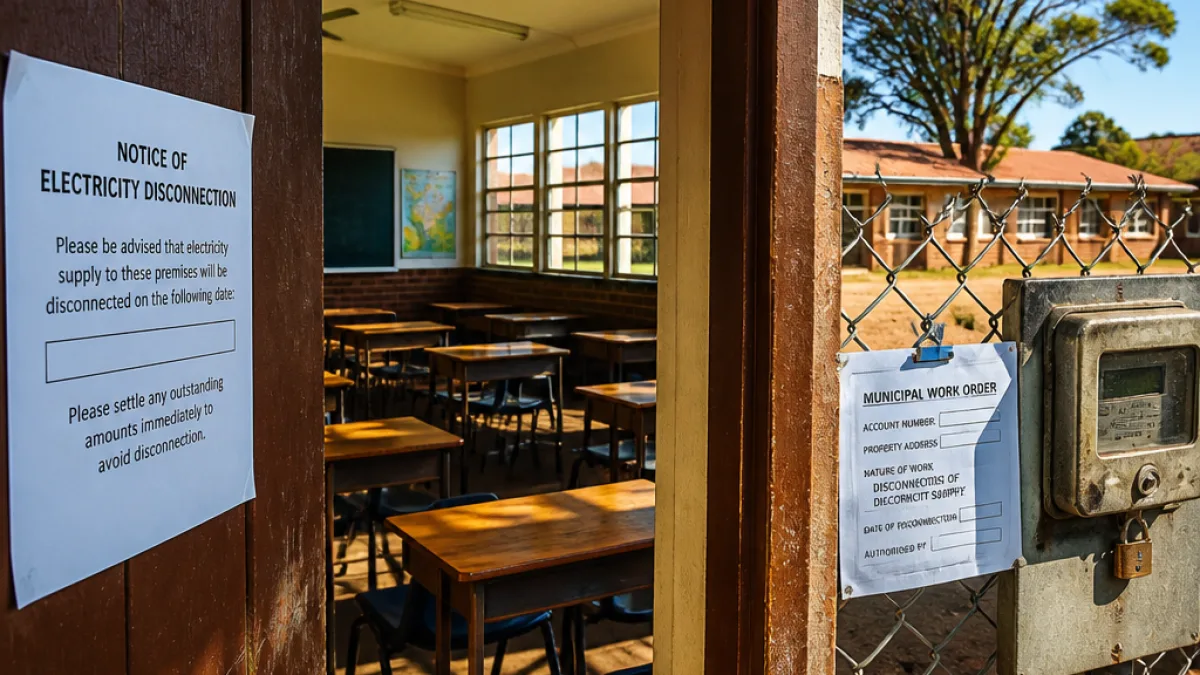
Province-wide electricity cuts hit classrooms and expose financial oversight failures
Gauteng learners have forfeited 8,925 school days in 2026 because of electricity disconnections at public schools across the province, the Gauteng Department of Education (GDE) has told the provincial legislature. The figure, supplied in a written response by Education MEC Lebogang Maile to questions tabled by the Democratic Alliance (DA), paints a picture of repeated disruption to teaching and learning caused by a lack of power at schools.
The admission undercuts earlier denials that electricity cuts were taking place at scale and raises hard questions about the department’s capacity to oversee school finances and to intervene before essential services are lost.
How the loss plays out in classrooms
For learners and teachers the consequences are concrete. The department’s reply highlights that when schools are disconnected:
- smartboards, computers and other digital learning tools cannot be used;
- photocopiers and internet connectivity are affected, hampering lesson preparation and access to resources;
- security systems can be compromised, increasing risks to both people and property;
- in many instances learners are forced to continue in unsafe or unsuitable conditions.
Each lost day represents a missed opportunity for teaching, assessment and curriculum coverage at a time when many learners are still recovering from learning losses incurred during earlier disruptions.
Department admits it lacks a central debt register
Compounding the concern is the department’s admission that it does not maintain a central register of schools’ outstanding debts to service providers. The register would ordinarily include amounts owed, duration of those debts and the reasons behind them—information needed if the department is to prioritise support and intervene early.
Without such a register, the GDE’s ability to identify financially distressed schools and prevent the loss of essential services is severely constrained. The DA has submitted the department’s legislative replies to the Public Protector as supplementary evidence in its ongoing complaint about electricity disconnections at public schools.
What we know from the department’s response
| Detail | Content |
|---|---|
| Number of school days lost (2026) | 8,925 |
| Source of information | Written reply by MEC Lebogang Maile to DA questions in the Gauteng Provincial Legislature |
| Departmental shortcoming acknowledged | No central register of schools’ outstanding debts to service providers |
Political and oversight consequences
The DA’s referral of the replies to the Public Protector signals an escalation of the dispute from the political to the oversight arena. The party argues the department failed to exercise effective oversight to prevent schools reaching the point where essential services were disconnected.
For parents, educators and school governing bodies the immediate need is clarity on which schools are affected, how long disconnections lasted and what remedial steps the department will take to restore services and prevent recurrence. The department’s acknowledgement of widespread municipal debt, coupled with the absence of a central debt register, suggests co-ordination problems between schools, the GDE and municipalities or service providers.
What this means for the coming term
As the academic year progresses, these disruptions risk widening existing inequalities. Schools with adequate financial management and access to emergency funds can shield learners from the worst effects; those without such buffers will bear the brunt.
Parents and educators seeking immediate redress should pursue the following practical steps:
- Ask the school governing body for details on any outstanding municipal or service-provider accounts and planned remediation;
- Request the district office to confirm whether the school is on any departmental support list or scheduled for intervention;
- Report unresolved service disconnections to the provincial education department and to the relevant municipality so they are officially recorded.
The GDE’s written reply to the legislature provides an important record, but it also raises questions about how many schools remain at risk and how quickly the department and municipalities can act to keep lights on and learning uninterrupted.
More clarity is needed from the department on the geographical spread of the disconnections, which districts and schools were most affected, and what immediate funding or administrative measures will be used to prevent further losses. For now, the confirmed total of 8,925 lost school days stands as a stark indicator of the impact of basic service failures on education across Gauteng.
Gauteng correspondent reporting from Johannesburg.











