
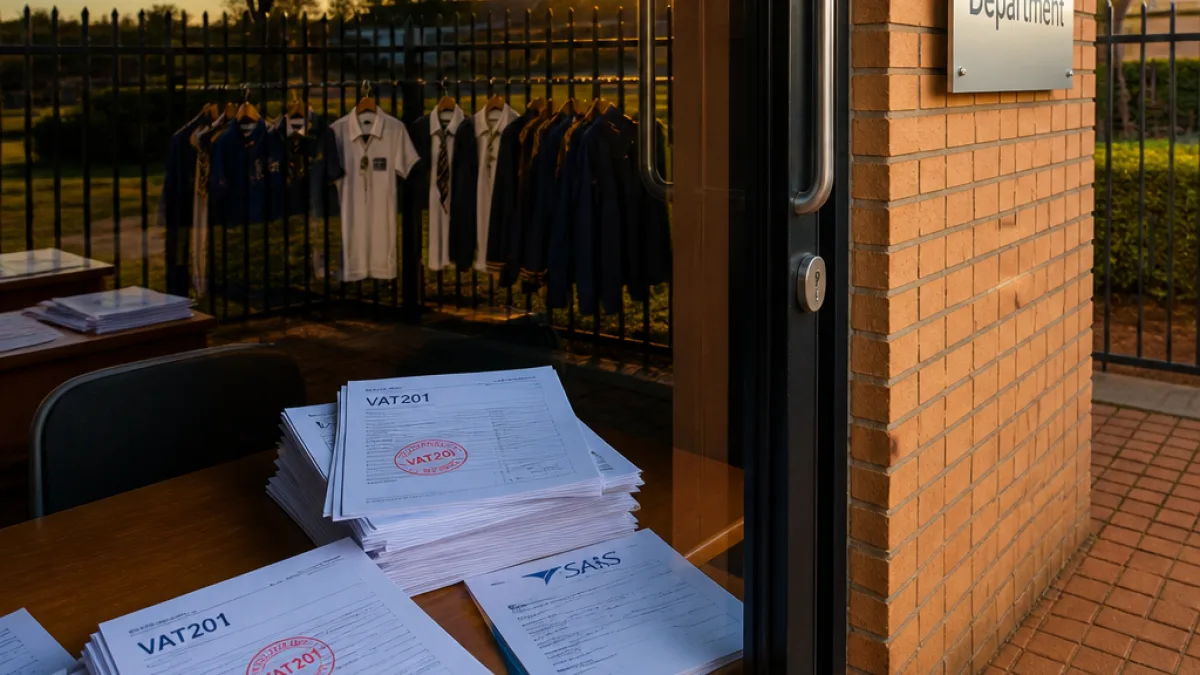
The Gauteng MEC for Education, Sport, Arts, Culture and Recreation, Lebogang Maile, has urged schools and their governing bodies to urgently review and regularise their Value-Added Tax (VAT) affairs after a change in the tax treatment of school supplies that came into effect on 1 January 2026.
What changed and who it affects
The change means that supplies made by schools registered under the South African Schools Act are now exempt from VAT. As a result, many schools that previously operated as VAT vendors no longer conduct an “enterprise” for VAT purposes and should exit the VAT system.
However, Maile warned that deregistration is not automatic. Schools that remain registered as VAT vendors must apply to the South African Revenue Service (SARS) to be deregistered and must continue to meet their VAT obligations while still registered.
“We call on principals, School Governing Bodies and those entrusted with the financial administration of our schools to familiarise themselves with these changes and ensure that their institutions comply. Good governance requires that every school understands its financial and statutory obligations and acts accordingly,”
The MEC's statement places responsibility squarely on school leadership to understand and act on the change.
Practical steps schools must still follow
The Gauteng Department of Education set out a number of immediate practical requirements for affected schools. Key points include:
- Continue submitting VAT returns while a school's VAT registration remains active — returns are generally expected to be nil unless adjustments are required.
- Declare any VAT charged on supplies made on or after 1 January 2026 in the relevant VAT201 return.
- If VAT was charged and later refunded (for example via a credit note), make the relevant adjustments in line with SARS requirements.
- Where applicable, assess whether the school must account for so‑called exit VAT under section 8(2) of the VAT Act for assets retained when the VAT enterprise ceased.
The department noted that items potentially subject to exit VAT include trading stock, equipment, furniture, improvements to property and other enterprise assets where input VAT had previously been deducted.
Why schools must act now
Leaving registrations active without filing accurate returns exposes schools to administrative risk and potential SARS queries. Deregistration must be applied for through SARS rather than assumed, and records need to be up to date so any post‑registration adjustments can be made correctly.
| Action | What to check |
|---|---|
| VAT registration | Are you still registered as a VAT vendor? If yes, apply to SARS for deregistration where appropriate. |
| VAT returns | Continue submitting VAT201 returns until deregistration is confirmed; declare VAT on supplies made on/after 1 Jan 2026. |
| Exit VAT | Assess retained assets for possible VAT accounting under section 8(2) of the VAT Act. |
School principals and School Governing Bodies are the named custodians of financial governance and will need to work with their financial officers and accountants to make sure SARS obligations are met.
Where schools can get help
The department's reminder implicitly points schools towards SARS for deregistration guidance and for clarifying how to record and adjust VAT on transactions that straddle the 1 January 2026 cut‑off. Schools that charged VAT on supplies after that date must ensure they declare and, if necessary, refund and adjust such amounts according to SARS rules.
For many schools this will mean convening governing body finance subcommittees to review past returns, identify any outstanding declarations and to prepare the deregistration application if they no longer meet the criteria for a VAT enterprise.
The MEC's call comes as Gauteng education authorities focus on strengthening governance and financial accountability across schools. For affected institutions, the next steps are administrative but important — and timeous action will reduce the risk of findings in future audits and avoid unexpected tax liabilities.











