
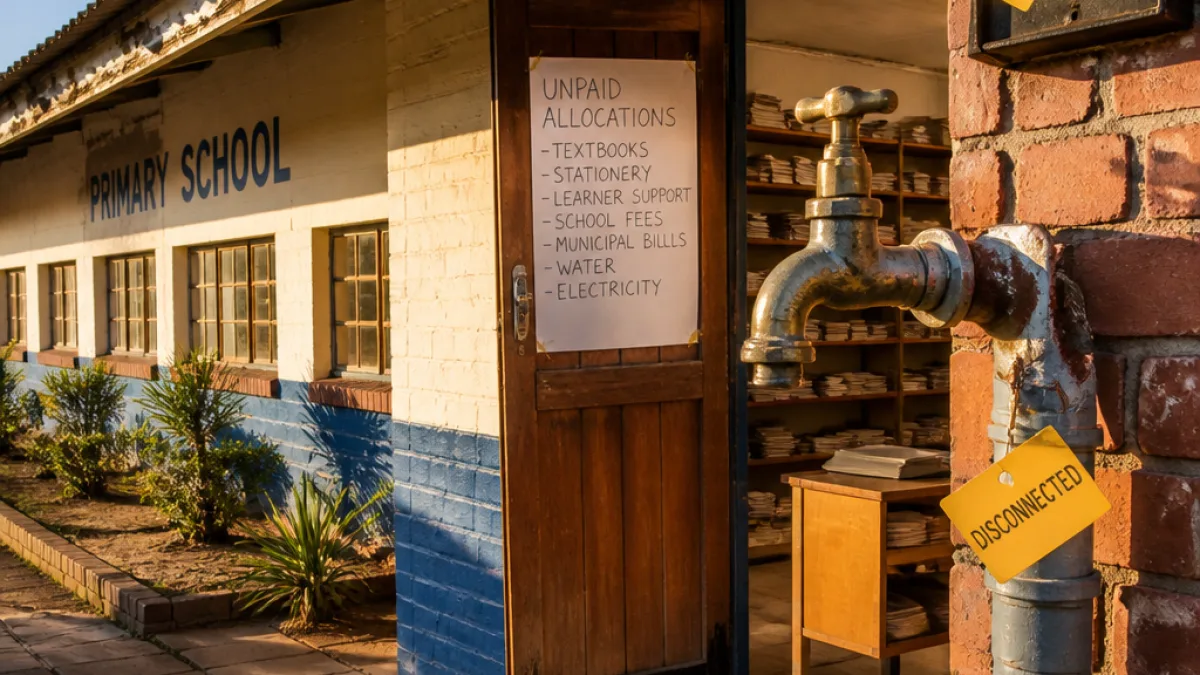
The Gauteng Department of Education has not paid allocations owed to 2,202 schools, amounting to almost R1 billion, according to reporting that examined provincial school funding.
What is unpaid and who is affected
The unpaid allocations were intended to cover three core items: maintenance, municipal services and the purchase of textbooks. Schools across urban and township areas are among those listed as beneficiaries, but have been unable to access the funding that managers and governing bodies expected this financial year.
Principals and school governing bodies rely on these allocations to keep facilities safe, pay for electricity and water, and order learning materials for learners. Without the transfers, routine repairs, basic utilities and textbook replenishment are being delayed, school leaders said in the reporting.
Practical consequences at school level
School heads and parent representatives described a mix of immediate and looming problems: leaking roofs not being fixed before the rainy season, outstanding municipal accounts that could lead to disconnection, and shortages of workbooks in classrooms preparing for matric and other assessments.
- Maintenance: Planned repairs and preventive maintenance projects are on hold.
- Municipal services: Some schools risk accumulating arrears on electricity and water accounts.
- Textbooks: Orders for learner materials are delayed at a time when teaching needs are acute.
For many schools, these allocations are not a luxury but the difference between staying open and operating with significant constraints. School governing bodies often have limited capacity to fill funding gaps from fundraising or parent contributions, especially in economically constrained communities.
Funding shortfalls and accountability
Provincial education funding is complex. Allocations flow from the department to public schools for specific purposes, and delays in payment can stem from administrative bottlenecks, budget reallocation decisions, or compliance checks. The reporting highlighted the scale of the arrears across the province but did not detail the department’s explanation for the non-payment in each instance.
Parents and educators said they want clarity: clear timelines for payment, confirmation of the amount owed to each school, and a plan to prevent future interruptions. School governing bodies are expected to hold the department to account and demand a schedule for release of the funds.
How parents and schools can respond
School leaders should request itemised statements from the department showing the outstanding allocations and expected release dates. Governing bodies may consider:
- Requesting written confirmation of the amounts owed to the school.
- Escalating the matter through the district office and the provincial education oversight structures.
- Engaging parent associations to identify essential short-term measures while funds are pursued.
Parents concerned about the learning environment should raise questions at governing body meetings and seek transparency on how the school plans to prioritise any interim resources.
Broader context
Education funding and timely delivery of resources remain persistent issues across South African provinces. Delays in disbursing earmarked funds compound existing pressures on schools, particularly those serving poorer communities. The lack of textbooks and inadequate maintenance directly affects learning outcomes and safety.
Officials at provincial and district level are responsible for ensuring that allocations reach schools and that compliance processes do not unreasonably delay essential services. Civil society organisations and parent bodies regularly call for improved financial management and quicker resolution of arrears.
As the academic year progresses, learners and educators in Gauteng will be watching for swift action from the department to unblock these funds. Without tangible timelines and payments, many schools must continue juggling limited resources while preparing learners for assessments and keeping premises safe.
How this was reported: The figures and the scope of affected schools were set out in the reporting reviewed; this article summarises those findings for Gauteng readers and explains the likely operational impact on schools.











