
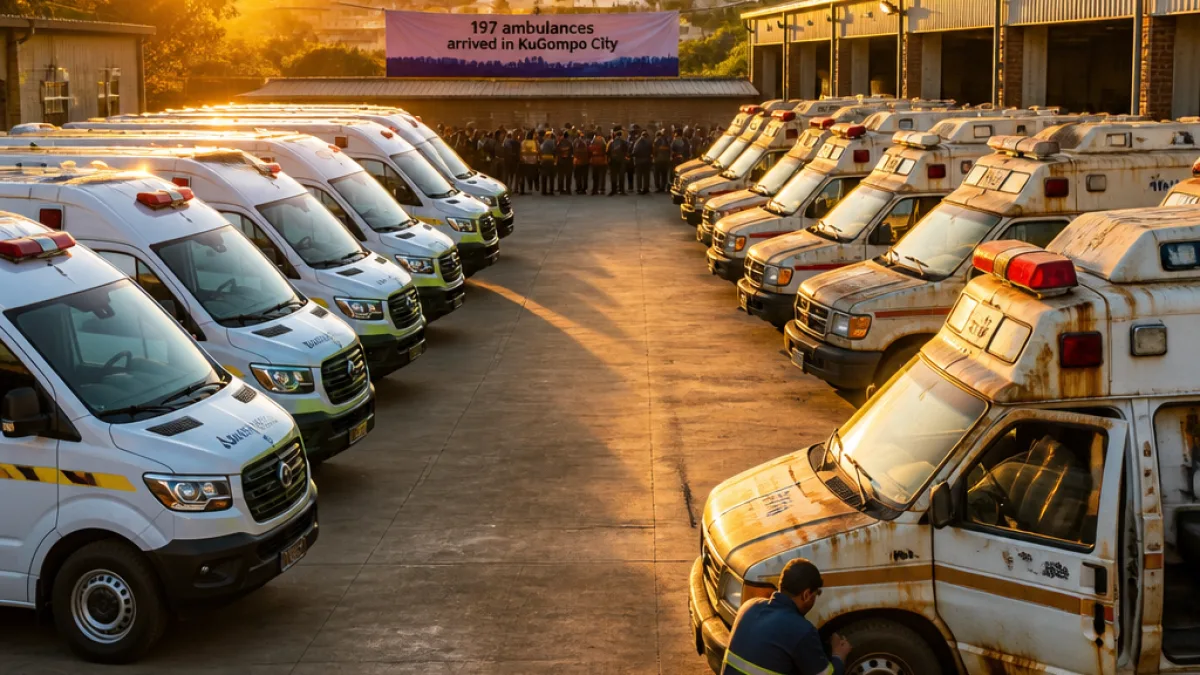
KuGompo City (formerly East London) — The Eastern Cape’s emergency medical services (EMS) remain under severe strain despite a provincial programme that will deliver 197 ambulances by the end of March next year, Health MEC Ntandokazi Capa has conceded.
Delivery will ease pressure but not fix the system
On Friday the province received a further 26 ambulances as part of a phased replacement of an ageing fleet. Capa said the vehicles represent an important step but fall well short of the scale needed to restore full operational capacity across the province.
“We know it’s not going to solve our issues, but it’s going to make a difference,” Capa said. “We know the challenges and we only want to appeal to our communities that they must really bear with us. We are trying our level best.”
In a written response to DA MPL Jane Cowley earlier this year, Capa provided figures showing the Eastern Cape currently has 353 ambulances in the fleet. Of these, 161 are grounded, leaving only 192 operational.
Numbers that reveal the gap
The MEC told reporters that for the province to operate at full capacity it would need around 600 ambulances. Even counting the new vehicles earmarked for delivery over the coming months, the province will remain well short of that benchmark.
| Metric | Number |
|---|---|
| Total ambulances in fleet | 353 |
| Grounded | 161 |
| Operational | 192 |
| Ambulances needed for full capacity (province estimate) | ~600 |
| Ambulances to be delivered by Mar next year | 197 |
Phased roll-out and remaining shortfalls
The current roll-out follows the recent deployment of 21 ambulances about two weeks earlier. The Eastern Cape Department of Health expects further deliveries in October and again in February and March next year. Capa described the incoming vehicles as replacements for ageing units rather than net additions that would reach an ideal target.
Frontline EMS workers, unions and patients continue to describe a service under severe pressure. Concerns include shortages of operational vehicles, ambulances being sent out without essential equipment, and long waits for emergency responses in some districts.
- 197 ambulances are expected by the end of March next year, but these are largely replacements.
- Current fleet: 353 vehicles, but only 192 are in service.
- Provincial estimate for full capacity: about 600 ambulances.
What this means for communities and services
The gulf between the ambulances available and those required for a fully functioning EMS means that response times are likely to remain inconsistent across the province. Areas that are already underserved face the prospect of continued delays, while emergency staff must manage equipment shortages and vehicle downtime.
Health management’s public appeal for patience recognises the human impact of the shortfall, but does not change the operational reality: replacing old vehicles will improve reliability only if accompanied by maintenance budgets, trained crews, and properly equipped ambulances.
Questions for accountability
The confirmation that many units are grounded raises questions about fleet management, maintenance funding and procurement timelines. Stakeholders — including unions and opposition legislators — will likely press the department to detail how the new ambulances will be distributed, what support will go towards upkeep, and what interim measures will reduce risk to patients.
For now, the provincial health department frames the incoming vehicles as a necessary but incomplete step. The broader challenge for the Eastern Cape remains substantial: converting a partial fleet renewal into reliable, equitable emergency care for communities across the province.
Reporting from KuGompo City. Further updates expected as the department confirms delivery schedules and deployment plans.












