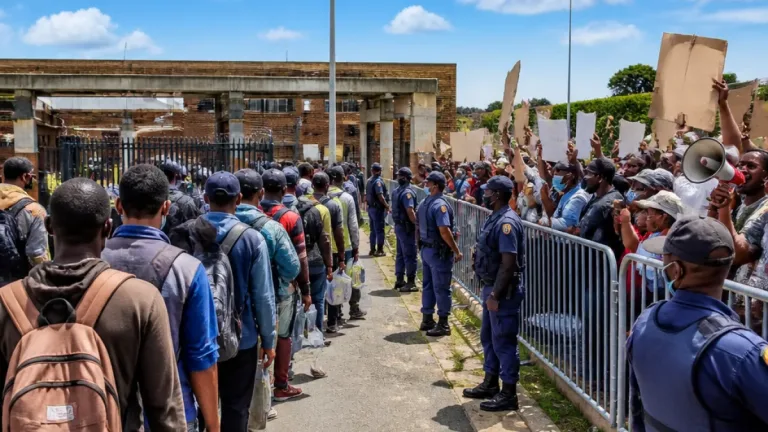
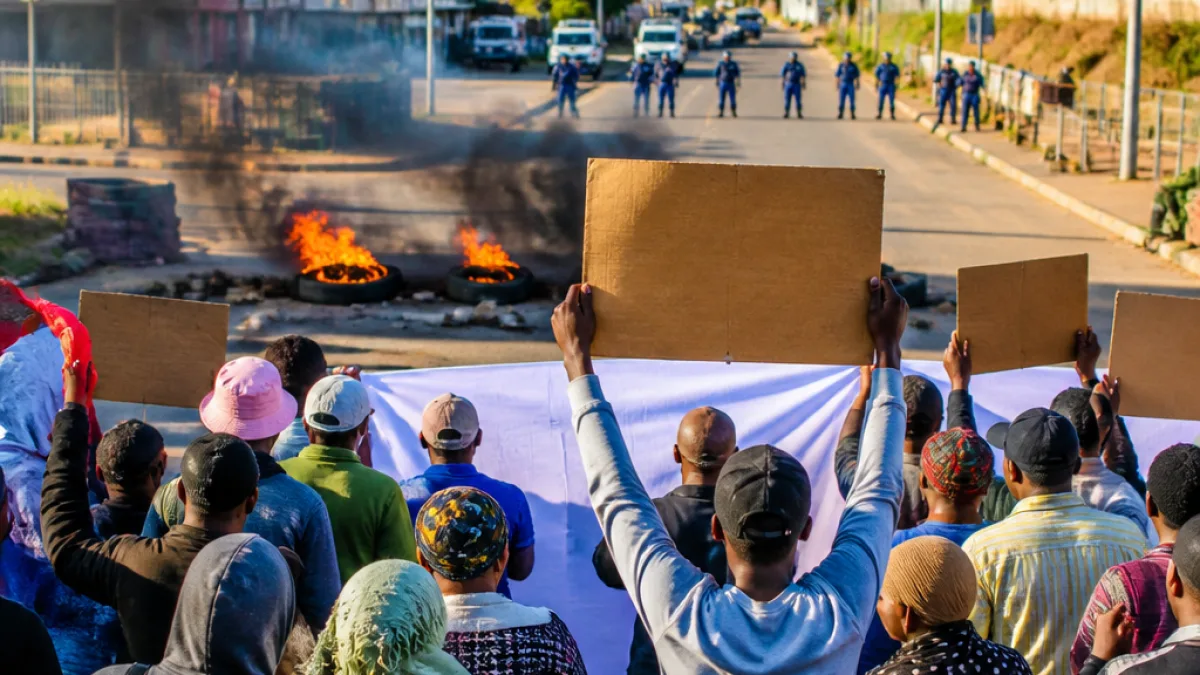
eNgcobo town in the Eastern Cape remained paralysed on Friday for a fourth consecutive day as residents continued a shutdown that has closed schools, halted business activity and disrupted traffic along the R61. The protest targets the municipal manager of the Dr AB Xuma Local Municipality, whom demonstrators accuse of corruption, nepotism and poor service delivery.
Demands centred on municipal leadership
Protesters are demanding the removal of Municipal Manager Khathutshelo Mulaudzi, saying his four-year tenure has failed to address basic service delivery needs. The action, coordinated by civic structures, entered its fourth day with local leaders insisting they will continue until their demands are met.
"The fight started last year and nothing happened. Now it’s 2026 and we are still saying the same thing. We decided it was best to close down the town, the businesses and the municipality. As we speak, we are on day four of the lockdown, and there is nothing happening business-wise in the municipality."
— Gcobani Nkwele, chairperson of Ngcobo Yethu Civic Organisation
Nkwele told reporters the decision to shut the town was taken with the support of local business owners, who attended meetings and backed the action despite its economic cost. He acknowledged the harm the shutdown is inflicting on the local economy but said residents felt they had exhausted other channels.
Premier orders probe, sets one-month deadline
In response to the unrest, Premier Oscar Mabuyane instructed the Eastern Cape Cooperative Governance and Traditional Affairs (CoGTA) MEC to investigate the allegations against municipal management. The provincial government has given itself a one-month timeframe to compile investigation reports into the issues fuelling the protests and shutdowns in eNgcobo.
The Premier’s intervention signals the seriousness of the matter for the province, where persistent municipal failures have been an ongoing political and administrative challenge. The instruction for an expedited inquiry aims to identify whether administrative or governance failures at the Dr AB Xuma Local Municipality require corrective action or escalation.
Local impacts and wider context
Residents closed schools and businesses and disrupted traffic along the R61, a key regional route. While no protest activity was reported on Friday afternoon, tensions remained high with residents maintaining that the municipal manager must be removed.
The shutdown in eNgcobo echoes wider concerns across the province about failing municipalities. Earlier this year, national and provincial actors have increased scrutiny of poorly performing municipal administrations, and the Democratic Alliance announced intentions to pursue criminal charges in relation to the worst-performing municipalities. The eNgcobo action adds to that mounting pressure on local government leadership.
- Duration: Four days of shutdown entering Friday.
- Main demand: Removal of Municipal Manager Khathutshelo Mulaudzi.
- Provincial response: Premier ordered CoGTA MEC to investigate with reports due in one month.
What residents say and what comes next
Community leaders say they held meetings with businesses, which supported the shutdown despite the economic pain. They argue that sustained action is necessary after what they describe as an unaddressed dispute dating back to the previous year.
The next steps hinge on the provincial inquiry and the municipality’s response. If the investigation finds governance failures or maladministration, the province could recommend a range of interventions, from administrative oversight to possible disciplinary or legal measures against officials. For residents, the immediate priority remains continuity of service delivery and visible corrective action.
| Day | Event |
|---|---|
| Day 1 | Residents began shutdown, schools and businesses closed |
| Day 2–3 | Shutdown continued, traffic disrupted on the R61 |
| Day 4 | Provincial government ordered investigation; tensions remain |
The municipal manager and Dr AB Xuma Local Municipality had not provided comment in reports at the time of publication. The province’s findings, due within a month, will be closely watched by community leaders and political stakeholders who view this as part of a broader contest over the management of local government in the Eastern Cape.