
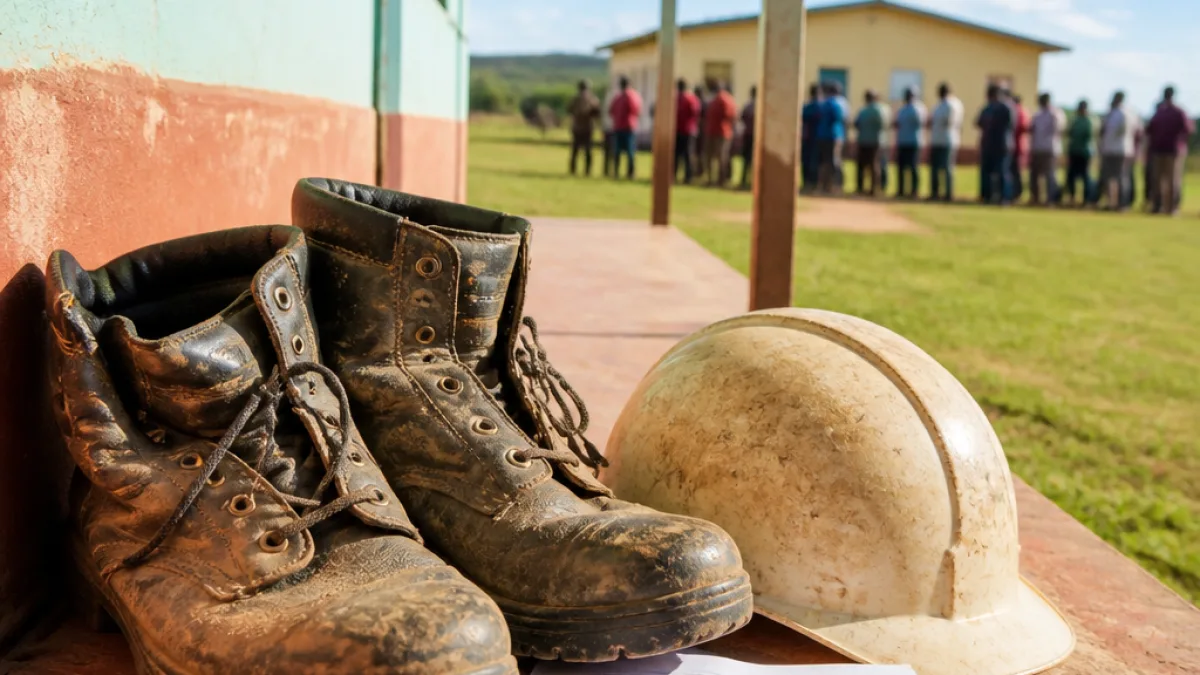
Bongani Mgwali left Sikhobeni village in Mthatha aged 26 to work in the mines, expecting steady income to support his family. After 15 years underground, deteriorating health forced him home about six years ago. He says headaches and dizzy spells began while he was still working and he was later released for medical reasons.
Now 46, Mgwali struggles to stand for long periods and to provide for his family. He says he received some money when he left the mines but was told the remainder went to a provident fund contribution and that he has never received the balance.
“I cannot work now. I started developing these terrible bouts of headaches while still in the mines and would get dizzy and sometimes fall,” he said. “My health has deteriorated to such a point that I cannot stand on my legs for too long. As if that was not enough, though they gave me some of my money, I was told the rest had gone towards my provident fund contribution. To this day, I have never received a cent of that money.”
Mgwali’s story is one of many prompting renewed calls to trace former mineworkers and their families. Premier Oscar Mabuyane recently told a gathering that through the provincial rollout of Project Thubalethu the Eastern Cape had seen payments totalling R1.897bn disbursed to more than 24,200 former mineworkers, widows and dependants.
But the province is also part of a larger national shortfall. Mabuyane said about R10bn in compensation and benefits remains unclaimed by more than one million former mineworkers and their families across South Africa. An estimated 370,000 former mineworkers live in the Eastern Cape, giving the province one of the largest concentrations of potential beneficiaries.
Why many beneficiaries remain out of reach
Authorities and community leaders point to several practical barriers that prevent people like Mgwali from claiming what may be due to them: poor records, migration, limited awareness of entitlement processes and the long latency of occupational illnesses such as silicosis and tuberculosis. Premier Mabuyane appealed to traditional leaders to help trace eligible former mineworkers and their families, saying many remain unaware of their rights to compensation.
The Department of Mineral Resources and Energy and implementing agencies have been running targeted outreach under Project Thubalethu, which seeks to identify and pay former workers, widows and dependants who qualify for compensation related to occupational diseases, injuries and other mine‑related benefits.
Practical steps for potential claimants
Former mineworkers or dependants who believe they may be eligible should consider the following actions as an initial step towards claiming benefits:
- Contact local traditional leaders or municipal offices for information about Project Thubalethu outreach clinics.
- Gather any employment records, pay slips, medical reports or identity documents to help verify service and entitlement.
- Attend provincial or mobile claims clinics when they are announced; officials sometimes visit rural areas.
Community organisations and some legal aid clinics can provide assistance to navigate paperwork and make submissions on behalf of claimants.
| Metric | Figure |
|---|---|
| Payments in Eastern Cape (Project Thubalethu) | R1.897bn |
| Beneficiaries paid in Eastern Cape | 24,200+ |
| Estimated unclaimed nationally | R10bn |
| Estimated former mineworkers in Eastern Cape | 370,000 |
The scale of the unclaimed amounts has prompted concern among civil society groups and unions, which have in the past accused employers and intermediaries of failing to ensure adequate record‑keeping and of obstructing claims. The long delay between exposure and disease onset complicates matters: many people develop illnesses years after leaving the mines.
Health experts note that occupational lung diseases such as silicosis increase susceptibility to tuberculosis — a significant issue in mining communities. Compensation schemes aim to address both past economic loss and the medical consequences of exposure, but they depend on claimants being traced and assisted through a complex process.
For rural communities in the Eastern Cape, the lack of accessible information and distance to urban‑based claims offices remain persistent barriers. Premier Mabuyane’s appeal to traditional leaders reflects a strategy of using local structures to bridge those gaps and to encourage residents to check whether they or family members are owed payments.
For men like Mgwali, the payments can mean the difference between subsistence and dignity. Whether the remaining R10bn is recovered for its rightful beneficiaries will depend on sustained outreach, clearer records and coordinated effort between government, traditional authorities and community organisations.
Officials running Project Thubalethu have not provided a timeline for when the national shortfall might be eliminated. In the meantime, former mineworkers and their families in the Eastern Cape are being urged to come forward or to ask traditional leaders and local officials for guidance on making claims.















