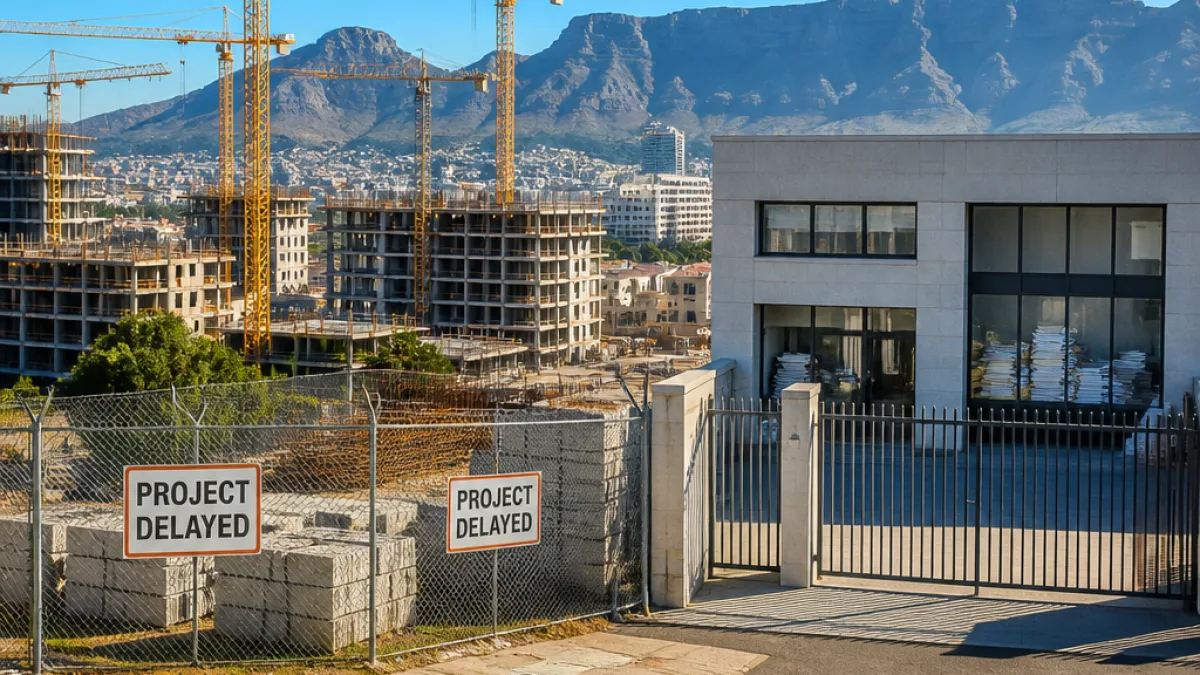
The Democratic Alliance (DA) in the Western Cape has said 2 640 social housing opportunities across the province are being delayed because of outstanding approvals, funding and agreements at the Social Housing Regulatory Authority (SHRA). A parliamentary reply obtained by the DA shows eight projects are affected, with approximately R1.12 billion in SHRA funding required to unlock construction.
Projects ready but unable to start
According to the information cited by the DA, projects in Woodstock, Mitchells Plain, Elsies River, Parow, Belhar, Mossel Bay, Plettenberg Bay and the Salt River Market development are among those awaiting SHRA action. The Salt River Market project is said to have received approval but remains stalled because its Consolidated Capital Grant agreement has not been signed.
The DA’s provincial infrastructure spokesperson, Dirk Wessels, called on the national regulator to remove the blockages so projects that are ready to proceed can begin construction and supply affordable homes to residents.
“It is unacceptable that 2 640 social housing opportunities are being held back by administrative and funding blockages at a national entity,” Wessels said.
Wessels told the party’s caucus that capable government should remove obstacles to delivery rather than allowing bureaucracy to keep people waiting.
Funding context and intergovernmental tensions
The DA also pointed to broader funding pressures it says are hampering housing delivery. The party rejected claims that the provincial department had forfeited funds to the value of R821 million, arguing instead that reductions to national housing grants — totalling R825 million for the 2023/24 and 2024/25 financial years — have reduced the availability of resources and increased pressure on projects already facing approval delays.
Those figures frame the dispute as an intergovernmental one: the province maintains it has projects in the pipeline that could deliver homes if national approvals and funding were in place, while the DA accuses SHRA of creating administrative bottlenecks.
- Number of stalled units: 2 640
- Number of projects affected: 8
- Estimated SHRA funding required: R1.12 billion
At the time of publication, SHRA had not issued a public response to the DA’s statement. The parliamentary reply referenced by the DA forms the basis of the party’s claim; the reply itself reportedly details the projects and the approvals outstanding.
Local impact and timelines
Delays to these projects have immediate implications for households on waiting lists for affordable housing, construction sector employment opportunities and municipal planning. Social housing developments typically combine rental units aimed at lower-income households with subsidy support and require multiple approvals, including funding agreements, land use permissions and grant contracts.
The DA has urged SHRA to expedite outstanding grant agreements and related approvals for projects that are construction-ready. It argues that signing the Consolidated Capital Grant and clearing administrative hurdles would enable work to begin and relieve pressure on the province’s housing backlog.
| Item | Figure |
|---|---|
| Stalled social housing units | 2 640 |
| Projects affected | 8 |
| Estimated SHRA funding needed | R1.12 billion |
For residents in areas such as Mitchells Plain and Woodstock, stalled projects mean continued pressure on rental markets and municipal housing lists. For municipalities, delays can complicate integrated development plans and the sequencing of services such as water, sanitation and roads that accompany housing projects.
What happens next
The DA says it will continue to press national authorities to remove the bottlenecks. If SHRA signs outstanding grant agreements and releases funding, proponents of the affected projects would be able to move to construction planning and procurement phases.
Until then, the dispute illustrates the fragile balance between national grant administration and provincial delivery capability — a dynamic that often shapes how quickly new housing reaches those who need it most.
Requests for comment were made to SHRA and the national Department of Human Settlements at the time the DA released its statement; no formal reply had been published alongside the parliamentary reply referenced by the DA.