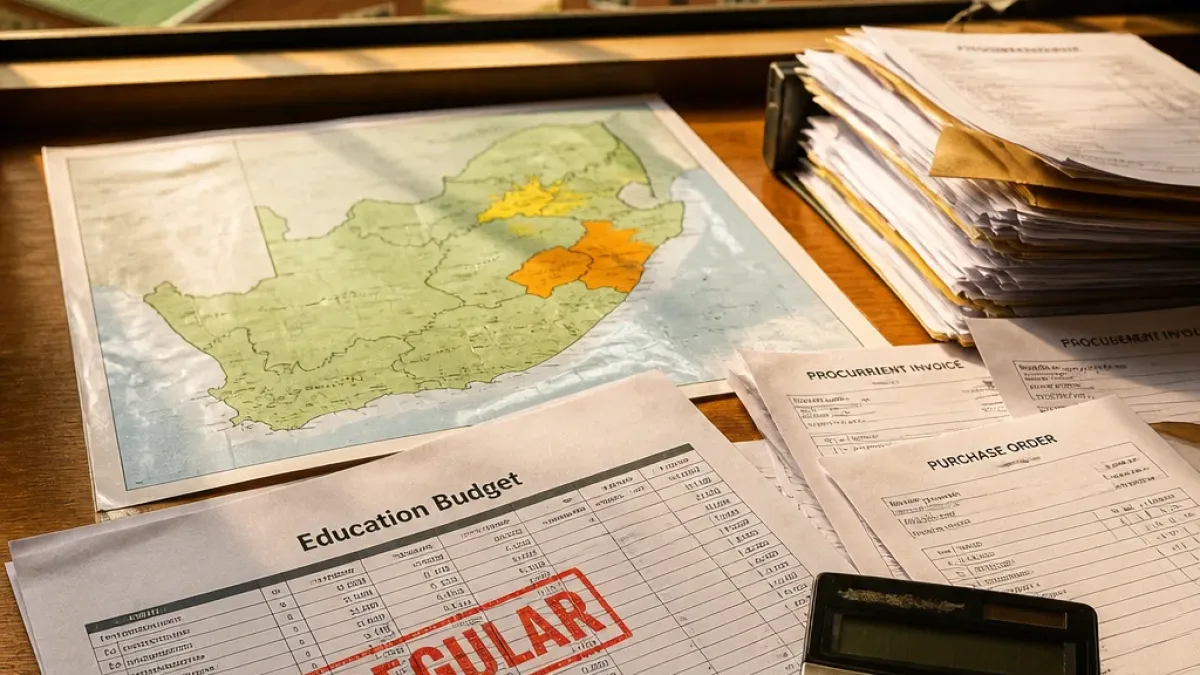
The Auditor‑General has reported R20.7 billion in irregular expenditure across the nine provincial education departments for the financial year ending in March, with the Gauteng Department of Education identified as the single largest contributor to the total, according to News24 reporting.
Scope and audit outcomes
The provincial departments together manage a combined budget of R340.3 billion. Of the nine departments, Mpumalanga and North West received qualified audit opinions. The remaining seven departments received unqualified opinions but with findings that the Auditor‑General recorded, the report said.
These audit results underline persistent governance and financial‑management weaknesses across the schooling system. Irregular expenditure is money spent in contravention of procurement rules, or without proper authorisation or documentation — issues that directly reduce funds available for learning resources and school-level services.
What the numbers mean for classrooms
When provincial departments incur irregular expenditure, funds that should reach schools or learner support programmes are effectively diminished. While an unqualified audit opinion indicates that financial statements present a fair view, findings still point to areas where controls are weak. Qualified opinions in Mpumalanga and North West signal material misstatements or inadequacies in compliance that the Auditor‑General judged significant enough to limit certainty about the accounts.
- R20.7bn — total irregular expenditure across nine provincial education departments.
- R340.3bn — combined budget managed by the provincial education departments.
- 2 — provinces with qualified audit opinions: Mpumalanga and North West.
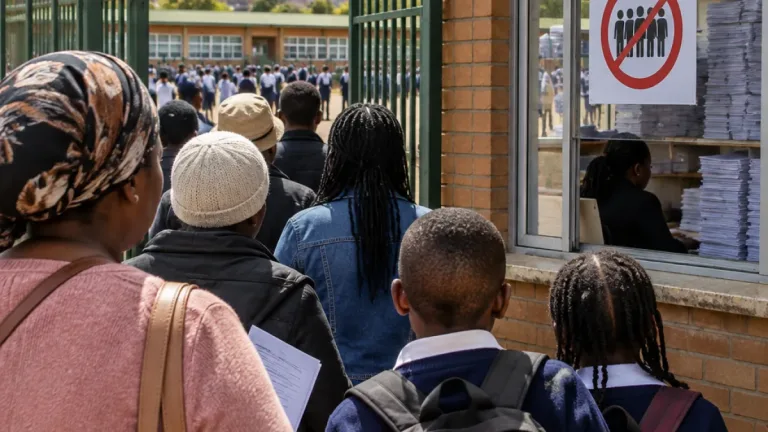
The immediate consequence is twofold: reduced resources for schools, and the diversion of administrative capacity away from teaching and learning toward corrective financial management. For learners and teachers, this often translates into delays in receiving textbooks and learner materials, disruptions to planned maintenance of school facilities, and postponed support programmes.
Accountability and follow‑up
Provincial education departments must produce remedial action plans to address the Auditor‑General’s findings. National oversight bodies, including the National Treasury and the education department at national level, typically engage with provinces to monitor implementation of corrective measures. The Auditor‑General’s disclosures will also be considered by portfolio committees in Parliament and by provincial legislatures when scrutinising departmental performance.
Good financial management is a precondition for improving educational outcomes. The scale of irregular expenditure highlighted by the Auditor‑General raises questions about procurement practices, contract management, and internal control systems across several provinces. Restoring robust, transparent systems is necessary to ensure that the bulk of education funding reaches classrooms and that learners benefit from planned programmes.
Parents, school governing bodies and educators have a stake in how provinces respond. Strengthened oversight by school governing bodies, clearer procurement rules at district level, and faster implementation of audit recommendations can reduce risks that funding intended for learners is lost to irregular processes.
As the provinces present their responses and remedial plans, close monitoring will be required to ensure that corrective steps are implemented and that irregular expenditure is reduced in the year ahead. For learners and teachers, the priority must be that provincial administrative action results in more predictable and effective delivery of resources to schools.
| Indicator | Figure |
|---|---|
| Total provincial education budget (combined) | R340.3 billion |
| Irregular expenditure reported | R20.7 billion |
| Provinces with qualified opinions | Mpumalanga, North West |
Further parliamentary and provincial oversight hearings are expected to probe the causes of the irregular spending and to hold departments accountable for ensuring that budgets are used to improve conditions in schools rather than being consumed by avoidable financial losses.