
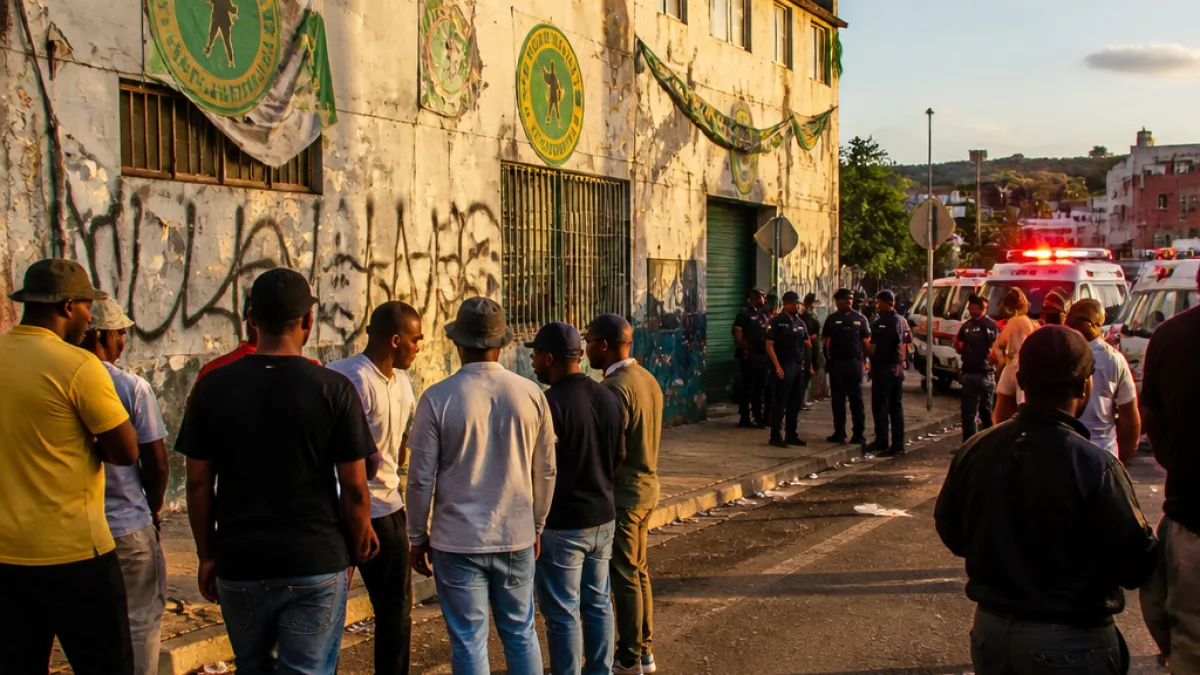
Durban — A University of KwaZulu‑Natal political analyst has warned that rising hostility within the uMkhonto weSizwe (MK) Party could degenerate into deadly clashes before the municipal elections in November, with the eThekwini metro singled out as a potential flashpoint.
Roots of the rift
Zakhele Ndlovu, an academic and political analyst, described the internal dynamic as an "old members versus new members" struggle that has deepened since the party’s formation. He told the Mail & Guardian that the recruitment and placement of recent arrivals into senior roles — many from the ANC and some via the EFF — have generated resentment among founding and long‑standing members.
“The MK Party has become notorious for parachuting new members into leadership positions and this has created tension and resentment from those who joined the party upon its formation,”
Ndlovu said that a large proportion of the party’s senior leadership joined only after the 2024 national election, a fact he argued has exacerbated feelings of marginalisation among earlier members. With the MK Party appearing poised to vie for control in eThekwini, competition for council seats and leadership roles is sharpening.
Local stakes: why eThekwini matters
eThekwini is KwaZulu‑Natal’s only metropolitan municipality and carries significant administrative and financial responsibilities. Control of the metro would provide access to municipal appointments and resources — incentives that analysts say intensify internal party contests.
Ndlovu warned that those who miss out on nominations or positions may be driven to extremes as they view politics as a route to employment and income. He said this dynamic mirrors broader economic grievances that affect many in the party’s rank and file.
Complaints from prominent backers
The analyst’s remarks came after public complaints from Ayanda Dlamini, a Durban traditional healer and one of the MK Party’s notable funders during its lead‑up to the 2024 election. Dlamini has accused the party of favouring defectors from other parties and sidelining what he calls core MK Party members. According to reporting, he said he would refuse a junior council position if nominated, saying it would be an insult given his financial contributions.
What the warning means for voters and the metro
Although Ndlovu framed his comments as a prediction of possible deadly skirmishes, he linked the risk to internal competition over nominations and access to municipal posts. The escalation of political violence would carry consequences for public safety, governance and the delivery of municipal services in communities across eThekwini.
- Key concern: resentment over leadership appointments of recent recruits
- Geographical focus: eThekwini metro identified as the likely hotspot
- Potential impact: threats to candidate safety, increased factionalism, and pressure on municipal operations
Context and caution
Political parties in KwaZulu‑Natal have previously experienced factional battles and episodes of violence, particularly around candidate selection processes. Ndlovu’s warning amplifies those concerns ahead of a municipal election in which control of metros can be decisive for local power and patronage networks.
The warning does not constitute evidence of planned attacks; rather, it is an assessment by an academic observer based on recruitment patterns, reported grievances and the party’s apparent trajectory in the province.
| Issue | Reported effect |
|---|---|
| Parachuting of new leaders | Resentment among long‑standing members |
| Competition for eThekwini positions | Increased factionalism and risk of violent confrontations |
| Economic pressures on rank and file | Politics viewed as employment route, heightening stakes |
What readers should watch for
In the run‑up to November, close attention should be paid to:
- How the MK Party manages its candidate selection and nomination processes;
- Any public statements from the party addressing the allegations of preferential treatment for recent defectors;
- Reports from eThekwini communities about threats, intimidation or violence linked to political competition.
Local stakeholders — party officials, community leaders and law enforcement — will need to take preventive steps to protect candidates and voters if tensions escalate. For now, the warning from Ndlovu serves as an alert to the potential for instability as political prizefighting intensifies in one of KwaZulu‑Natal’s most strategic municipalities.












