
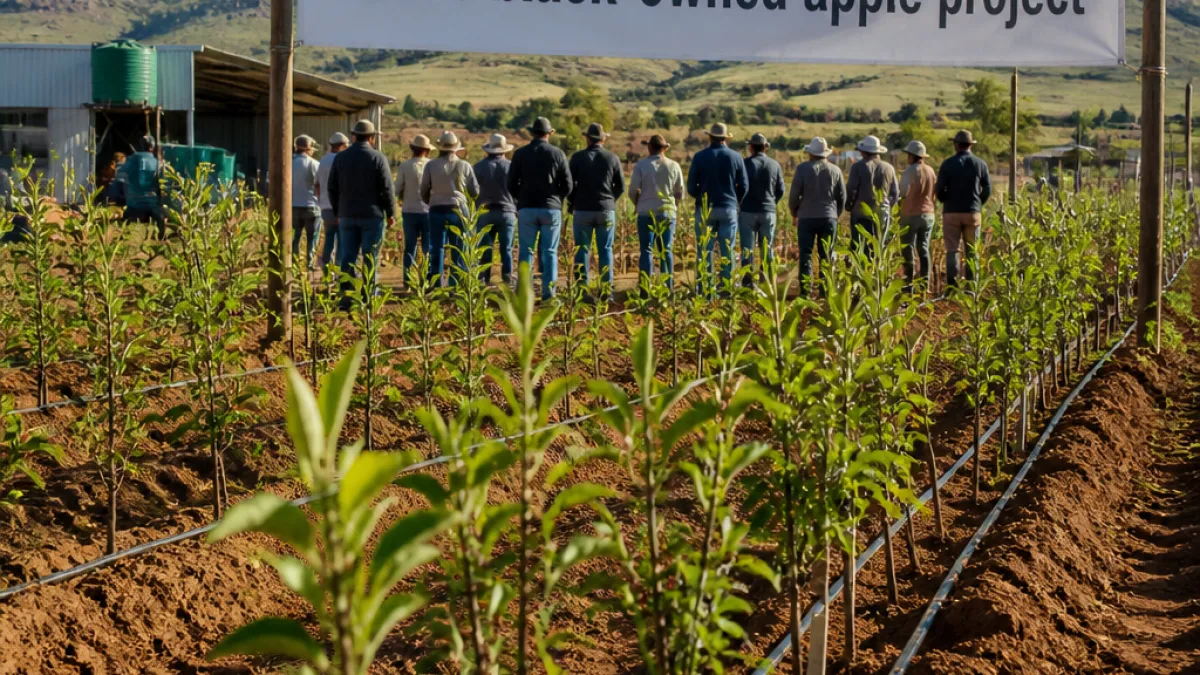
Remmoho Investments in Agriculture, a fully black‑owned enterprise, is positioning an apple operation on Stead Farm, 14 kilometres outside Bethlehem, as a major new player in South Africa’s pome-fruit sector. Backed by local and commercial expertise, the project’s leaders say the Free State can add significant production capacity because of available land and water resources.
Project background and partners
The enterprise is led by chairman Pitso Sekhoto and has Remmoho’s chief executive, Phuti Kubushi, in operational roles. Stead Farm’s owner, Kobus du Preez, is a shareholder and a hands-on farming partner. The group held a farmers’ day on 30 April 2026 at the farm to showcase its plans and attract interest from the sector.
Organisers framed the project as part of a transformation agenda for the Thabo Mofutsanyana district, with an emphasis on job creation and commercial viability. Remmoho describes the venture as combining new cultivars and high-density planting methods with close technical collaboration between shareholders.
Jobs, scale and the water argument
Project leaders set an early target of creating up to 500 jobs as plantings expand. They argue the Free State has comparative advantages on two fronts: land availability and reliable water supplies sourced from Lesotho, which the venture sees as underpinning large-scale irrigation potential.
“At present the Western Cape might be the primary producer of apples in SA, but they are struggling with adequate land and water... Our environment and climate allow us to add to what they are doing in the Western Cape because we have plenty of land and water from Lesotho,”
That comment, made by Remmoho’s CEO during the farm event, summarises the strategic case: rather than displacing other regions, the Free State operation intends to supplement national output and reduce geographic concentration of apple production.
Technical approach and market focus
According to the farmers’ day briefing, the operation will deploy modern orchard techniques, including high-density planting and newer cultivars. Those methods aim to increase yields per hectare and bring production timelines closer to commercial returns. Close technical collaboration between Stead Farm’s management and Remmoho is central to the roll-out.
- Ownership: 100% black‑owned commercial farming company (Remmoho Investments in Agriculture)
- Location: Stead Farm, 14 km outside Bethlehem
- Employment target: up to 500 jobs
- Key inputs: high‑density planting, new cultivars, irrigation supported by Lesotho water
Local significance and risks
For the Free State, a successful apple hub would diversify an agricultural economy that is often associated with grains and livestock, and could create seasonal and permanent work in a district with limited industrial employment. The project also offers a blueprint for black ownership and participation in commercial horticulture, a sector historically dominated by other provinces.
Risks include climatic variability, market access, and the capital intensity of establishing orchards with modern irrigation and trellising systems. The venture’s reliance on Lesotho water makes future water agreements and cross‑border water security relevant factors for long‑term viability.
| Aspect | Detail |
|---|---|
| Ownership | 100% black‑owned Remmoho Investments in Agriculture |
| Location | Stead Farm, 14 km outside Bethlehem |
| Jobs (target) | Up to 500 |
| Tech | High‑density planting, new cultivars, irrigated orchards |
What this means for growers and communities
Growers in the province may see the initiative as a signal that higher‑value horticulture is practicable outside traditional Western Cape areas. For local communities, the programme promises income generation across planting, pruning, packing and logistics. The farmers’ day drew a substantial crowd despite poor weather, indicating sector interest in technical exchange and investment opportunities.
Project leaders framed the farm as an example of how private investment and on‑farm expertise can work together to open new markets and create livelihoods. Observers will now watch how quickly plantings translate into production and whether the targeted job numbers materialise.
As the venture proceeds, key milestones to monitor will include expansion of planted hectares, attainment of first commercial harvests, labour absorption rates and final market agreements for fruit off‑take. Those outcomes will determine whether the Free State can legitimately claim a growing share of the country’s apple industry.














