
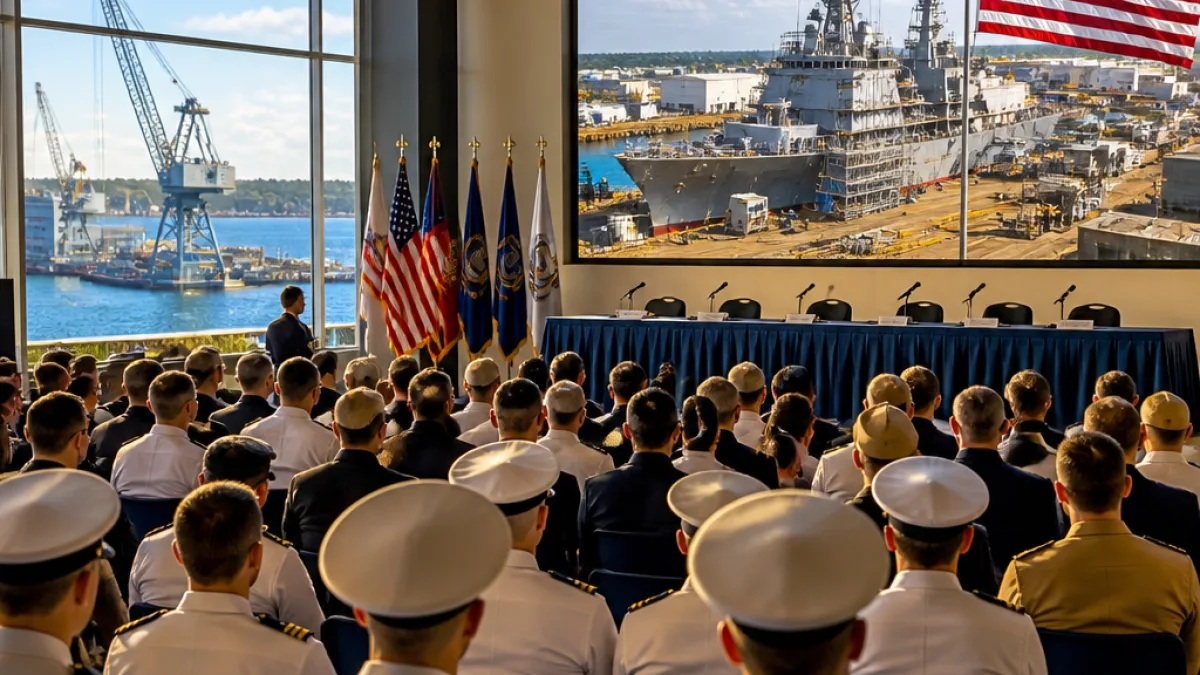
VALLEJO — More than 150 sailors, naval officers, and federal, state and local officials gathered Thursday at the California State University Maritime Academy to press lawmakers to revive U.S. shipbuilding capacity and shore up jobs in the maritime sector.
Legislation aims to cut red tape, boost domestic shipyards
U.S. Rep. John Garamendi, D-Fairfield, who represents Solano County and helped convene the summit, described the maritime industry as “critical” and warned that current shipbuilding levels threaten the country’s ability to sustain operations in the Pacific. The meeting focused on the Shipbuilding and Harbor Infrastructure for Prosperity and Security for America Act, known as the SHIPS Act, a bipartisan proposal introduced by Garamendi and other members of Congress.
Panelists at the Vallejo event said the bill would streamline permitting and regulatory barriers, create incentives for domestic ship construction and funnel port fees into a maritime security trust fund. It also would establish a Maritime Security Board with a presidentially appointed advisor, according to speakers.
Speakers tie shipbuilding to national security and local economies
Stephen Carmel, administrator of the U.S. Maritime Administration, told the audience that “national security rests on economic security,” and warned that the U.S. fleet and industrial base have eroded over decades.
“The maritime industry is critical,” said U.S. Rep. John Garamendi. “Study after study shows the United States military cannot sustain action in the Pacific. It can’t do it.”
At the summit, panelists offered numbers to illustrate the decline: in the 1970s the country built about 20 ships per year, today the average is closer to three. In the post-World War II era, the United States had more than 1,000 commercial ships flying the American flag; today fewer than 200 do. Panelists also noted the U.S. operates fewer than 300 battleships, and that there are only a handful of domestic facilities capable of large-scale ship construction.
- Reduce regulatory hurdles for shipbuilding projects
- Redirect port fees into a maritime security trust fund
- Create incentives to build ships in U.S. shipyards and form a Maritime Security Board
Local impact and industry stakes for Vallejo
Vallejo — home to Cal Maritime, a maritime workforce pipeline, and proximate to Bay Area ports — stands to feel the effects of any federal moves to expand domestic shipbuilding. Speakers at the summit emphasized the industry’s economic footprint: maritime activity nets more than $5 trillion for the U.S. economy and supports millions of jobs, figures cited by panelists during the meeting.
Organizers framed the SHIPS Act as a response to long-term declines in U.S. shipbuilding capacity and flagged potential benefits for regions with maritime infrastructure and trained labor forces. For Vallejo, that could mean increased demand for shipyard work, port-related services and maritime training programs.
Outlook and next steps
Supporters urged swift congressional action but acknowledged legislative hurdles ahead. The summit served both as a policy forum and a local reminder that federal decisions will shape employment opportunities and the maritime economy in Solano County. Officials said they will continue advocacy efforts in Washington while working with private-sector stakeholders and training institutions to prepare Vallejo’s workforce for potential growth.
As the SHIPS Act moves through the legislative process, Vallejo officials and maritime educators will be watching for concrete funding measures and regulatory changes that could translate into contracts for domestic yards and jobs for local residents.















