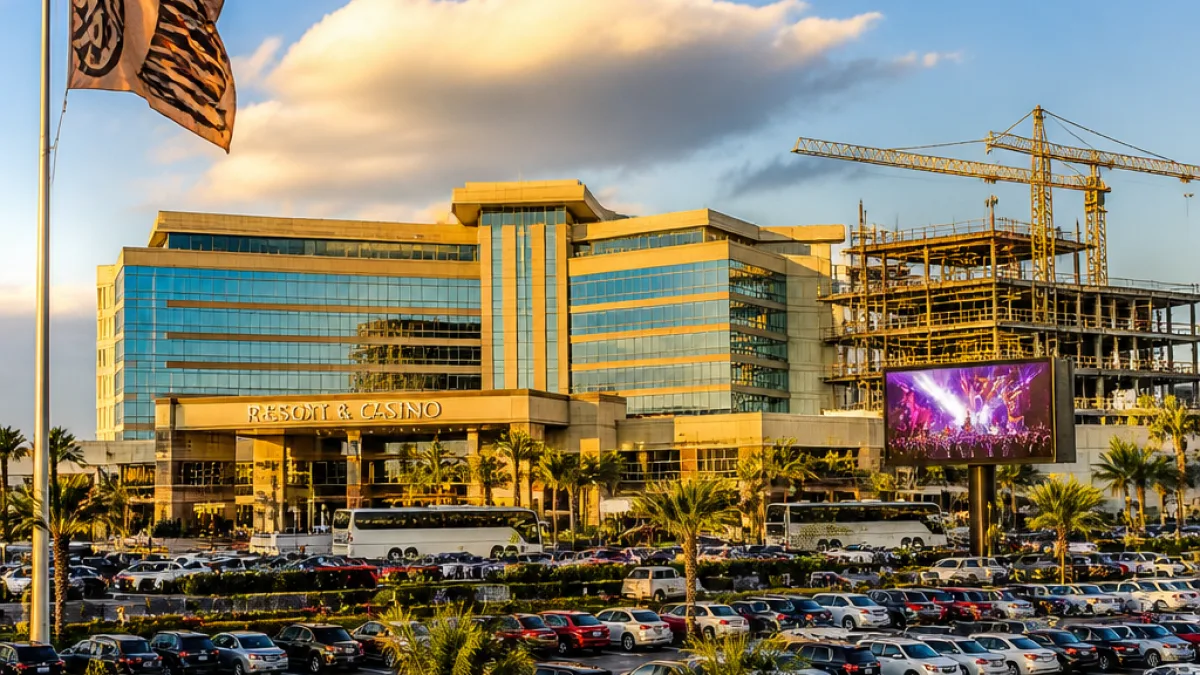
From bingo hall to regional powerhouse
The Yuhaaviatam of San Manuel Nation mark roughly four decades of gaming that began in the 1980s when tribal leaders opened a bingo hall on their reservation in San Bernardino County. That modest enterprise evolved into Yaamava’ Resort & Casino, a major regional destination notable for a vast gaming floor and a high-profile entertainment calendar.
The property has grown beyond its modest beginnings into a landmark for Southland gaming, featuring headline musical acts and a wide array of amenities that now draw visitors from across Southern California. The resort’s reputation is widely recognized in the region for its advertising presence and concert lineup, which has included national and international performers.
Identity, history and economic survival
The tribal community, historically known as the San Manuel Band of Mission Indians, has recently reclaimed its ancestral name, Yuhaaviatam (pronounced yu-HAH-vee-ah-tahm), which the tribe says means “people of the pines.” The Native community traces its homeland to the San Bernardino mountains, valleys and high desert. The tribe’s modern history includes forced displacement and a federal reservation established in 1891.
Vice Chairman Johnny Hernandez Jr., speaking about the tribe’s early decades on the reservation, described a period of economic struggle and marginal land that posed long-term challenges for community survival.
“We were put up against the hillside there with non-fertile land and really in an area where people probably didn’t think that we were going to survive,”
That historical hardship helps explain the tribe’s determination to pursue enterprises capable of funding community needs. Initial efforts such as orchards and small-scale sales were insufficient, prompting the tribe to explore gaming as a revenue source — a move consistent with many tribes nationwide during the same period.
Scale and regional implications
Yaamava’ is now widely known for its expansive gaming operations and entertainment offerings. Public descriptions of the property note it as having one of the largest slot-machine counts in the western United States. The resort has positioned itself as both an economic engine for the tribe and a prominent entertainment venue serving millions in the broader region.
- Origins: Bingo hall opened in the 1980s on the San Manuel reservation.
- Branding: The tribe has reintroduced its ancestral name, Yuhaaviatam.
- Resort scale: Yaamava’ Resort & Casino is described as having one of the largest gaming floors in the West, with thousands of slot machines.
| Item | Detail |
|---|---|
| Period of origin | 1980s (bingo hall) |
| Anniversary | About 40 years of gaming |
| Gaming capacity | Reportedly more than 7,500 slot machines |
For Costa Mesa residents, the story matters for several reasons. Orange County’s hospitality and entertainment sectors compete for visitors, workers and discretionary spending across the region. A major tribal resort in the Inland Empire that attracts concerts and large crowds can shift regional tourism flows, labor demand and venue competition. In addition, the economic model demonstrated by the Yuhaaviatam — using gaming and entertainment revenues to fund tribal services — reflects broader trends affecting municipal planning, regional transit, and workforce availability across Southern California.
While the tribe’s rise reflects a specific community response to historical dispossession and economic marginality, the resort’s footprint is now part of the larger Southern California entertainment and gaming ecosystem that Costa Mesa officials, business leaders and residents monitor when considering tourism strategies, job opportunities and cultural partnerships.
As the Yuhaaviatam celebrate decades of gaming and a reclaimed name that ties the community to ancestral lands, the development underscores how tribal enterprises have reshaped regional economics and public life — a dynamic that influences cities across the county, including Costa Mesa.