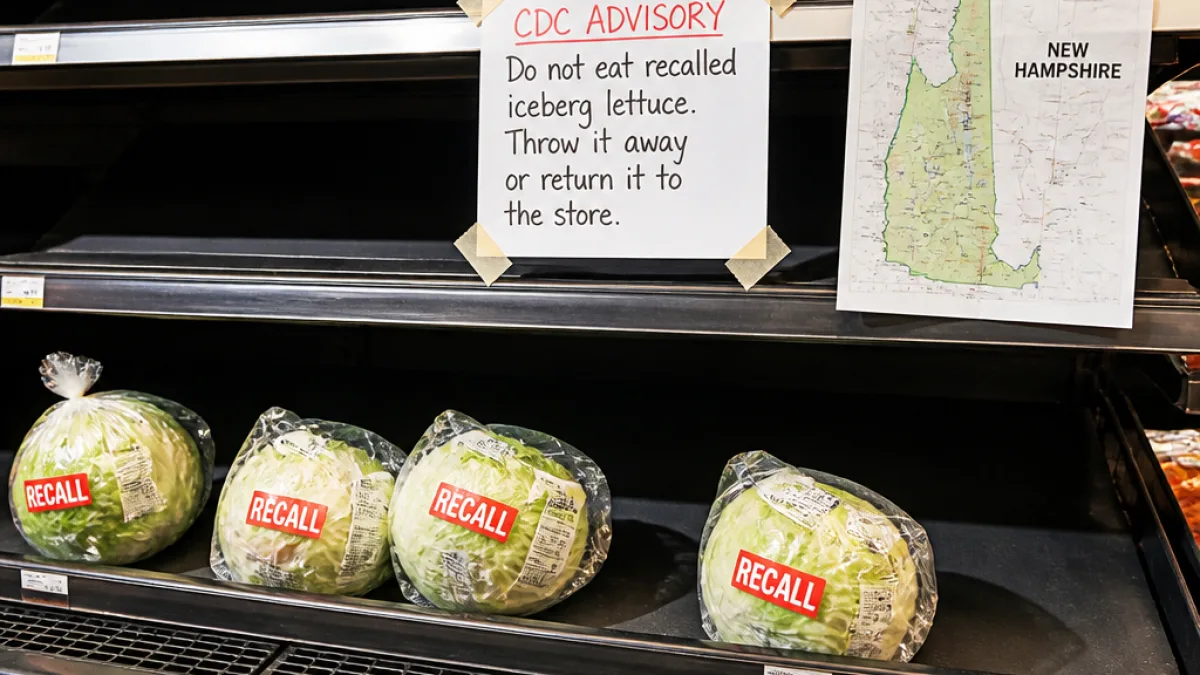
CONCORD, N.H. — New Hampshire health officials announced Tuesday that the state has recorded 79 confirmed cases of cyclosporiasis after identifying 10 additional infections since last week. The New Hampshire Department of Health and Human Services (DHHS) said investigators are examining links between the state cases and a recent recall of iceberg lettuce from Taylor Farms de México.
State and federal investigation
The recall, announced July 17, involves iceberg lettuce sourced from central Mexico that was distributed in at least 27 states. The Centers for Disease Control and Prevention has been coordinating with state public health agencies on a multistate probe into Cyclospora cayetanensis infections potentially connected to the recalled product.
As of Aug. 5, the CDC reported the following national totals related to the outbreak:
| Metric | Number |
|---|---|
| Confirmed cases | 6,358 |
| Hospitalizations | 278 |
| Deaths | 2 |
| States reporting cases | 15 |
What is cyclosporiasis?
Cyclosporiasis is an intestinal infection caused by the parasite Cyclospora cayetanensis. DHHS reminded residents that symptoms typically develop about a week after exposure but can appear sooner or later in some people. Common signs include:
- Watery diarrhea
- Stomach cramps and bloating
- Nausea and loss of appetite
- Weight loss and fatigue
Health officials emphasized that while many cases are not severe, some patients require hospitalization, particularly those who become dehydrated or have underlying health problems.
Testing and treatment guidance
DHHS and the CDC advised clinicians to consider Cyclospora testing for patients with prolonged or severe gastrointestinal illness, noting that routine stool tests may not detect the parasite. The CDC recommends that patients ask specifically for testing for Cyclospora when symptoms and history suggest possible exposure.
Treatment typically involves prescribed antimicrobial therapy; health departments urged symptomatic residents to contact a health care provider promptly rather than self-treating. Officials also advised patients to tell providers about any recent consumption of leafy greens or other fresh produce that may be linked to the outbreak.
Advice for consumers
The CDC and state health officials are urging people not to eat the recalled Taylor Farms iceberg lettuce. Consumers who have the product should throw it away or return it to the place of purchase for a refund.
- Do not eat the recalled iceberg lettuce.
- Discard or return the product to the retailer.
- If you become ill, contact your health care provider and ask about Cyclospora testing.
Because the recalled lettuce was sold in multiple package types and distributed to both consumers and food service operations, officials warned that restaurants and retailers should check their inventories and remove any affected products.
Ongoing updates
State public health investigators continue to interview patients and trace product distribution to identify common points of exposure. DHHS said case counts are preliminary and may change as additional laboratory results and patient interviews are completed.
Residents seeking more information can consult the DHHS website or the CDC’s outbreak advisory. Health officials asked anyone who believes they may have purchased or consumed the recalled lettuce and who is now symptomatic to contact their health department or medical provider for guidance.
No new details on specific source contamination have been released publicly; investigators continue to gather epidemiologic and laboratory evidence to determine the outbreak’s full scope and origin.
This report will be updated as state and federal agencies release new information.