
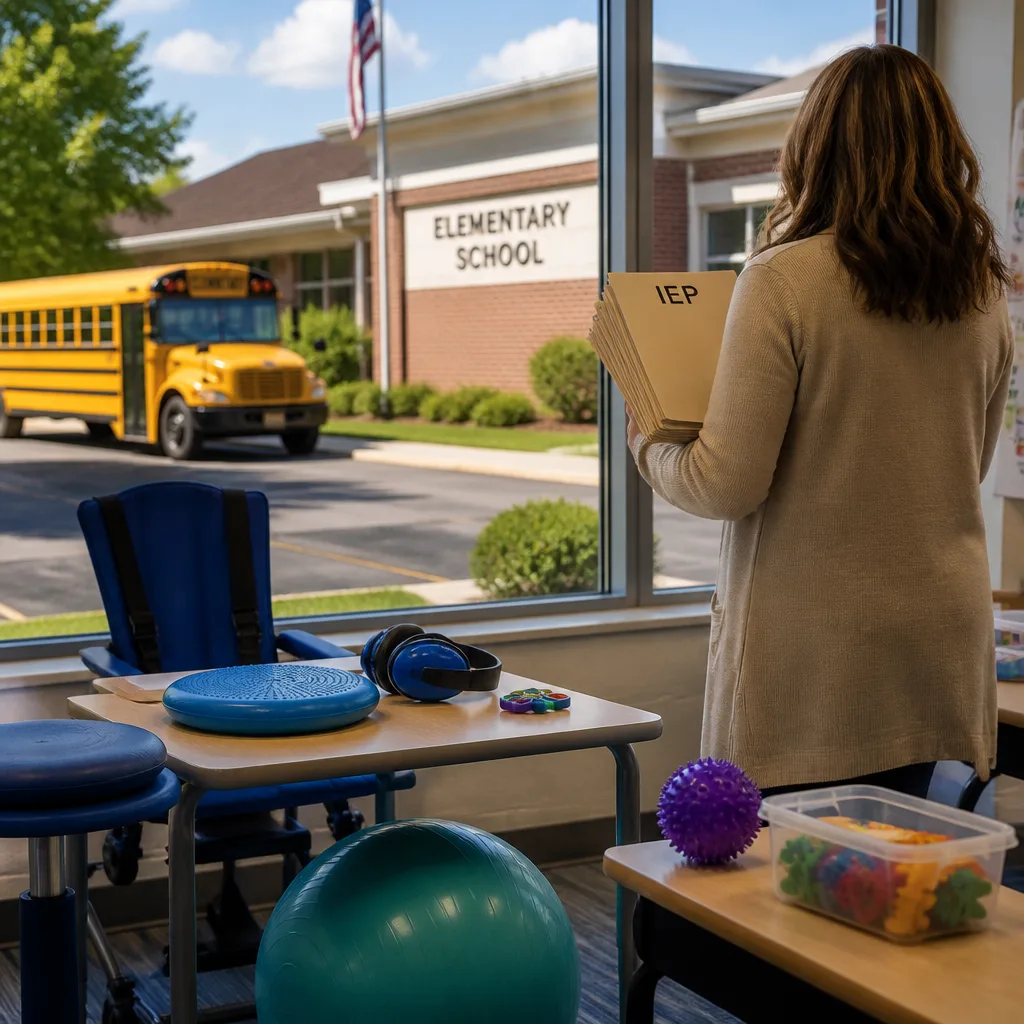
Jonathan Elementary School in Marshall County, Kentucky, filled a lingering special education vacancy for a combined fourth- and fifth-grade position after a search that continued into July — a local example of a national staffing shortfall that the U.S. Department of Education identified in 2025.
National data, local impact
The Education Department’s 2025 report found that 45% of schools nationwide had vacancies in special education and 78% reported difficulty hiring for those roles. Locally, the vacancy extended late into the summer before the district hired Brian Flowers, who previously worked in private practice with children with disabilities.
Flowers said the transition to the classroom was sudden. He described stepping into the role after not actively seeking school employment and emphasized his interest in supporting students both in small groups and within general education settings.
"It happened very fast; I was not looking for the job. But God made it very clear that this was exactly what was supposed to happen."
Why special education positions are hard to fill
The Department of Education attributes the shortage to several structural and economic factors. Among those cited in the report are uncertain pensions and comparatively low salaries for educators. The rise of private practices providing one-on-one services to children with disabilities also appears to be drawing qualified professionals away from public school positions, according to Flowers.
Flowers noted differences between private and school settings, saying private-sector work often involves one-on-one interactions. In the classroom, he said, he will work both with students in special education programs and with general education students, allowing for more group-based learning and greater exposure to multiple adults in the school environment.
Classroom implications and teacher perspectives
Educators and administrators say extended vacancies in special education can strain schools’ capacity to meet individualized education program (IEP) requirements and can increase caseloads for remaining staff. While the local hire fills a critical need at Jonathan Elementary, the broader data suggest many districts nationwide continue to face recruitment and retention problems.
Flowers pointed to additional nonfinancial factors that may dissuade prospective teachers from entering special education, including the job’s demands and lingering stigma about disabilities. He said these perceptions could deter students in teacher-preparation programs from pursuing special education credentials.
- Location: Jonathan Elementary School, Marshall County, Kentucky
- New hire: Brian Flowers, former private practitioner
- Grades affected: Fourth and fifth
| Metric | 2025 Education Department report |
|---|---|
| Schools with special education vacancies | 45% |
| Schools reporting difficulty hiring special education staff | 78% |
What this hire means and what's next
For Jonathan Elementary, hiring Flowers ends a search that extended into summer months and brings classroom experience with children with disabilities into the school setting. His move from private practice to public education illustrates one of the dynamics cited by the Education Department: alternatives outside the public school system that may attract trained specialists.
State and district officials nationwide are weighing responses that range from incentives and adjustments to compensation to pipeline strategies aimed at recruiting more teachers into special education certification programs. The local hire at Jonathan Elementary demonstrates how individual districts are adapting in real time, but the Education Department’s figures indicate that similar vacancies remain widespread.
As districts continue planning for the school year, administrators will need to balance immediate staffing needs with longer-term strategies to stabilize special education staffing and ensure that students with disabilities receive mandated supports.














