
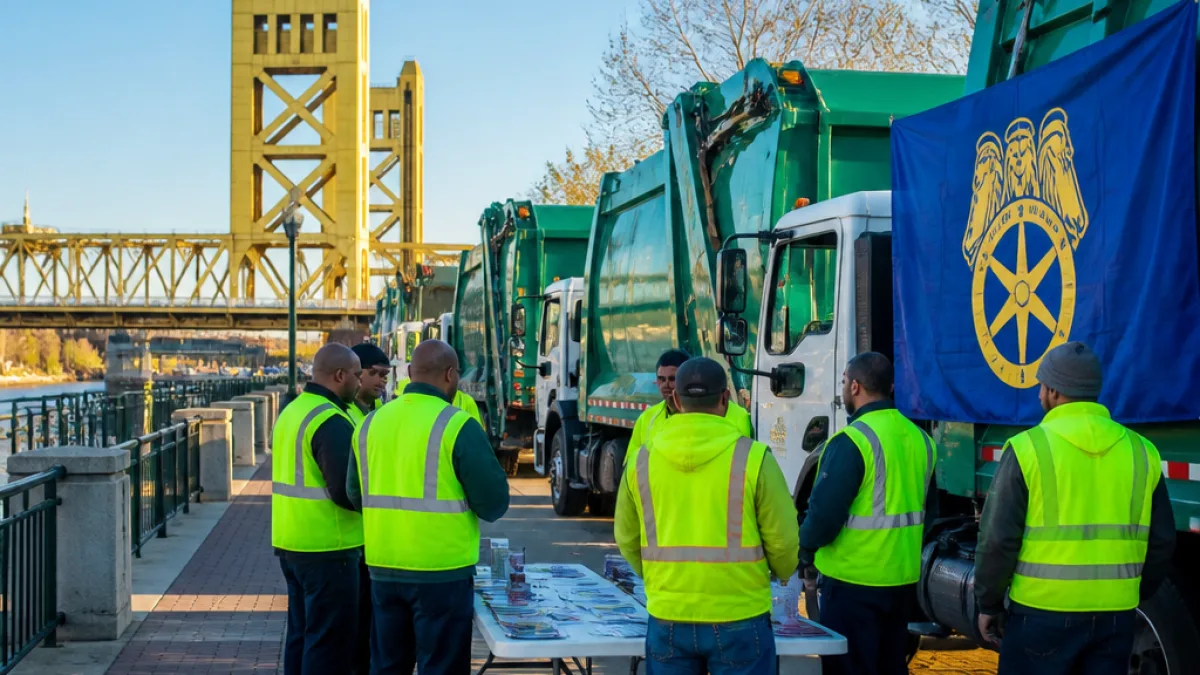
SACRAMENTO — sixty-nine drivers, mechanics and welders who provide waste collection across the city voted to join Teamsters Local 150, marking the first time waste workers in Sacramento have unionized with the local, officials announced Tuesday.
Victory after contested campaign
The narrow but decisive organizing effort followed what union leaders described as an aggressive anti-union campaign by Waste Management. In a statement provided to the press, one worker who participated in the drive described company tactics that included mandatory meetings and hiring outside consultants to dissuade employees.
"This win was a long time coming, and it did not come easy. Waste Management went to desperate lengths trying to stop us from unionizing — everything from forcing us to attend captive audience meetings to spending huge amounts of money on union busters," said Francisco Covarrubias, a seven-year Waste Management worker and new Teamster.
Teamsters Local 150 credited the new members with pushing through the effort despite the opposition. "This is Local 150's first waste organizing win in the City of Sacramento," said Dale Wentz, the local's secretary-treasurer.
What the union win means locally
The newly organized group is immediately positioned to begin bargaining for a first contract with Waste Management. Union representatives say their priorities will include workplace respect and stronger protections for employees; the company has not publicly detailed its response to the vote.
Local 150 already represents a broad range of workers in Northern California, and the union highlighted that it represents roughly 9,000 members across the region, with a concentration in Sacramento. The local’s leaders framed the victory as a foothold for further organizing among waste and recycling workers in the city.
- Workers who voted: 69 drivers, mechanics and welders
- Union: Teamsters Local 150 (approx. 9,000 members regionally)
- Company: Waste Management, the largest solid waste and recycling firm in North America
| Item | Figure |
|---|---|
| Workers who joined | 69 |
| Local 150 membership (approx.) | 9,000 |
| Waste Management revenue (last year) | $25 billion |
Labor context and city impact
Waste collection is an essential municipal service, and organizing among front-line workers can shape labor costs, service arrangements and workplace standards in the years ahead. While the vote itself does not immediately change work rules or pay, it gives the newly certified bargaining unit legal standing to seek a contract that would set wages, benefits and workplace protections.
Union leaders described the result as a model for additional organizing drives at other waste collection operations in the city. Local 150 said it will use the Sacramento victory to expand its presence among waste workers elsewhere in the area.
Waste Management, which operates nationwide and generates significant annual revenue, has a long history of representing collection, hauling and recycling services for private and public clients. The company did not provide an on-the-record response to the union's announcement in statements released by Teamsters organizers.
For Sacramento residents, the immediate effects are likely to be administrative and contractual: the new members and their union will open negotiations with the company to seek a first collective-bargaining agreement. Those talks will determine staffing, safety protocols, compensation and other conditions that affect both workers and the delivery of city sanitation services.
As negotiations proceed, residents and local officials will be watching whether the outcome influences municipal contracting practices or service continuity. The union framed the vote as a workers’ response to what it described as a heavy-handed campaign by management, while Waste Management's public position was not included in the union announcement.
The Teamsters Union requested additional information and directed inquiries to its local communications contact. City officials did not immediately release a comment on how the unionization might affect municipal agreements or service oversight.
Negotiations and any resulting contract could take months. Meanwhile, the new members will be integrating into Local 150 and preparing for the bargaining process that follows certification.















