
Citywide attendance crisis pushes district, community groups into action
Pittsburgh Public Schools and neighborhood partners are intensifying efforts to address a surge in chronic absenteeism after district records showed 32% of students missed 18 or more days of school last year. Officials say the pattern is concentrated in specific schools and is closely tied to low academic performance in reading and math.
Community organizations and the district are deploying a range of strategies aimed at removing barriers to daily attendance, from practical support such as backpacks and transportation help to structural changes designed to increase students’ connection to school.
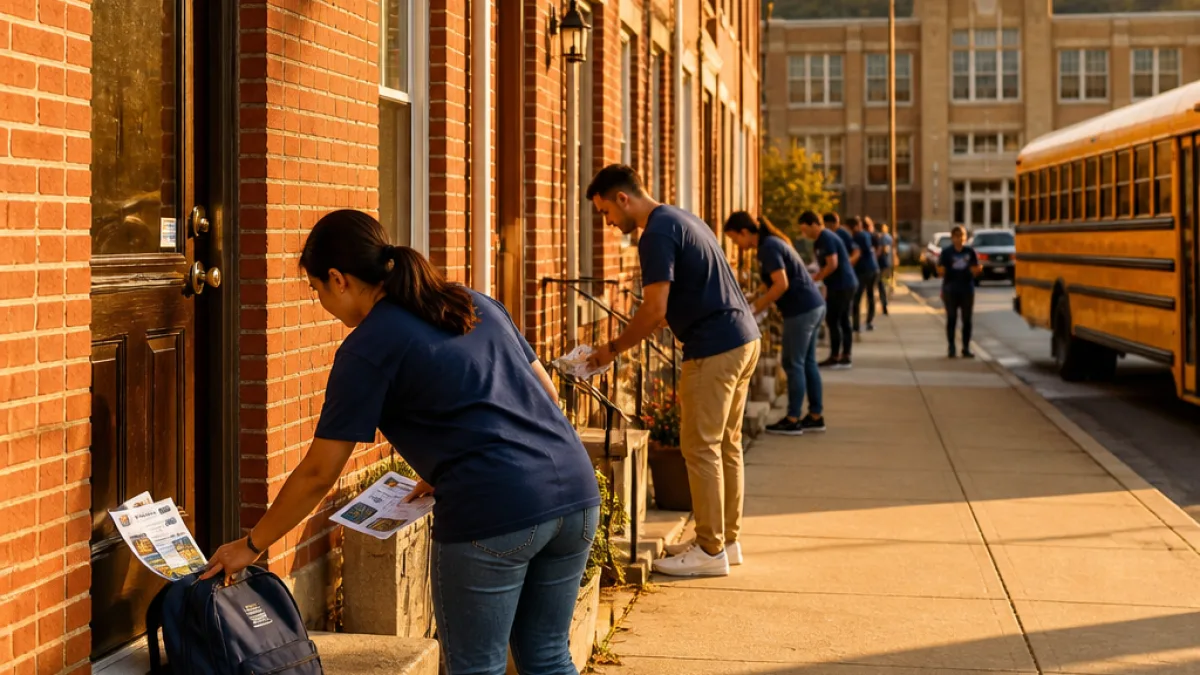
- Door‑to‑door outreach: Local group A+ Schools is visiting homes in Arlington to connect incoming kindergartners’ families with supplies and services.
- Wraparound services: Offers of help with transportation, food and clothing are being used to stabilize students’ ability to attend regularly.
- School culture changes: The district is piloting “house” systems in more buildings to foster belonging and daily engagement.
Leaders emphasized that the consequences of prolonged absences extend beyond missing class time. Schools with higher attendance rates tend to produce stronger academic results, while campuses with high chronic absenteeism frequently show some of the lowest math and reading scores in the state.
"If you are not in school, you cannot be successful as a learner, and our job as a school district is to improve outcomes for young people and attendance is an outcome," said Pittsburgh Public Schools Assistant Superintendent Dr. Melissa Pearlman.
The problem is especially acute in several city high schools. District data and local reporting indicate that institutions such as Westinghouse and Perry high schools have chronic absenteeism rates exceeding 50%, meaning more than half of students missed at least 18 days during the school year. Educators describe predictable downstream effects: missed instruction compounds gaps in foundational skills, which depress achievement benchmarks and graduation prospects.
Community partners step up ahead of new school year
With the school year approaching, groups like A+ Schools have prioritized front‑end engagement. Volunteers distributed backpacks filled with supplies to families of entering kindergartners and are conducting door knocks to identify immediate needs that could keep children home.
"Today is about bridging that gap, going and knocking on doors, letting folks know about what's available at the school to help them out," said James Fogarty with A+ Schools.
District officials described this outreach as part of a multi‑pronged response that blends community resources with in‑school changes. Among the innovations is adoption of a house model in an increasing number of schools — a system that organizes students into smaller, consistent groups intended to build mentoring opportunities and a sense of belonging.
| Metric | District figure |
|---|---|
| Students chronically absent (missed 18+ days) | 32% |
| Some high schools (e.g., Westinghouse, Perry) | >50% |
School leaders say reducing chronic absenteeism will require sustained investment and coordination across city agencies, social service providers and neighborhood schools. That includes addressing nonacademic problems — from food insecurity and unstable housing to access to reliable transportation — that keep children and families from consistent school attendance.
Experts and district staff also point to the importance of early intervention. Patterns of absence that begin in elementary grades often persist, limiting students’ opportunities to master basic literacy and numeracy. The district’s current strategy blends immediate problem solving with longer‑term culture changes intended to reengage students.
Still, community advocates caution that outreach and new models need measurable targets and transparency to track progress. Residents will be watching attendance and achievement data in the coming months to see whether the district’s combined approach produces measurable declines in chronic absenteeism and gains in classroom performance.
As the new school year approaches, district officials say they will continue to rely on partners in neighborhoods to help remove practical obstacles and to encourage families to make daily attendance a priority.















