
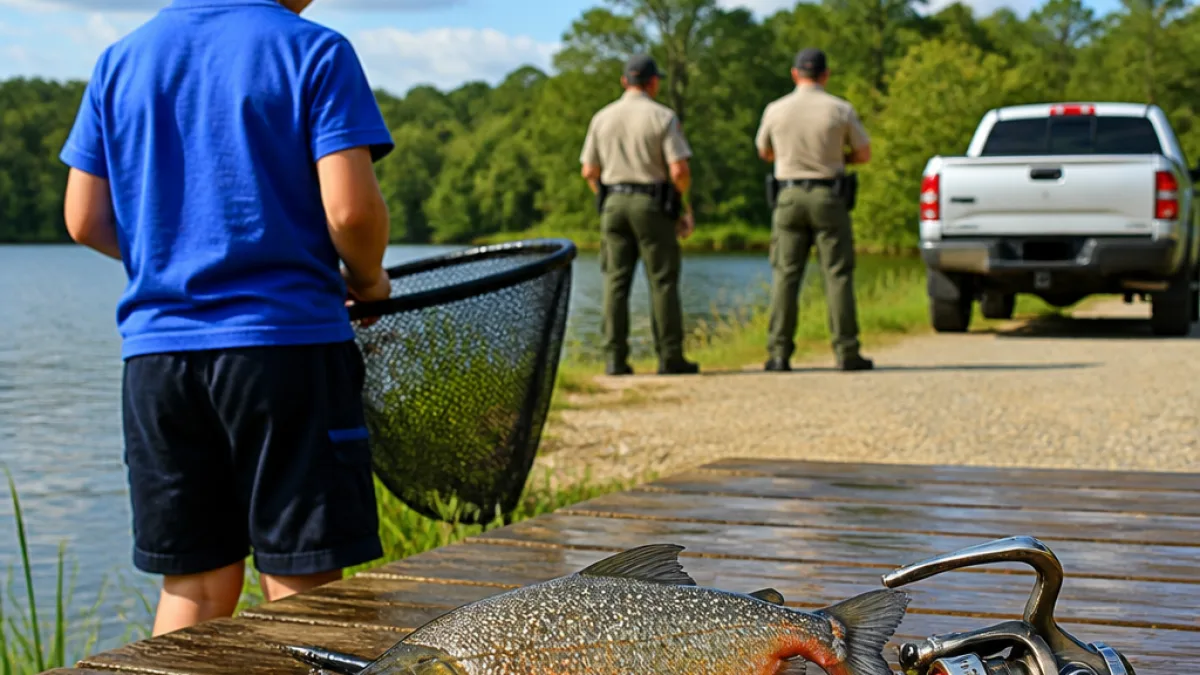
RIDLEY PARK — A weekend fishing trip turned extraordinary when an 8-year-old boy pulled a piranha from Ridley Park Lake, a catch Pennsylvania Fish and Boat Commission officials say was almost certainly the result of an unlawful pet release.
Unexpected catch raises alarms
Seamus Coffey, who was fishing with his father at the borough lake, reeled in what the family first thought might be a common freshwater species before realizing the fish did not belong in Pennsylvania waters. The specimen was later identified by commission staff as a type of piranha, a South American species not native to local lakes.
"Some of our folks have determined that this is certainly a species of piranha," said Mike Parker of the Pennsylvania Fish and Boat Commission.
Authorities say the most likely explanation is that the fish once belonged to a private owner who released it into the lake when it became too large or difficult to care for. Introducing nonnative animals into public waterways is illegal and can jeopardize local ecosystems.
How the rescue unfolded
The Coffeys, who have fished Ridley Park Lake for years, initially placed the fish back into the water. After considering potential harm to native species, they decided to humanely euthanize the piranha to prevent it from upsetting the lake’s balance or becoming prey for local predators.
Onlookers estimated the fish measured about 9.5 inches long and weighed roughly 2 pounds. The boy told reporters he recognized the fish from online videos and images, which helped the family and officials identify it quickly.
Officials: illegal releases are a recurring problem
Fish and Boat Commission staff said incidents like this occur when aquarium or exotic-pet owners release animals into ponds, lakes or streams instead of finding a proper home. When nonnative species are introduced, they can compete with, prey on or transmit disease to indigenous wildlife.
State officials did not indicate any planned penalties for the person who released the fish, but they reiterated that releasing aquarium animals into public waters violates state law and can carry consequences.
Practical guidance for residents
The commission urged anyone who keeps aquarium fish or other exotic animals to take responsible steps if they can no longer care for their pets. That includes contacting a local aquarium, pet-rescue group, or animal control agency for rehoming options rather than dumping animals in the wild.
- Report unusual or nonnative wildlife sightings to the Pennsylvania Fish and Boat Commission.
- Do not release aquarium animals into public waterways.
- Contact local animal-control or wildlife-rehabilitation organizations for rehoming help.
Local reaction and context
Residents at Ridley Park Lake expressed surprise at the find. For many, the lake is a familiar spot for family fishing outings and community recreation, making the discovery especially unexpected.
State officials said the bureau is monitoring the situation and assessing whether further steps — such as targeted surveys of the lake — are necessary to ensure no other nonnative animals have been introduced.
| Detail | Information |
|---|---|
| Location | Ridley Park Lake, Ridley Park, Delaware County |
| Species (identified) | Red-bellied piranha (identified by Fish and Boat Commission staff) |
| Approximate length | 9.5 inches |
| Approximate weight | 2 pounds |
| Disposition | Humanely euthanized by the anglers to prevent ecological harm |
Why nonnative fish are problematic
When species that evolved in other regions are placed into new environments, they can upset food webs and habitat dynamics. Some nonnative fish become invasive, reproducing rapidly and displacing native species. Others may carry parasites or diseases to which local species have no resistance.
Authorities encourage anglers and lake users to remain vigilant and report unusual catches. Quick identification and reporting can reduce the risk that nonnative species will establish populations and cause lasting ecological damage.
For residents with questions or to report a sighting, contact the Pennsylvania Fish and Boat Commission. Local environmental and animal-rescue organizations may also assist with rehoming aquarium pets and offering guidance to owners who can no longer care for exotic animals.
The Coffeys’ weekend story serves as a reminder that even a routine day on the water can become a conservation teachable moment. Officials said cooperation between anglers, the public and wildlife authorities is essential to protecting Pennsylvania’s lakes and streams from similar incidents.


















