
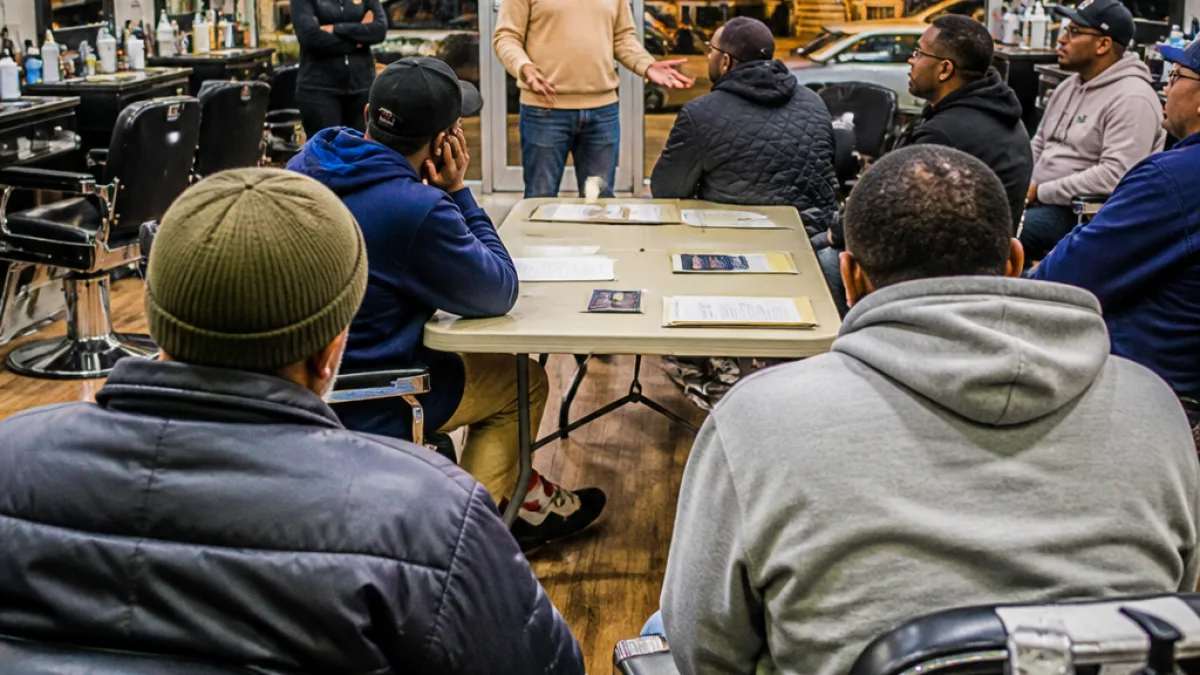
PHILADELPHIA — On a recent Friday night inside Philly Cuts, the low hum of clippers and the smell of hot towels framed what organizers described as an urgent political conversation: why some Black men moved away from voting for the Democratic ticket in 2024 and what that means for future elections in Pennsylvania.
Barbershop as political forum
Political strategist Khalil Thompson, co-founder of the group Win With Black Men, convened the discussion on Aug. 21, 2026, bringing together a cross-section of the community. Those present included local politicians, union leaders, lifelong residents, recent arrivals and a few high school students. The two-hour meeting mixed small talk about neighborhood life with pointed questions about priorities and party performance.
Thompson said his outreach grew out of the 2024 presidential result, when Democrat Kamala Harris lost to Republican Donald Trump, a shift that surprised many observers because Black men typically vote overwhelmingly Democratic. Thompson has traveled to communities nationwide to probe the causes of even small changes in that voting bloc.
“We know the shop is like our own country club that we come to, so we really just want to start having a conversation about what’s important to us in our community,”
The remark, offered during the conversation, underscored the cultural role barbershops play as civic spaces where political thinking is shaped outside formal campaign venues.
Why it matters for Philadelphia and Pennsylvania
Philadelphia is a Democratic stronghold, and it is also a critical component of statewide math for Democrats seeking victory in Pennsylvania. The city’s Black residents make up about 40% of the population, and party strategists say turnout and enthusiasm in Philadelphia are central to compensating for losses elsewhere in the state.
While the city is not considered competitive in this year’s midterm contests, the discussion at Philly Cuts reflected longer-term calculations. Even modest shifts among groups that have historically supported Democrats can be consequential in close statewide or national races.
- Organizer: Win With Black Men
- Location: Philly Cuts barbershop, Philadelphia
- Date of event: Aug. 21, 2026
- Participants: local elected officials, union leaders, residents, and students
Attendees raised a range of topics, from economic concerns and public safety to education and everyday life challenges facing middle-class Black men. The conversation format, which included food and multiple short speeches, aimed to surface specific grievances and priorities that might inform future outreach and policy proposals.
Organizing and outreach challenges
Thompson framed the effort not as an exercise in blame but as a listening tour to understand why some voters shifted in 2024. For Democrats, the task is twofold: identify policy failures or communication gaps that alienated voters, and translate local conversations into durable organizing that increases turnout and loyalty.
Local leaders in the room emphasized practical needs — jobs, reliable services, and neighborhood safety — while younger attendees pushed for broader conversations about representation and responsiveness. The range of ages and backgrounds at the shop highlighted internal diversity within a voting bloc often treated as monolithic.
Philadelphia campaign operatives and party officials have acknowledged that targeted, sustained engagement is necessary to maintain and grow support among Black voters. Events like the barbershop conversation aim to rebuild trust and ensure that party platforms and candidates address the day-to-day concerns people raised in community spaces.
| Item | Detail |
|---|---|
| Event organizer | Win With Black Men |
| Venue | Philly Cuts barbershop |
| Date | Aug. 21, 2026 |
For Philadelphia residents, the barbershop conversation served as a reminder that political allegiance is not automatic and that community-based listening can reveal why voters feel disconnected. How political organizations act on what they learn will shape whether the city’s electorate remains energized and aligned with the party that has long depended on its support.
As national campaigns begin to prepare for future presidential contests, the appeals and grievances voiced in places like Philly Cuts could influence strategy across Pennsylvania, underscoring the city’s continuing role as a political anchor in close statewide and national elections.

















