
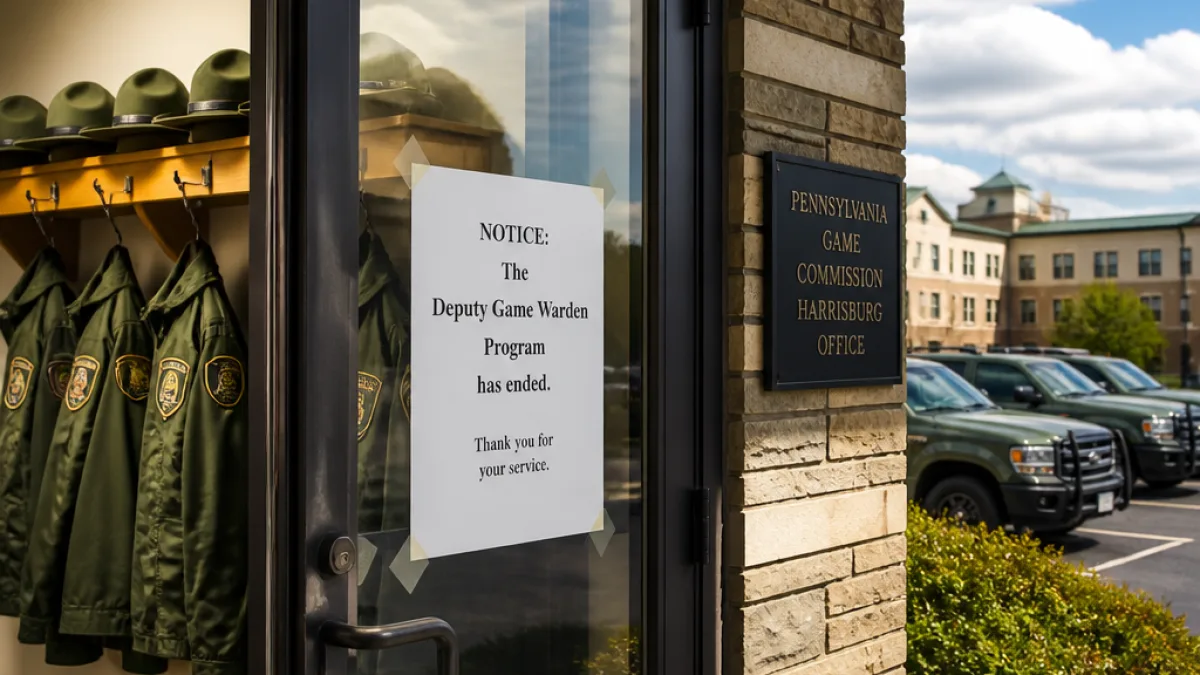
The Pennsylvania Game Commission has announced it is ending the long-running Deputy Game Warden program, a change that will significantly reduce the number of people who assist full-time wildlife wardens across the commonwealth.
Program ends after more than a century
First established in 1903, the deputy program historically supplemented the work of professional wardens with part-time and volunteer personnel who helped enforce hunting, fishing and trapping regulations, managed nuisance wildlife, and taught hunter safety. The commission said the decision to close the program was difficult and expressed appreciation to the volunteers who have served.
In a statement to deputies, the agency framed the move as part of an effort to focus on an "efficient and effective full-time, professional workforce," saying the change represents “a natural evolution.”
Numbers and immediate impacts
According to commission records and archived material, there are more than 140 deputy game wardens statewide and 155 full-time state game wardens. The elimination of the deputy program will therefore reduce the pool of people who carry out enforcement and outreach duties in the field by roughly half.
| Role | Count (approx.) | Typical compensation/equipment |
|---|---|---|
| Deputy game wardens | 140+ | Stipend of $100/day; about $10,000 in state-issued uniforms/equipment (archived site) |
| Full-time game wardens | 155 | Full-time, professional positions |
The commission has removed the deputy section from its website. Previously, deputies were required to accompany full-time wardens on ride-alongs, pass background checks and complete nine days of training in Harrisburg.
Legal changes influenced decision
Commission spokesman Hunter Kauffman said a recent Pennsylvania Supreme Court ruling played a role in the decision. The ruling requires game wardens to obtain a warrant before entering private land, and Kauffman said the legal environment and complexity of wildlife law enforcement have changed enough that it would be inappropriate to place those interpretive burdens on a volunteer workforce.
"It was not the sole reason, but it did play a role," Kauffman said, referring to the court decision.
The agency stopped short of saying the court ruling was the only factor driving the change, repeating that the move was meant to strengthen and professionalize its full-time force.
Reaction from the field
The announcement drew immediate concern from some hunters and longtime volunteers. Bill Eckenrode, a member of the White Oak Rod & Gun Club in Allegheny County, said he did not understand the reasoning and warned the loss of deputies would leave full-time wardens without help.
"It’s going to put the (full-time) game wardens in a tough position, because they aren’t going to have any help at all," Eckenrode said. "It just doesn’t make sense."
Deputy wardens served across the commonwealth, including 10 in Allegheny and Westmoreland counties. The program’s mix of responsibilities included direct law enforcement, public education on hunter safety and management of nuisance wildlife—tasks that frequently brought volunteers into close contact with landowners and hunters in rural and suburban communities.
What comes next
The commission has not publicly outlined a detailed implementation timetable nor how existing deputies will be transitioned out of the program. It notified deputies by email and said it was grateful for their service.
Local communities and outdoor groups will be watching for additional information on staffing changes, enforcement coverage and whether the commission will expand hiring of full-time wardens or change deployment strategies to cover areas that previously relied on deputy assistance.
- Program lifespan: Began in 1903, now discontinued.
- Deputies affected: More than 140 part-time/volunteer deputy game wardens statewide.
- Full-time wardens: 155 on the commission’s roster.
As the commission moves forward, hunters, landowners and conservation organizations have called for clarity on how field enforcement and outreach will be sustained without the decades-old network of deputy wardens. The agency's emphasis on a professionalized workforce signals a significant shift in how Pennsylvania will administer wildlife law enforcement going forward.


















