
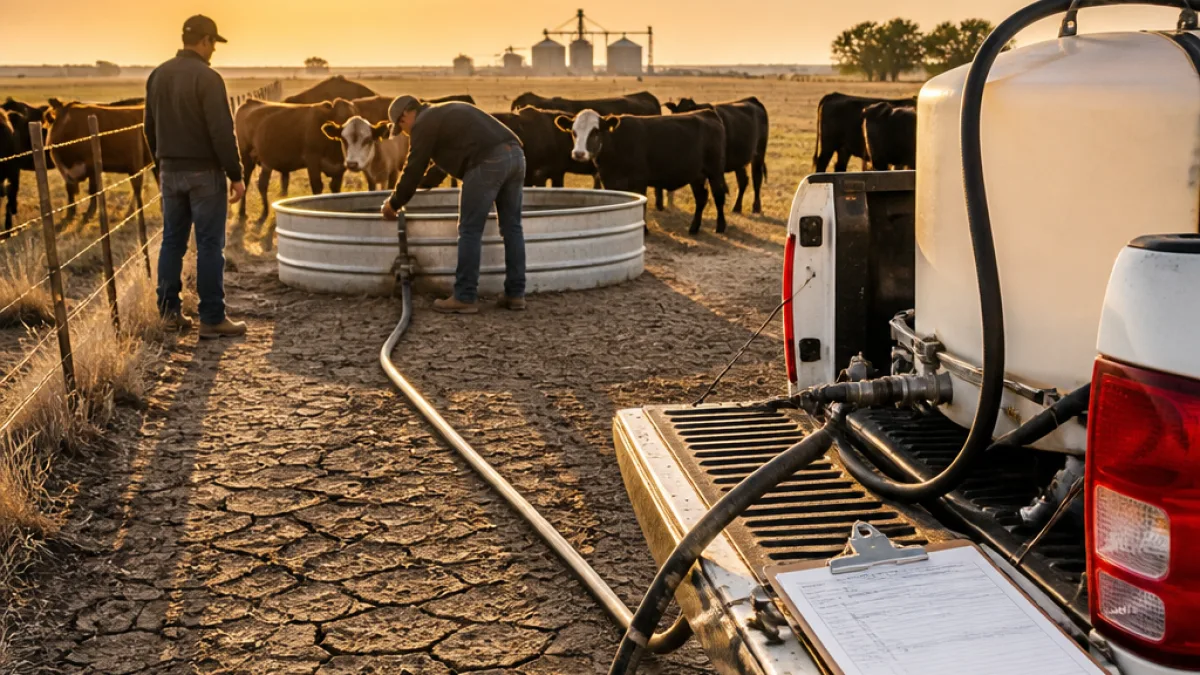
BISMARCK — The North Dakota State Water Commission on Tuesday activated an emergency program to help livestock producers cope with severe drought, approving $2 million in funding for the Drought Disaster Livestock Water Supply Project Assistance Program.
Short-term relief, long-term resilience
The program provides cost-share assistance for a range of water-supply measures, including new water wells, rural water system connections, pipeline extensions and pasture taps. It also covers labor, materials and equipment rentals for work completed on qualifying new water projects.
Under the program, individual producers may receive cost-share for up to three projects, with reimbursement of up to 65% of eligible costs — capped at $10,000 per project.
“This July ranked as one of the hottest and driest on record in North Dakota, putting enormous strain on livestock producers who are just trying to keep their herds watered and fed and their operations afloat,” Gov. Kelly Armstrong said during the commission meeting.
The commission’s unanimous vote to activate the program followed Armstrong’s declaration of a drought disaster for the state and came as state climate summaries showed an unusually hot, dry July. State Climate Office data cited at the meeting noted July 2026 was the sixth warmest and the 12th driest July on record for North Dakota.
Scope of drought across the state
Data from the U.S. Drought Monitor presented at the meeting, reflecting conditions as of Aug. 11, show widespread dryness across North Dakota:
- 33.6% of the state in moderate drought
- 28.1% in severe drought
- 2.3% in extreme drought
All but about 1% of the state was considered at least abnormally dry on that map, with only a portion of Dickey County in the southeast remaining free of drought designation.
Why the program matters to ranchers
Agriculture Commissioner Doug Goehring told the commission that the drought has drained livestock dams and stressed producers’ ability to water animals. The emergency assistance program is designed to help producers who need quick access to new or improved water sources so they can maintain herds and avoid emergency sales or other drastic measures.
Officials said the program is intended both to address immediate water shortages and to help producers make investments that increase resilience to future dry spells. The program’s flexibility — covering wells, pipeline extensions and connections to rural water systems — reflects varied needs across the state.
How the funding works
Key parameters of the cost-share program approved by the State Water Commission:
| Amount available | $2,000,000 |
|---|---|
| Reimbursement rate | Up to 65% of eligible costs |
| Per-project cap | $10,000 |
| Projects per producer | Up to three |
Process and timing
At the meeting, Gov. Armstrong said he and Commissioner Goehring had worked on putting the program in place in the days leading up to the vote. The commission’s action was part of a broader slate of approvals for water infrastructure across North Dakota; commissioners also approved more than $5.9 million for various dam, drainage and water-system projects statewide.
Producers seeking assistance should contact the State Water Commission or the Department of Agriculture for guidance on eligibility, application procedures and documentation requirements. Officials emphasized that the program is targeted at new water-supply projects and associated expenses; it does not reimburse for repairs or maintenance of existing systems unless tied to a qualifying new project.
Local implications
Ranchers in parts of North Dakota that are classified in severe or extreme drought face increasing costs and operational decisions as water sources shrink. The state’s cost-share program aims to reduce immediate pressure on operations while encouraging investments that could lower vulnerability to future dry spells.
Agriculture and water officials said the need for responsive, place-based assistance will likely continue as climate and weather variability affect seasonal water availability across the Upper Midwest.
State officials did not provide an estimate at the meeting for how many producers the $2 million could assist; that total will depend on the size and scope of approved projects and applications received.
For now, the activation of the assistance program marks the first direct state-level financial response aimed specifically at livestock water needs tied to the ongoing drought.


















