
Local representative challenges proposed switch to ward-based council
FARGO — A state legislator and former Cass County commissioner is sharply criticizing a proposed overhaul of Fargo’s municipal government, saying a switch from the city’s current five-member at-large commission to a mayor-and-council model elected by wards would dilute voter influence and open the door to parochial politics.
State Rep. Scott Wagner, who served 12 years in county leadership, told reporters the measure would reverse a longstanding local practice: Fargo abandoned a ward system in 1913, he noted, and returning to single-member districts would be a step backward for accountability.
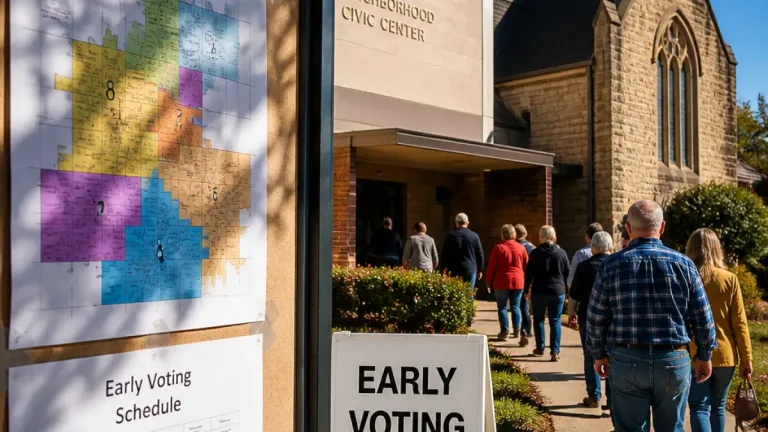
Under the current commission structure, Wagner said, every Fargo voter casts ballots for every commissioner, giving residents collective oversight of the entire governing body. The proposal under consideration would create a mayor elected at large and six council members each chosen by voters in separate geographic wards, limiting each resident’s direct vote to one council seat.
- Current structure: Five at-large commissioners elected citywide.
- Proposed structure: One mayor elected at-large and six council members elected by individual wards.
Wagner argued that the change would reduce the breadth of representation. “Right now, you get to elect all of your city commissioners,” he said. “No matter where you live in Fargo, they all work for you.” He added that under a ward system, residents effectively lose influence over council members outside their district.
“[Under] a system that isolates that vote to one person, I feel that I am losing a substantial amount of representation.”
He also raised concerns about low turnout in municipal elections and the risk that council seats could be decided by just a few hundred voters in individual wards. Wagner cautioned that such conditions could empower narrow or fringe interests rather than produce representatives accountable to the city as a whole.
Implications for Fargo voters and local politics
Proponents of ward systems typically argue single-member districts improve geographic representation and ensure neighborhoods have dedicated advocates on the council. Critics, as Wagner made clear, worry about the trade-off between local advocacy and citywide accountability.
Wagner drew comparisons to larger U.S. cities with ward-based councils and said he did not want Fargo to follow those models. “I’m going to just be frank, I don’t want to be Minneapolis, I don’t want to be Chicago, I don’t want to be San Francisco, I do not want to be L.A.,” he said, framing his opposition in terms of what he sees as risks in larger urban systems.
| Feature | At-large commission | Proposed mayor/council |
|---|---|---|
| Who voters elect citywide | All commissioners | Mayor only |
| Number of representatives | Five commissioners | Six council members + mayor |
| Voter influence per seat | Citywide for each seat | Limited to ward for council seats |
Wagner’s public remarks underscore the debate Fargo residents will face as the city considers the proposal. Key questions include whether neighborhood representation outweighs the loss of citywide voting power for each seat and how to guard against low-turnout outcomes that might not reflect broader public preferences.
City officials and advocates on both sides of the proposal will likely point to turnout data, demographic shifts and governance goals as they make their cases. For now, Wagner’s intervention places a prominent local voice against changing the long-standing at-large model, invoking both historical context and concerns about accountability.
The consequences of a transition would extend beyond ballot design. How council members build coalitions, prioritize citywide projects, and respond to cross-district issues would shift if each member primarily represents one geographic sector rather than the entire Fargo electorate.
As discussions continue, Fargo voters should expect further public hearings and outreach so residents can weigh trade-offs and potential safeguards, such as at-large seats or staggered terms, that might mitigate the concerns raised about reduced citywide accountability.
Reporting on local governance changes remains ongoing as the city and stakeholders consider the future structure of Fargo’s government.