Federal sign-off clears path for a larger IHNC lock in New Orleans
The U.S. Army has taken a formal step toward replacing the Inner Harbor Navigation Canal Lock in New Orleans, signing a record of decision that advances plans to build a modern, larger lock to serve the Gulf Intracoastal Waterway (GIWW). Assistant Secretary of the Army for Civil Works Adam Telle signed the decision Aug. 27 alongside Col. Scotty Autin, commander of the Corps of Engineers’ New Orleans District.
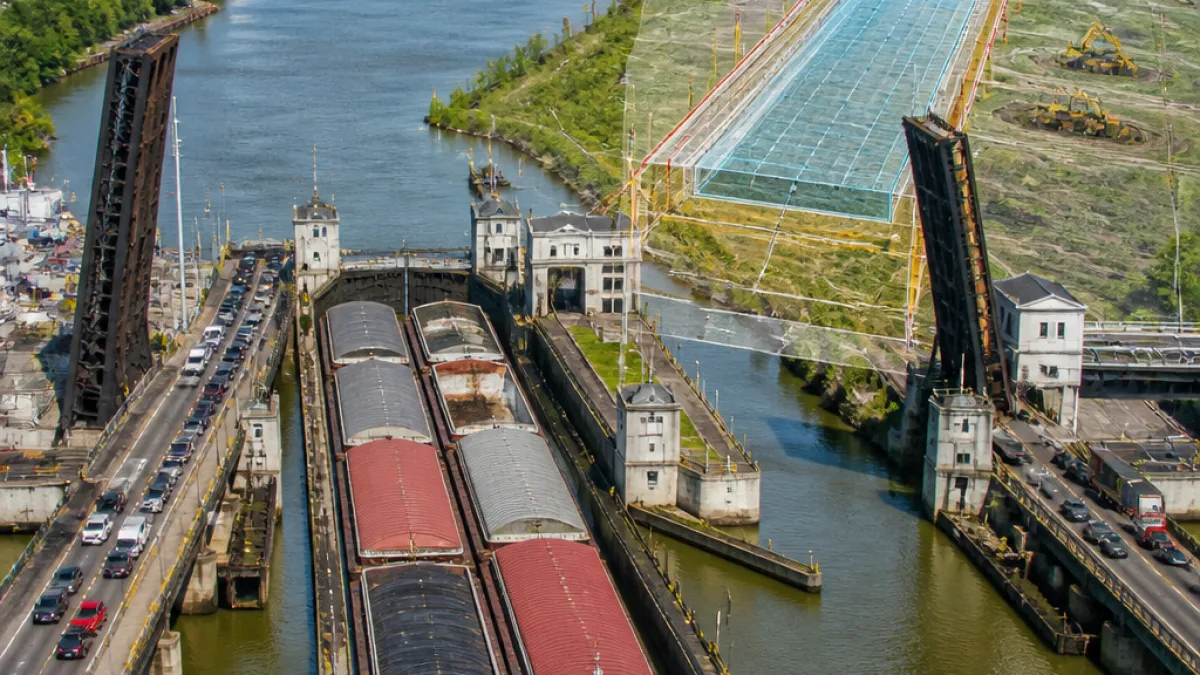
The existing chamber, built in 1923, is now 103 years old and measures 640 feet by 75 feet by 31.5 feet. Under the Corps’ recommended plan, the replacement will be a shallow-draft chamber measuring 900 feet by 110 feet by 22 feet and located roughly 2,400 feet north of the current lock. The larger dimensions are intended to let a standard six-barge tow pass in a single lockage, a move expected to cut delays and improve reliability for regional commerce.
“The Inner Harbor Navigation Canal Lock is a vital artery for regional and national commerce, and we have a responsibility to move projects like this from review to reality,”
Telle said that completing an efficient but rigorous environmental review clears the way to deliver a more resilient lock system that can relieve navigation bottlenecks and strengthen supply-chain reliability.
Why size matters: delays, bridge openings and economic drag
Today, typical jumbo tank barges range from about 250 to 300 feet in length and 50 to 54 feet in width. Because of the current lock’s size, a standard six-barge tow typically requires multiple lockages — sometimes three or more — to pass through. The physical mismatch creates long waits: the locking process alone can take up to 16 hours, not counting time spent waiting in the queue.
- Long lockage times increase fuel and labor costs for tow operators.
- Repeated lock openings add to local traffic delays by triggering drawbridge openings on both sides of the lock.
- Frequent queuing creates unpredictability for industries that rely on timely barge movements.
Paul Dittman, president of the Gulf Intracoastal Canal Association, told the Corps the new lock would be a substantial improvement over the existing structure, saying a modern, larger facility will greatly increase efficiency by reducing the need for multiple lockages.
Location and design decisions
The New Orleans District, which has studied options for decades, selected a plan to build the new 900-by-110-foot lock chamber approximately 2,400 feet north of the current lock site. That location was chosen to accommodate a design capable of passing a six-pack tow in a single operation, according to Corps materials.
The replacement also reflects a balance between draft depth and chamber size: the existing lock has greater depth but narrower width and length, while the proposed facility reduces draft to 22 feet in favor of a longer and wider chamber better matched to contemporary tow configurations.
| Existing lock | Proposed replacement | |
|---|---|---|
| Length | 640 ft | 900 ft |
| Width | 75 ft | 110 ft |
| Draft | 31.5 ft | 22 ft |
| Proposed siting | About 2,400 feet north of current lock | |
Local implications
For New Orleans, the IHNC lock replacement targets persistent chokepoints that ripple through port operations and local traffic patterns. Reducing the number of lockages per tow should lessen delays that increase costs for shippers and cause repeated drawbridge openings that interrupt road traffic. Those improvements are pitched as beneficial both for regional industries that move petroleum and bulk products via the GIWW and for neighborhoods affected by bridge operations.
The Corps’ decision signals the project moving from study and environmental review toward engineering and construction planning, but the record of decision itself does not set a construction start date or a budget in public materials released with the announcement. The New Orleans District will continue work on the next project phases following the signing.
The move follows decades of study by the Corps and has drawn support from industry stakeholders who say a modernized lock will reduce costly bottlenecks and strengthen supply-chain reliability for the Gulf Coast and inland waterways.