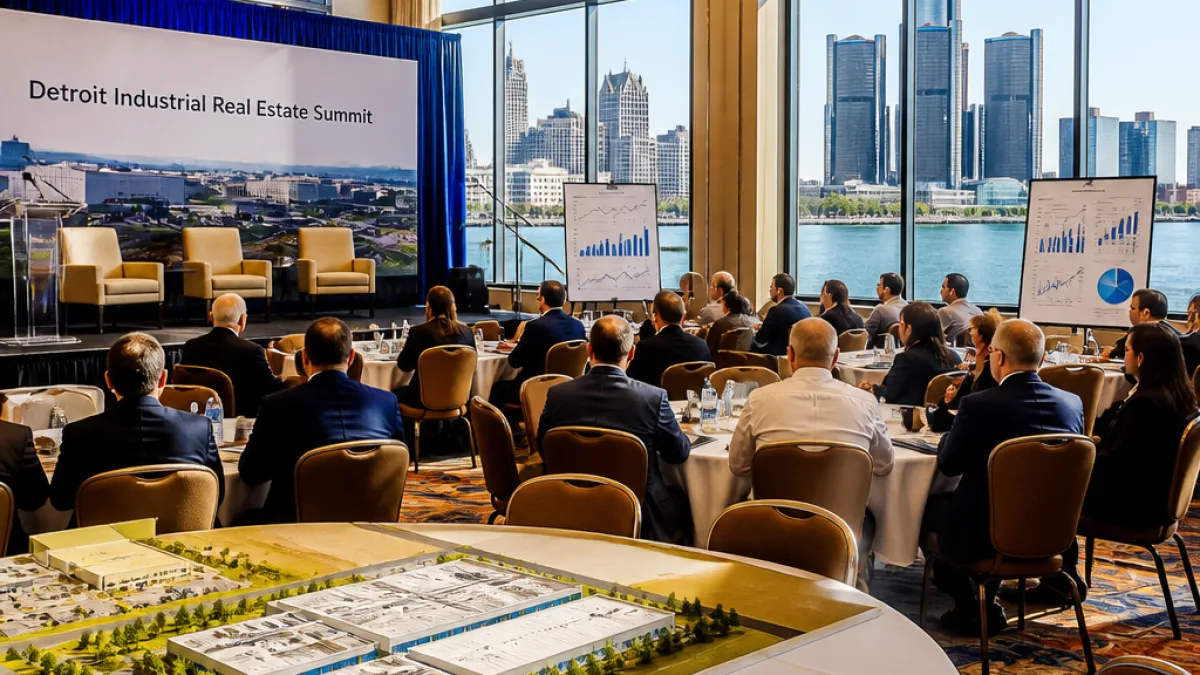
Regional industrial leaders signal steady demand despite post‑pandemic cooling
The Detroit area’s industrial sector remains a key engine of the local economy, even as demand for warehouse and manufacturing space has eased from the surging levels seen during the pandemic, industry leaders said at the Detroit Industrial Real Estate Summit on Aug. 27.
Organized by the Michigan Real Estate Journal and held at the San Marino Club in Troy, the fourth annual summit brought together brokers, developers, financiers and public‑sector partners to discuss trends, development pipelines and the capital markets supporting industrial growth across the region.
Speakers emphasized a common theme: while the frenetic pace of the COVID real estate boom has moderated, the market has not collapsed. Instead, panelists characterized conditions as a period of adjustment in which fundamentals such as location, labor access and infrastructure remain central to investment decisions.
- Steady demand: Panelists said demand for industrial space in the Detroit area is lower than pandemic peaks but continues at a sustainable pace.
- New projects: Presentations highlighted existing and planned industrial developments that show continued private investment in the region.
- Networking and education: Attendees earned three hours of real estate continuing education credits and used the summit to form partnerships across public and private sectors.
Moderators and panelists included a mix of brokerage, development and legal professionals who broke the agenda into market outlook, development and design, and capital strategies. The lineup featured names familiar to Detroit’s real estate community: Wendy Acho of Farbman Group; Drake Filippis of Signature Associates; Nick Savoy of Lee & Associates; Randall Book of Colliers; Jason Capitani of L. Mason Capitani CORFAC International; and Elizabeth Rogers of Taft, who moderated the market outlook panel.
| Session | Representative speakers |
|---|---|
| Market outlook | Wendy Acho; Drake Filippis; Nick Savoy; Randall Book; Jason Capitani; Elizabeth Rogers (moderator) |
| Development & design | Marc Werner; Shannon Selby; Emily D’Agostini Kunath; Conrad Schewe; Thomas Styf; Nick Weise (moderator) |
| Capital strategies | (Speakers noted in the program) |
"The Detroit area remains an attractive destination for companies seeking industrial space," speakers said at the summit.
Panelists on the Development & Design session discussed both the operational requirements of next‑generation industrial facilities and the design choices that make projects viable in a competitive market. Participants included Marc Werner of NorthPoint Development and Shannon Selby of the Detroit Regional Partnership, along with developers and construction managers who said attention to layout, clear heights and access are still primary drivers in site selection.
Speakers also outlined how regional strengths — including transportation links, available land and manufacturing heritage — help retain a steady pipeline of projects even as occupier demand normalizes. They cautioned, however, that projects must be responsive to shifting logistics needs and local workforce realities.
The summit underscored the role of capital markets in sustaining construction and redevelopment. Representatives from brokerage and development firms explored financing approaches and the importance of aligning capital sources with project timing and risk. Attendees were reminded that while lenders and investors have become more selective since the COVID boom, committed capital is still available for projects that demonstrate sound fundamentals and tenant demand.
Beyond the panels, organizers pointed to the event’s networking opportunities and continuing education credits as concrete benefits for local practitioners. For Detroit residents, the steady flow of industrial investment has implications for employment, supply‑chain resilience and tax base expansion in neighborhoods that host or neighbor industrial sites.
As firms and public officials plan future industrial projects, summit participants said success will hinge on realistic expectations about demand, thoughtful site and building design, and financing strategies that reflect current market discipline. For now, the consensus at the San Marino Club was clear: the industrial sector in the Detroit region has shifted from a pandemic boom to a more measured phase, but remains an essential driver of economic activity.