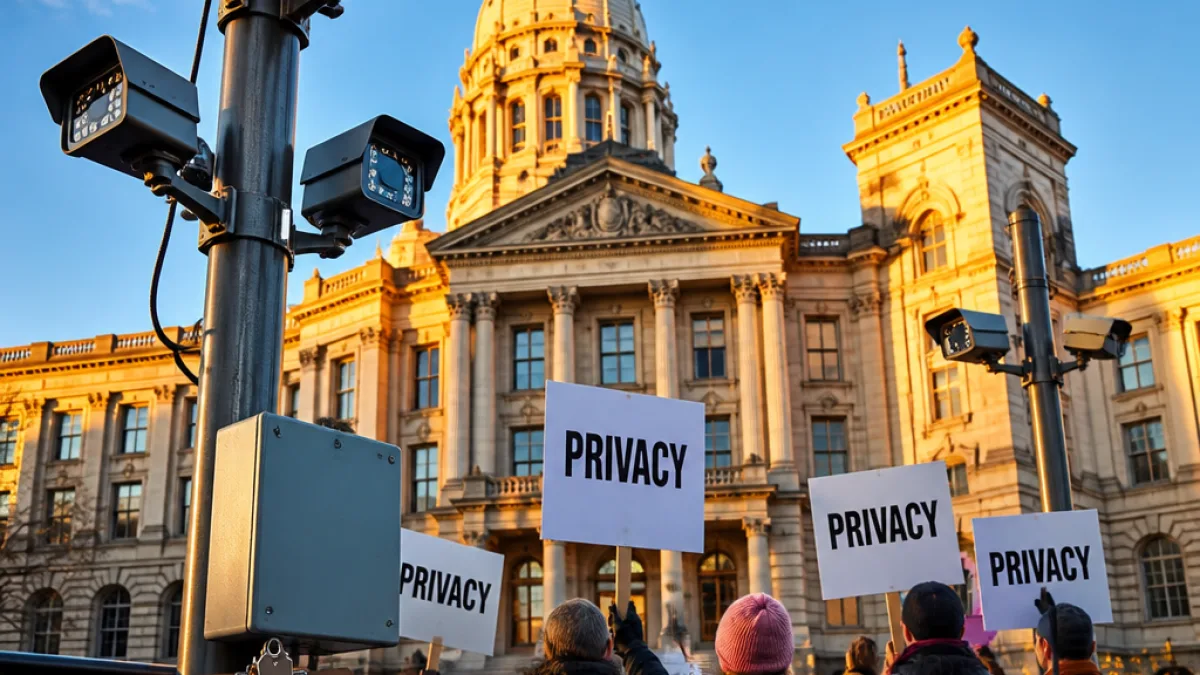
LANSING — A city council member has proposed a resolution that would ask Mayor Andy Schor and the Lansing Police Department to terminate contracts with Flock, the company that supplies automated license plate readers the councilman said pose risks to privacy and civil liberties.
Growing use, mounting concerns
Councilman Ryan Kost, who represents Ward 1 in northeast Lansing, introduced the measure ahead of a council vote scheduled for Aug. 24. The resolution requests that city administrators "terminate all existing contracts and agreements with Flock for the operation or use of automated license plate reader cameras" and refrain from entering new agreements for "AI-assisted automated license plate reader systems" until the city completes public engagement and a transparent privacy impact assessment.
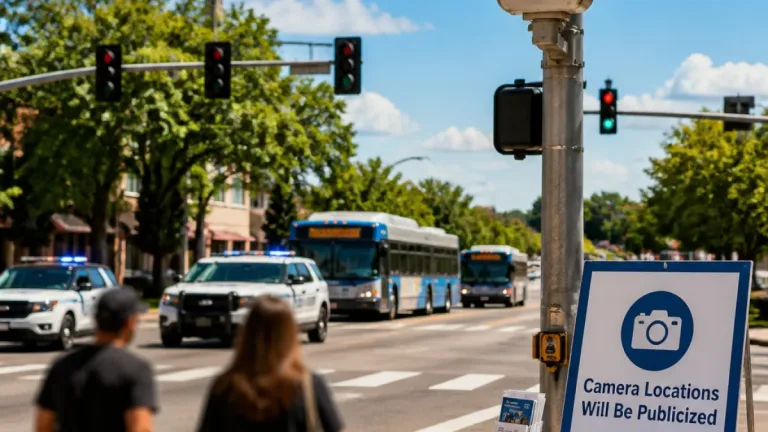
Kost said the technology has expanded in the city since an initial grant provided roughly six Flock cameras about four years ago. Lansing Police Chief Rob Backus told Kost in April that the department had 26 cameras at seven locations, according to the councilman.
| Item | Count |
|---|---|
| Initial Flock cameras (grant) | ~6 |
| Reported cameras (April) | 26 |
| Locations reported | 7 |
Privacy, misidentification and oversight at issue
In presenting the resolution, Kost pointed to what he called the "incredible power" of searchable, networked license-plate databases and the risk that they could be used to track residents who are not suspected of crimes. He said community members have expressed concerns about potential misuse, misidentification and surveillance of lawful activity.
"My concern is this tool is an incredibly powerful tool, and I have deep concerns that any company or government entity has this much power at their fingers where they can literally type into an AI database a little bit of information and track any citizen in town, whether they've committed a crime or not," Kost said.
The resolution also calls for the establishment of "clear policies governing data collection, retention, sharing, auditing, and oversight" before any AI-assisted automated license plate reader systems are adopted again.
What the resolution would do
If approved by council, the resolution would be a formal request to city leadership — it would not itself terminate contracts. The measure seeks:
- Termination of existing contracts and agreements with Flock for operation or use of automated license plate reader cameras;
- A ban on entering future agreements for AI-assisted license plate reader systems until public engagement and a privacy impact assessment are completed;
- Development of transparent policies for data handling, retention, sharing, auditing and oversight.
Context and local consequences
Automated license plate readers are used by many law enforcement agencies to locate stolen cars, identify vehicles associated with crimes and aid investigations. Supporters say the technology helps public safety efforts by providing timely leads. Critics argue the systems can produce false reads, enable broad location tracking, and share data across wide law enforcement networks without sufficient safeguards or public input.
For Lansing residents, the outcome of the council vote could shape how the city balances those competing concerns. If the council approves Kost's resolution, it would signal strong municipal scrutiny of license-plate technology and could prompt negotiations with the police department and the mayor's office about contracts, data policies and public engagement processes. If the council rejects the resolution, the current arrangements with Flock would likely remain in place unless city administrators move on their own to change them.
The councilman said his moral opposition to the cameras informed the timing of the resolution. He told colleagues he could "no longer morally support these camera systems" and warned that the technology's capabilities will only increase over time.
Council is expected to discuss and vote on the proposal at its meeting on Monday, Aug. 24. The mayor's office and Lansing Police Department have not released statements in response to the proposal as of the council filing.