
Tariffs, freight and surcharges drive up local building costs
SHREVEPORT — Homeowners and builders in the Shreveport-Bossier area are confronting higher prices for flooring and other construction materials as trade tariffs, manufacturer surcharges and rising freight expenses push costs upward, local business owners and industry representatives say.
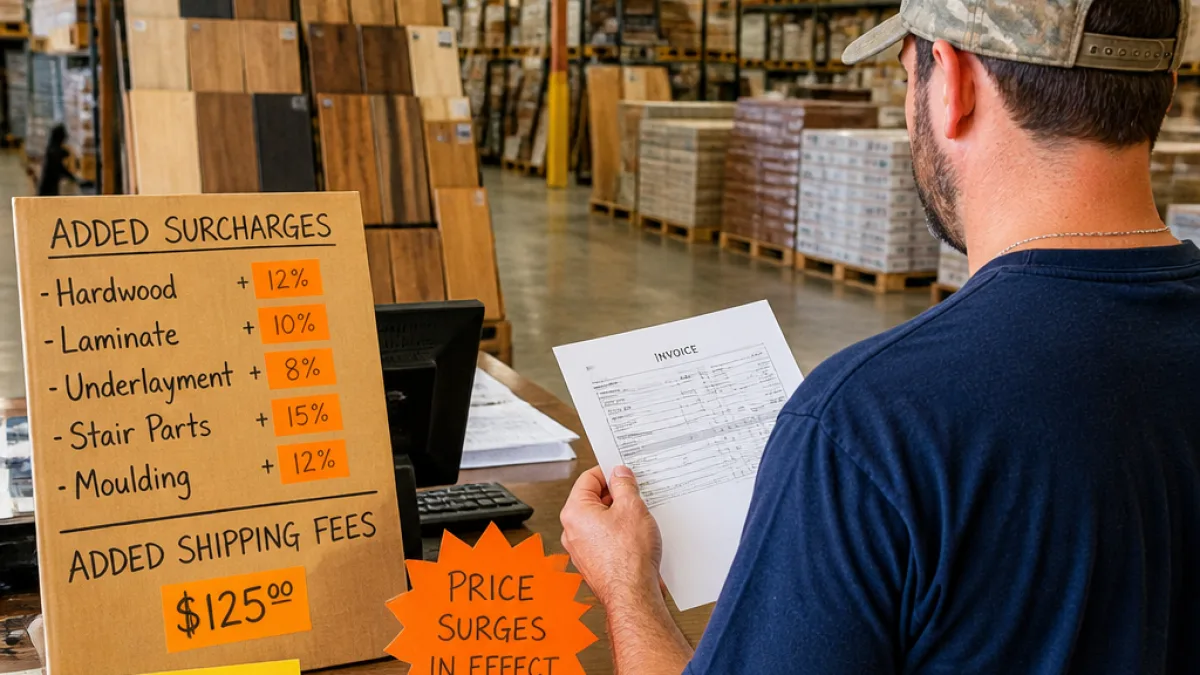
At SBC Flooring in Bossier City, owner Hayden Wallace said some brands have seen added costs amounting to 30 to 60 cents per square foot, while one supplier recently notified the company of an additional 8% surcharge on its products. Wallace said suppliers typically pass those increases downstream to retailers and consumers.
“Our suppliers are the ones who pass all this through,” Wallace said. “Some of them have a separate line item. Some of them they just bake it in and come in with a price increase.”
Impact on demand and local projects
Wallace said elevated prices for some flooring options have made them less competitive, reducing demand. He also pointed to higher fuel costs that have pushed up freight expenses, adding pressure to an industry already contending with inflation and supply-chain issues.
James Fine of the Home Builders Association of Northwest Louisiana said tariffs on Canadian lumber and related materials have had a notable effect on new-home costs. Fine told local outlets that, in some cases, tariffs have contributed to as much as a $21,000 increase in the cost of building an average home.
What this means for Shreveport residents
For buyers and remodelers, even modest per-unit increases on flooring can add hundreds or thousands of dollars to project totals, depending on home size and scope. Contractors face a similar squeeze: if manufacturers apply surcharges or fold tariffs into list prices without transparent line items, builders must choose whether to absorb costs, raise bids or seek alternative materials.
- Homeowners: Higher materials costs could delay or downsize planned remodels or new builds.
- Contractors: Must manage margins amid uncertain, fluctuating supplier pricing.
- Local retailers: May see altered demand patterns as consumers trade down or switch products.
Refunds, rebates and uncertainty
Wallace noted the tariff-refund process can be complex and costly to pursue, sometimes discouraging suppliers and retailers from seeking reimbursements that might otherwise soften price increases. That administrative burden can mean higher net costs for local businesses and consumers, even if refunds are theoretically available.
Both Wallace and Fine said they expect the elevated prices to remain a concern for the foreseeable future as tariffs and shipping costs persist. The shifting landscape leaves prospective homebuyers and renovators with decisions about timing, materials and budgets.
| Reported cost drivers | Local examples |
|---|---|
| Tariffs on imports | Contributed to up to $21,000 higher home costs (per association estimate) |
| Manufacturer surcharges | Notified of an 8% surcharge on some products |
| Freight/fuel costs | Increased shipping expenses for suppliers and retailers |
| Per-unit increases | 30–60 cents per square foot on affected flooring lines |
Local industry response and consumer choices
Some local suppliers are pursuing alternative brands or product lines that are less affected by tariffs and imports, and builders said they are looking for ways to mitigate costs through project design and material selection. For homeowners, options include delaying nonessential projects, choosing different materials, or seeking multiple bids to find the most competitive pricing.
As Shreveport and Bossier City households weigh renovation and homebuilding decisions, industry leaders said clear communication about price changes will be important. Wallace emphasized that transparency from suppliers and manufacturers helps retailers and contractors advise customers about real impacts and options.
For now, residents and local builders should plan for sustained uncertainty around material prices and consider contingency allowances in budgets as tariffs and shipping costs continue to influence the local construction market.