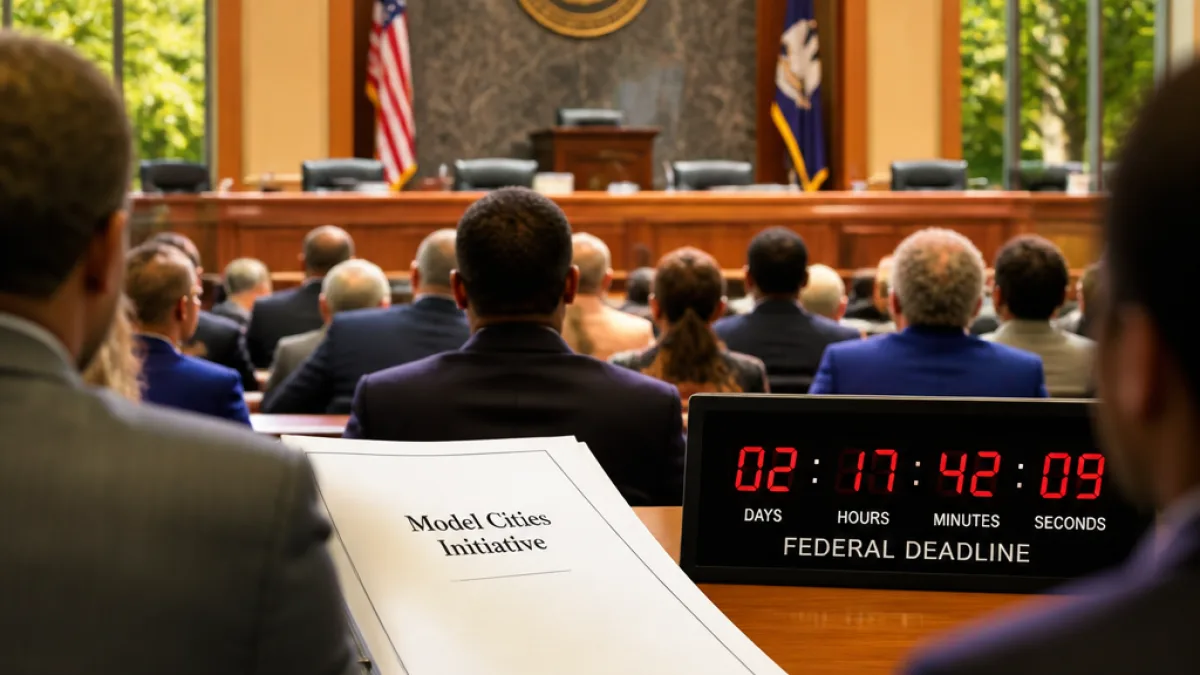
Local officials fast-track application before federal deadline
East Baton Rouge Parish has moved urgently to pursue a federal grant that could inject as much as $125 million into crime prevention, law enforcement and community programs over three years. The Criminal Justice Coordinating Council (CJCC) submitted application materials this week for the U.S. Department of Justice’s Model Cities Initiative, a competitive program that will distribute $300 million nationwide to just two to four cities.
Officials held an emergency special meeting inside Metro Council chambers so the CJCC could obtain a signature from Mayor Pro Tem Brandon Noel and complete the final step of the application before the deadline. CJCC Executive Director Christopher Csonka called the opportunity historic.
“This grant opportunity is really unprecedented in my history of being in criminal justice,” said Christopher Csonka.
The CJCC is requesting $125 million for East Baton Rouge Parish, to be used across the criminal justice system and community-based efforts if the parish is chosen as one of the awardees. The DOJ’s Model Cities Initiative will select a limited number of recipients nationally, increasing the stakes for the local application.
How officials say the funding could be used
CJCC leaders outlined a broad set of potential investments that reflect both immediate enforcement needs and longer-term prevention work. They said the funding could be shared among municipal departments, nonprofits and agencies addressing the drivers of crime.
- Police overtime, equipment and targeted crime-fighting initiatives
- Bail reform and programs designed to reduce pretrial incarceration
- Re-entry services for people leaving jail or prison
- Prevention and intervention programs aimed at keeping people out of the criminal justice system
Baton Rouge Police Chief TJ Morse emphasized the cross-cutting potential of the funds, saying the award would not be limited to policing alone.
“This money will go a long way to not only helping the Baton Rouge Police Department and our budget to help us with overtime dollars and equipment and special things to fight crime, but resources overall to help lower crime,” Chief TJ Morse said.
Local crime context and the pitch to DOJ
Officials submitted the application with the argument that Baton Rouge and Louisiana have historically experienced crime rates above the national average — a trend CJCC leaders say could strengthen the parish’s case for Model Cities funding. The proposal frames the grant as an opportunity to implement a coordinated, parish-wide strategy that pairs law enforcement resources with social services, re-entry supports and prevention programming.
Beyond immediate resource needs, CJCC officials described the potential for systemic change, including investments that address root causes of crime and support long-term reductions in arrests and recidivism. The proposed three-year timeline for the $125 million request would allow for multi-year planning, evaluation and partnerships across government and nonprofit sectors.
What comes next
The Department of Justice is expected to award a total of $300 million to only two to four cities nationally under the Model Cities Initiative. East Baton Rouge officials now await word from the DOJ on whether their application will be selected for funding. If chosen, the parish would begin distributing funds among departments and partner organizations according to the CJCC’s plan.
For now, local leaders are positioning the parish as a strong candidate, citing sustained crime data and a coordinated plan to deploy resources across prevention, enforcement and re-entry efforts should they secure the award.