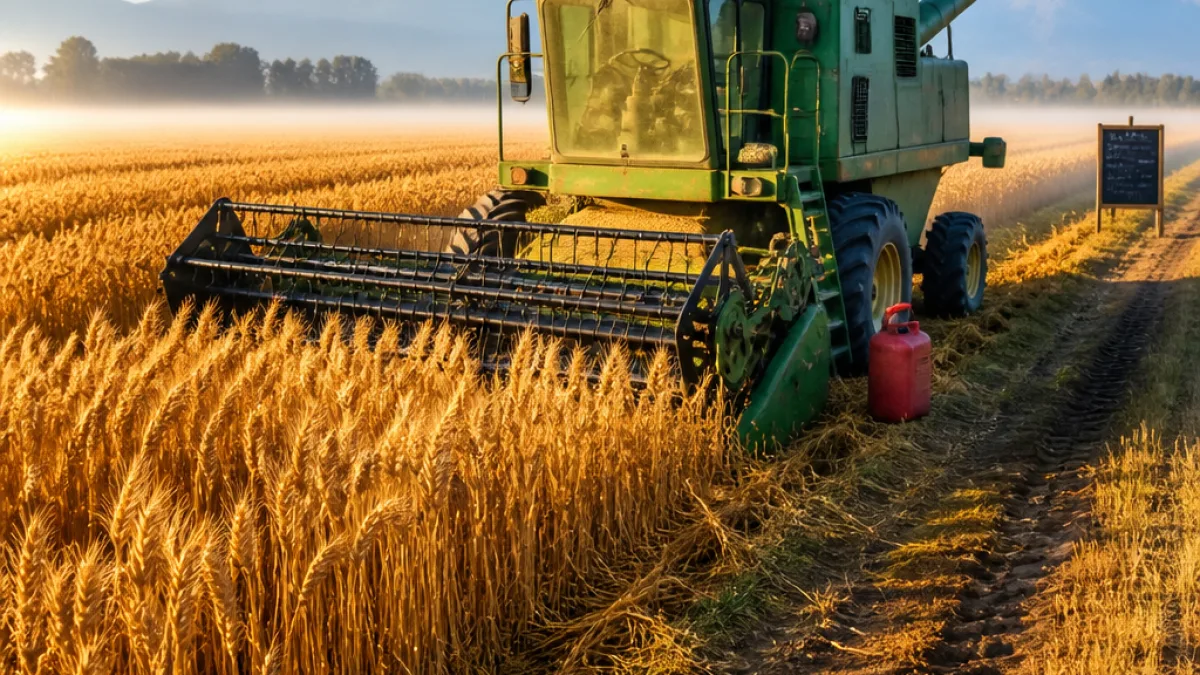
On a mid-August morning north of Kalispell, a combine cut through one of the healthiest wheat stands Heritage Custom Farming has seen in years. The machine, purchased used for $160,000, consumes roughly 100 gallons of fuel while harvesting about 10 acres and can process up to 900 bushels per hour.
Higher wheat prices — roughly $6.45 per bushel, up from about $4 per bushel a year ago — reflect a national supply shock. The United States is producing its smallest wheat crop since the 1970s, a downturn driven by drought in parts of the country and a complex geopolitical backdrop. But for Montana growers, the price uptick has not translated into clear profits.
Thin margins despite stronger prices
Producers say input costs have risen faster than commodity prices, squeezing already tight margins. The cost to produce wheat in many Montana operations is approximately $6 per bushel, leaving little or no margin when market prices are only slightly higher.
“The cost of production is about six bucks, so that’s kind of what we need to break even and that’s the struggle with wheat,”
The observation comes from a local custom farmer who described the arithmetic of modern farming: expensive machinery, high fuel consumption during harvest and ever-increasing costs for seed, fertilizer and other inputs. Even in a season that looks promising for yields, those fixed and variable costs consume most of the returns.
Harvest and operating realities
Harvest operations illustrate the scale of expenses. The combine used by the Kalispell operator costs an estimated $400 per day to operate during harvest when fuel and other day-to-day expenses are accounted for. Those costs, multiplied across a busy harvest season, quickly accumulate.
Farmers noted that improvements in weather this summer helped some fields recover after a difficult 2025 season. Cool temperatures and timely rains in June contributed to higher yields in parts of northwest Montana, where producers who saw poor results last year are optimistic about better volumes this season. Still, optimism is tempered by the cost realities.
Local impact of a national trend
Montana is part of a national wheat market; when U.S. production falls, global prices can climb. But local producers must contend with a different calculus: their own production costs, local weather variability and the capital needs of modern agriculture. Even when market prices rise, the benefits are uneven.
Economists say broader commodity prices have been low for several years, and the recent increase does not erase that history. For many Montana operations, debt repayments, equipment replacement and input purchases remain daily concerns.
What this means for farmers and consumers
For farmers, the immediate question is whether current prices will hold through the remainder of the marketing year. A few cents of fluctuation can determine whether an operation clears a small profit or breaks even. For consumers, higher commodity prices can filter through to end products, but the relationship is mediated by processing, transportation and retail margins.
Industry observers say policy, weather and global demand will continue to shape the market. Local producers emphasize the need for caution and careful cost management in the near term.
Numbers at a glance
| Item | Figure |
|---|---|
| Current wheat price (approx.) | $6.45 per bushel |
| Price one year ago (approx.) | $4 per bushel |
| Estimated cost of production | $6 per bushel |
| Combine fuel use during harvest | ~100 gallons |
| Daily harvest operating cost (approx.) | $400 per day |
Farmers in Kalispell and across Montana are watching markets and balancing inputs as harvest continues. Even with a better crop in some fields this year, the arithmetic of high production costs and thin commodity margins means many producers will find little in the way of surplus revenue once bills are paid.
- Higher national prices reflect record-low U.S. wheat production.
- Local costs of production are near or above current market prices.
- Improved yields this season may ease pressures for some but won’t erase increases in input and capital costs.
As harvest progresses, Montana growers will continue to weigh the short-term benefits of higher prices against long-term questions of profitability, capital replacement and resilience in a market that has delivered several tough years for commodity producers.