
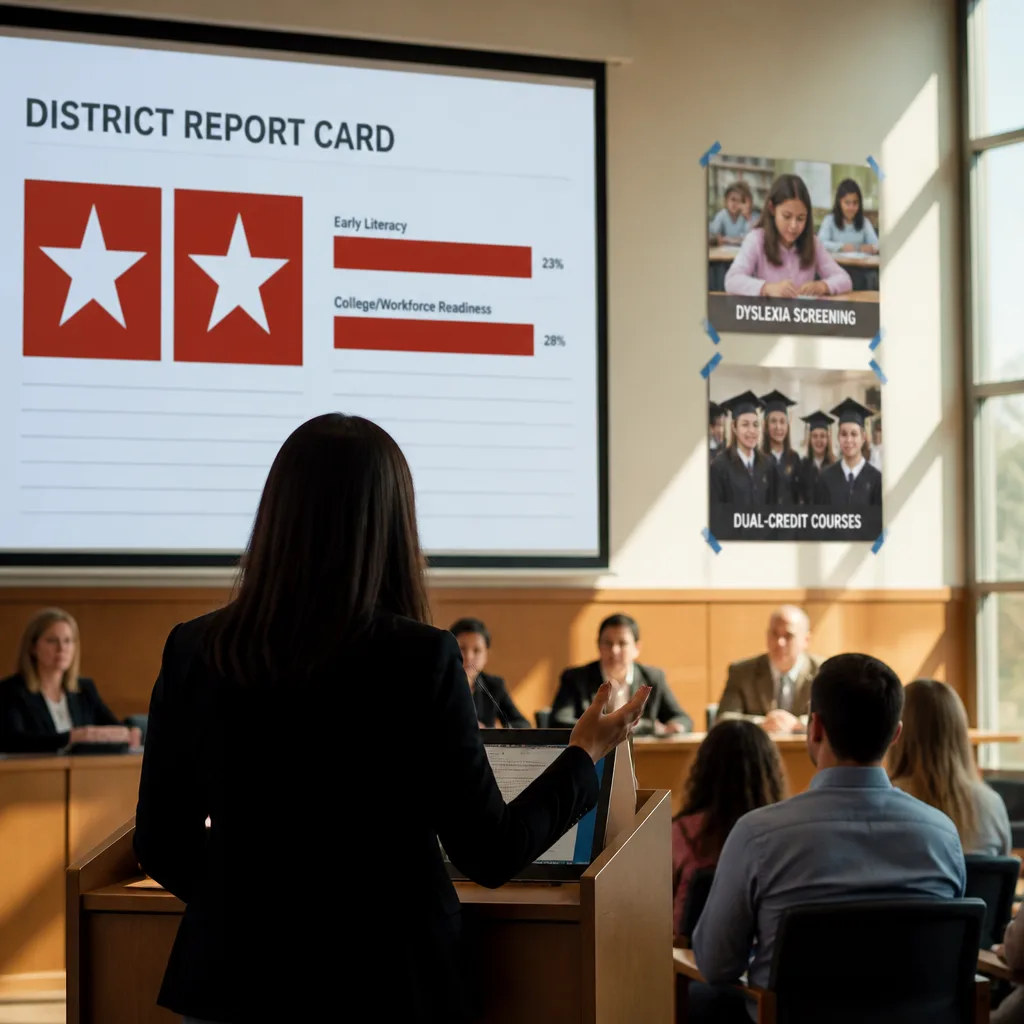
Middletown, Ohio — Middletown City Schools received a two-star rating on Ohio’s new five-star report card system, one of only six districts statewide to be assigned that score, and district leaders say they are beginning targeted efforts to address the weaknesses behind the rating.
District performance and priorities
The state report identified the district’s weakest results in two key measures: early literacy and college and workforce readiness, in both of which Middletown earned a single star. The district also reported a chronic absenteeism rate of 37.6%, well above the statewide average of 23.9%.
G. Elgin Card, who assumed the superintendent role this year after leading Princeton City Schools, acknowledged the grade card indicates a need for improvement but urged context and action.
“I really believe the grade card is not an end-all, be-all, because there's a lot of great things going on in Middletown in my couple months I've been here,”
Card said the district has already started reviewing the data and convening school leaders to plan changes. Among initial steps he outlined: ensuring consistent use of the state-approved literacy curriculum, re-examining procedures for dyslexia screening and increasing teacher certification for college-credit courses.
Short-term steps and longer-term goals
District officials described a mix of near-term actions and initiatives meant to yield improvement over multiple years. Card said he expects some gains to show up in coming report cycles as more teachers earn credentials to teach courses that provide college credit and as literacy interventions are applied more uniformly.
He also emphasized the importance of attendance, linking learning opportunities to students being physically present. Card noted that although the district’s chronic absenteeism figure remains elevated, it is declining from earlier years — a trend he said must continue for other reforms to take hold.
- Ensure consistent implementation of state-approved literacy curriculum
- Re-examine and strengthen dyslexia screening protocols
- Increase teacher certification for dual-credit and college-level coursework
- Convene advisory groups and engage community for broader buy-in
Card said he plans to form an advisory council that includes outspoken students to provide direct feedback to district leadership. He framed his approach as collaborative but driven, comparing his leadership style to coaching: competitive and focused on gradual, demonstrable gains.
Implications for students and community
Education experts and district leaders often warn that low ratings concentrate attention on both academic shortcomings and systemic barriers such as attendance, staffing and access to advanced coursework. In Middletown, persistent absenteeism and low readiness measures for early learners and older students present overlapping challenges: students not in class miss foundational instruction, and older students lacking access to college-credit opportunities limit postsecondary preparedness.
Card said principals and central office staff have already begun meeting to interpret the report card data and identify priority interventions. He urged community involvement, saying successes will depend on broad support from families, teachers and local stakeholders.
| Metric | Middletown | State Average |
|---|---|---|
| Overall report card rating | 2 stars | 5-star scale |
| Early literacy | 1 star | Varies |
| College & workforce readiness | 1 star | Varies |
| Chronic absenteeism | 37.6% | 23.9% |
Card stressed that improvement will not be instantaneous but said he is confident the district can make measurable progress if staff, students and community members align behind shared priorities.
“I want to make sure our community understands if our kids aren't here, they can't get the education they need,” Card said, urging local engagement and a sense of urgency about attendance and instructional consistency.
As Middletown pursues corrective steps, the district will offer a test case for how new leadership and targeted strategies can affect state accountability outcomes over time — and whether rising teacher certification rates and literacy work translate into higher ratings in future report cycles.














