
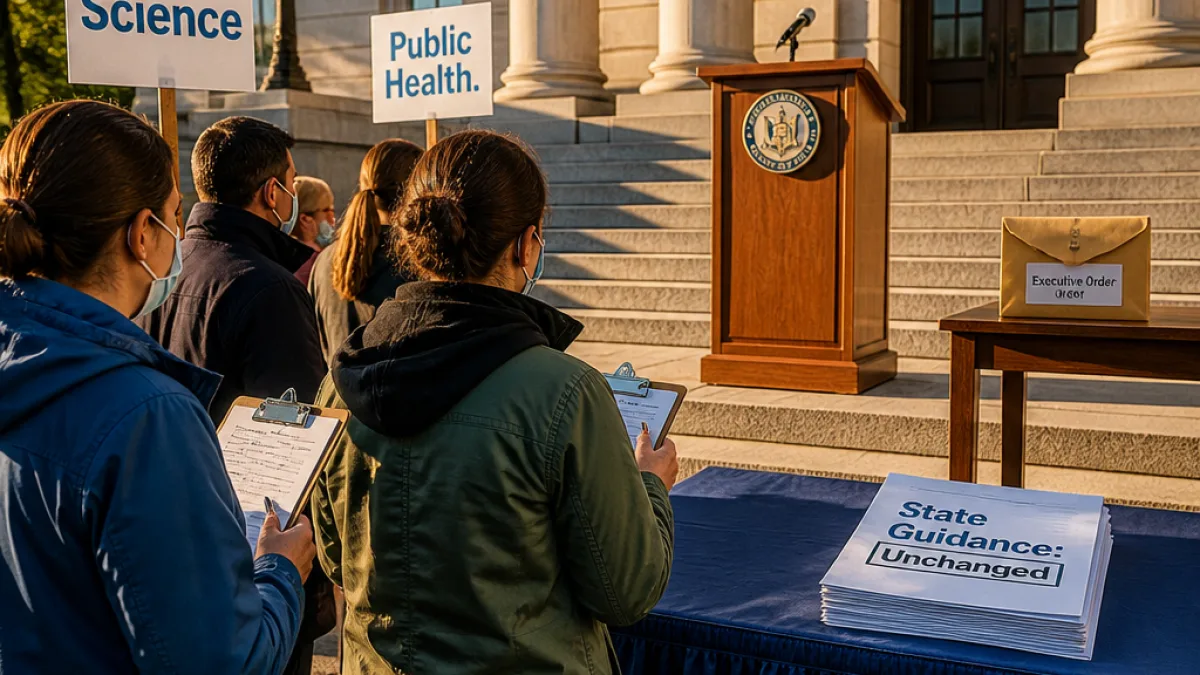
Gov. Janet Mills said Maine’s vaccine guidance remains unchanged following President Donald Trump’s executive order that revises federal childhood vaccine recommendations.
State keeps current policy
The governor’s office did not announce any alteration to Maine’s existing vaccine rules after the White House directed federal agencies to drop universal recommendations for some vaccines and to separate the combined measles, mumps and rubella shot into single vaccines.
In Maine, the announcement was met with swift criticism from a coalition of professional health organizations, which said the federal action is rooted in politics rather than science and could reduce protections for children.
Medical community voices concern
The Maine Medical Association, the state chapter of the American Academy of Pediatrics and other clinician groups warned the order would increase risks for children and add logistical and financial burdens for families and providers.
“You’re now talking about double, tripling or quadrupling the number of office visits in order for us to get vaccines,” Maine Medical Association President Dr. James Jarvis said. “That’s not going to happen. And all that means is that the child’s going to be more susceptible to these very preventable and deadly diseases.”
Jarvis and other group leaders pointed to rising measles cases nationwide as evidence that vaccine hesitancy is already eroding herd immunity in some communities; he said Maine and other states should resist changes that reduce vaccine uptake.
Legal direction to DOJ sparks state concern
The executive order also directs the U.S. Department of Justice to pursue legal action against states that do not allow philosophical exemptions for childhood vaccines. The directive could put states with more restrictive exemption policies, including Maine, in federal legal crosshairs.
Health organizations in the state emphasized that the evidence supporting current vaccine safety and effectiveness is extensive and that altering long-standing recommendations would not only be scientifically unjustified but would create practical problems for clinicians and families.
- Increased clinic visits: Separating combination vaccines into single shots would multiply appointments for children.
- Logistical burden: More visits could strain primary care practices and public health clinics.
- Potential for lower coverage: Additional required visits tend to reduce completion rates for multi-dose regimens.
Which organizations weighed in
More than half a dozen Maine health organizations publicly opposed the order. They urged families to discuss vaccination with their clinicians and to rely on established scientific guidance when making vaccination decisions.
| Organization | Type |
|---|---|
| Maine Medical Association | Physician association |
| Maine Academy of Family Physicians | Physician specialty group |
| Maine Chapter, American Academy of Pediatrics | Pediatrician association |
| Maine Academy of Physician Associates | Physician associates |
| Maine Nurse Practitioner Association | Nursing association |
| Maine Osteopathic Association | Osteopathic physicians |
| Maine Public Health Association | Public health professionals |
All urged parents to seek guidance from clinicians and public health officials rather than relying on changing political directives.
What this means for Maine families
For now, families in Maine should expect no change in state vaccine recommendations or school immunization rules. Clinicians in Maine continue to endorse the current, combined vaccine schedules that public health agencies have used for years.
Public health leaders frequently note that combination vaccines, such as the measles-mumps-rubella (MMR) shot, reduce the number of injections children receive and help improve overall vaccination completion. Health organizations say reversing that practice could lower timely coverage and increase vulnerability to outbreaks of preventable diseases.
Maine’s medical community encouraged parents to schedule recommended vaccinations and to talk with their child’s clinician about any concerns. They also recommended relying on peer-reviewed research and state and local public health guidance when making decisions about immunizations.
The reporting for this story includes information provided through a media partnership with Maine Public.

















