
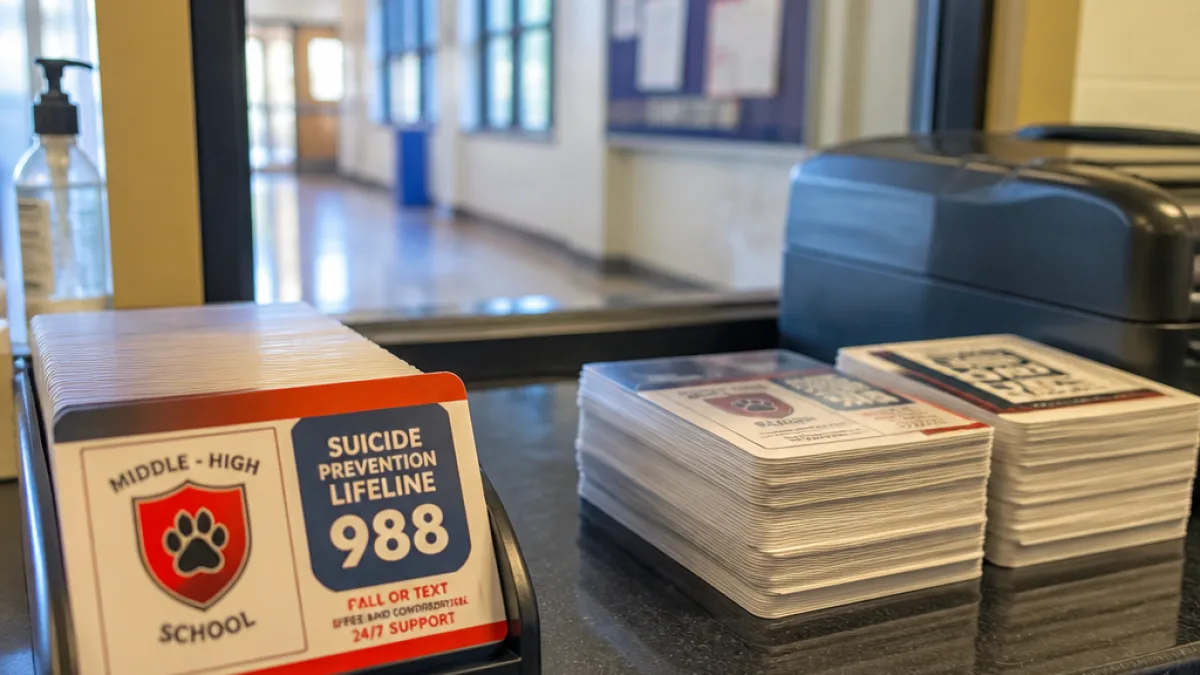
HARRISBURG, Pa. — A member of the state House of Representatives is preparing legislation that would require middle and high schools across Pennsylvania to place suicide prevention hotline numbers on student identification cards, a move he says would make crisis resources easier for teens to access.
Rep. David Delloso (D-Delaware) outlined the proposal in a co-sponsorship memo circulated to colleagues, saying the change could help students connect quickly with support during a mental-health emergency. The bill has not yet been formally introduced in the General Assembly.
What the proposal would do
Under the plan Delloso described, schools would be required to print the number for a national, state or local suicide prevention hotline on student ID cards issued to middle and high school students. The lawmaker framed the measure as a straightforward, low-cost way to ensure that contact information is physically present for adolescents who may be in crisis.
In the memo, Delloso wrote:
"Ensuring students have immediate access to crisis resources can help them seek and receive support when they need it most."
He also cited a 2023 study finding that roughly 20% of high school students nationwide seriously considered attempting suicide in the previous 12 months, using that statistic to underline the urgency of expanding access to help.
Precedents and legal context
Similar measures have been enacted in other states. Delloso’s memo notes that Michigan and New Hampshire have passed comparable laws requiring crisis numbers on student identification, a precedent advocates say demonstrates the proposal’s feasibility.
State officials and school administrators who evaluate or implement such a requirement would need to consider details including which hotline number(s) to use, how to update cards when numbers change, and potential costs for reprinting IDs. The memo does not specify enforcement mechanisms, penalties or funding sources.
Supporters and practical considerations
Proponents of the idea say that placing hotline numbers on ID cards meets students where they are — in their wallets or backpacks — and could prompt peers or adults to call for help when needed. Mental-health advocates frequently recommend multiple, easy-to-find entry points for crisis services, including signage, classroom materials and digital links.
- Low-cost intervention: Printing a phone number on existing cards is inexpensive compared with other public-health programs.
- Visibility: ID cards travel with students and are visible to peers, teachers and staff.
- Potential challenges: Updating numbers, determining which hotline to publish, and ensuring children know how to use the information.
Questions lawmakers will face
If the bill is filed, lawmakers and education officials will likely debate specifics: whether to require the national 988 Suicide & Crisis Lifeline number, to include state or local crisis lines in addition, or to allow districts to choose the number that best serves their community. They also will weigh how to address private schools, charter schools and districts that already print such information.
School districts could face administrative costs for reprinting outdated cards or for replacing cards midyear. However, supporters argue those costs are modest compared with the potential benefit of giving students immediate access to life-saving information.
Next steps
Delloso’s co-sponsorship memo represents an early stage in the legislative process. It indicates intent but not a formal bill. Interested parties — including school administrators, mental-health organizations and parents — may seek to shape the proposal before it is introduced or during committee review if a bill is filed.
For now, the proposal underscores a growing trend among states and localities to explore straightforward policy measures aimed at reducing youth suicide and improving access to crisis services. Whether Pennsylvania follows Michigan and New Hampshire will depend on how lawmakers prioritize the measure and how stakeholders respond to the practical questions it raises.















