
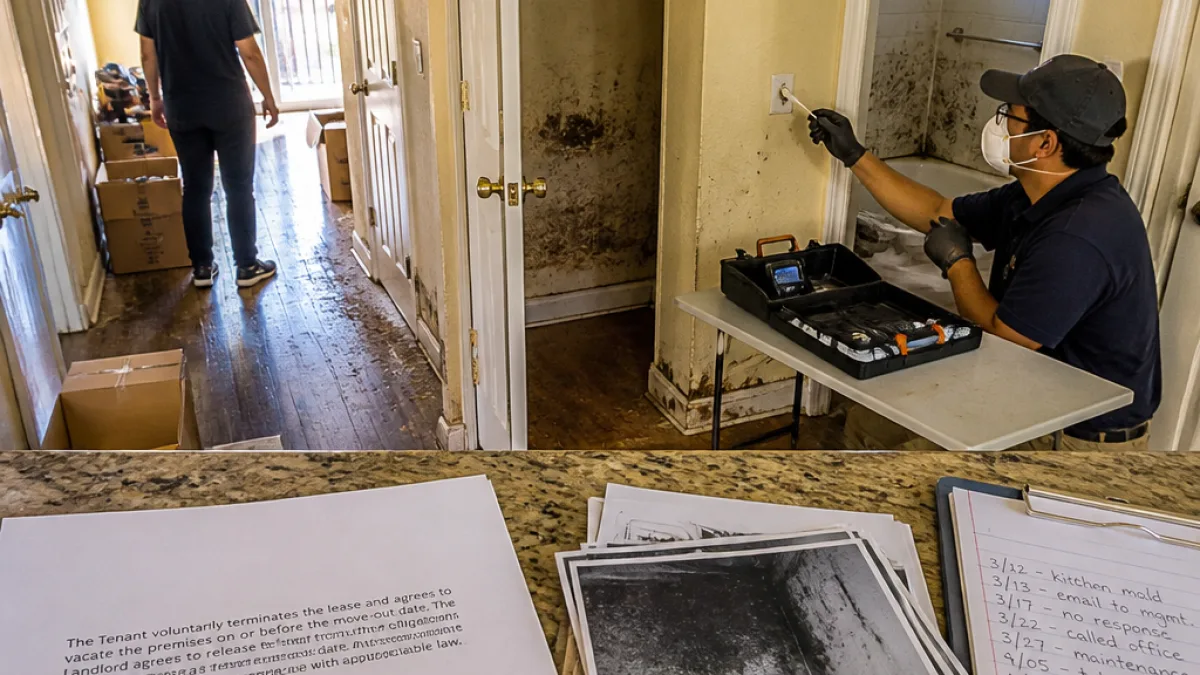
A Las Vegas woman who found black mold in multiple areas of her apartment this spring is urging other renters to act promptly when they encounter possible health hazards in rental units. The discovery led to remediation testing that concluded the mold levels were dangerous, a lease release without penalties and unanswered questions about who should cover the tenant’s out-of-pocket expenses.
Discovery and response
The tenant, Nicole Earle, said she discovered dark growths while looking under a bathroom sink in April. She said the problem extended beyond one spot, appearing in both bathrooms, a hallway closet and parts of the bedrooms.
"I'm looking with my phone and I'm seeing this dark stuff and I don't know what it is," Earle said.
Earle contacted the property management at Parkway at Silverado Ranch after finding the mold. She said the complex's initial response was not helpful. Earle later hired a remediation company that tested the mold and determined it was hazardous.
Outcome and remaining disputes
Following the remediation company’s assessment, Earle said she was able to secure a lease release with no penalties. The remediation firm also sent its own team to develop an abatement plan.
Even so, Earle told reporters she paid significant expenses out of pocket and believes the apartment complex should help cover those costs. She is seeking compensation but said she has grown discouraged about next steps.
WE NEWS reached out to Parkway at Silverado Ranch and the contacts Earle cited for comment but had not received a response by publication time.
Legal guidance for renters
Local advocates and state law outline specific steps renters should take when they encounter mold or other repair issues. The Legal Aid Center of Southern Nevada and state statutes recommend the following actions:
- Document everything: Take photos, videos and notes showing the location and extent of the problem and any communications with management.
- Send written notice: Alert the landlord or property manager in writing about the issue and request repairs.
- Allow time for repairs: Wait the appropriate period for the landlord to address the issue—guidance ranges from 2 to 14 days depending on the problem's nature and severity.
- Consider legal remedies: If the landlord fails to act, tenants may pursue repair-and-deduct options, lease termination, withholding rent or other legal steps; consult an attorney or tenant advocate for specifics.
The Legal Aid Center’s guidance underscores that timely, documented communication can be crucial if tenants later pursue compensation or dispute charges related to property conditions.
Health risks and remediation
Health effects tied to mold can range from allergic reactions and respiratory irritation to more serious complications for people with existing lung disease or compromised immune systems. Earle noted the concern was heightened because a family member has end-stage COPD, a chronic lung condition that can be worsened by mold exposure.
Professionally conducted testing and remediation are the standard responses when suspected hazardous mold is present. In Earle’s case, the remediation company confirmed elevated mold levels and undertook assessment work; it also assisted in negotiating a lease release.
| Issue | Fact reported |
|---|---|
| Locations affected | Both bathrooms, hallway closet, parts of bedrooms |
| Management response | Initial contact made; tenant reports unsatisfactory help |
| Outcome | Lease release with no penalties; tenant paid some costs |
What renters should know
When encountering mold or other potentially hazardous housing conditions, tenants should act promptly and preserve evidence of both the problem and their attempts to get it fixed. Contact information should be kept for any contractors or remediation professionals who test or treat the unit.
Those unsure of their options can contact the Legal Aid Center of Southern Nevada or a local tenant-rights organization for advice. In cases involving serious health risks, medical providers may also document health impacts that can support a tenant’s claim.
Earle’s case highlights how remediation and legal options can resolve urgent housing problems but also how unresolved financial disputes can leave tenants seeking further recourse. As summer rental turnover approaches, the incident serves as a reminder for renters and landlords to address maintenance and health concerns quickly and transparently.
Vanessa Trujillo, WE NEWS

















