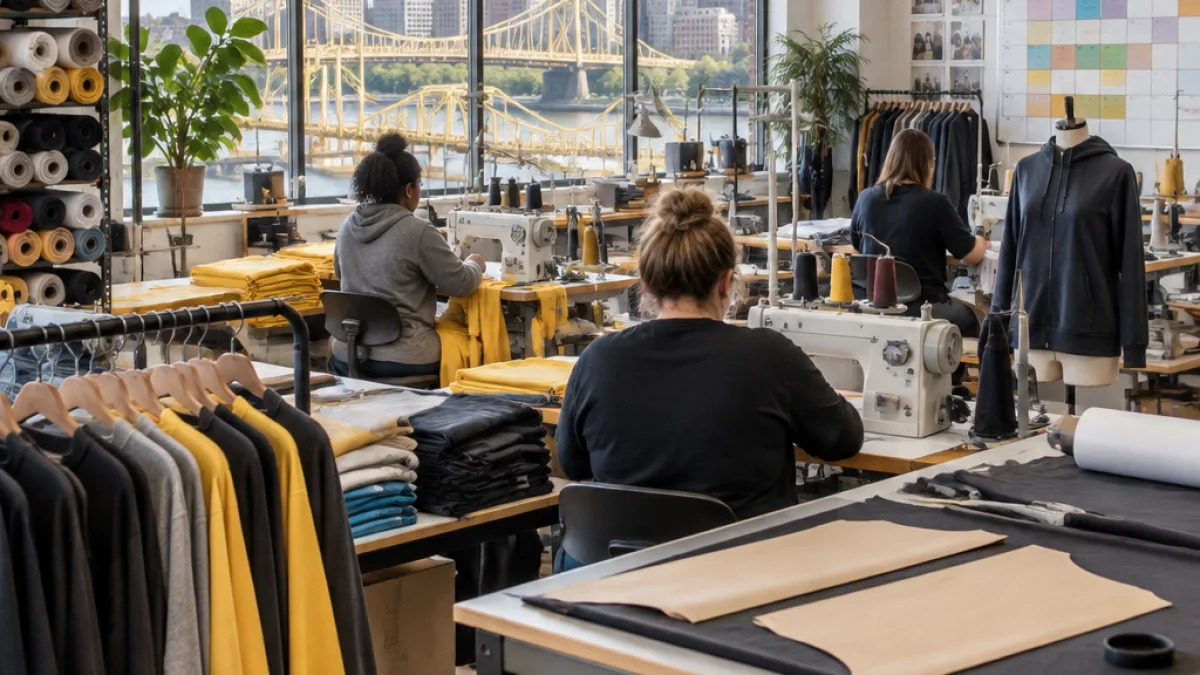
Kiya Tomlin built her apparel company around a problem she understood personally: how to pursue meaningful work while meeting the demands of family life. The founder and designer says her business grew from a childhood interest in making clothes into a manufacturing operation in Pittsburgh, where her six employees are all mothers.
Tomlin is married to Mike Tomlin, an NFL head coach, and has three children. Her family’s public profile brought visibility, but she said that attention often focused on her husband’s career rather than her own identity or professional ambitions. Football also shaped the family’s social life, with gatherings and visitors frequently becoming extensions of the sport instead of ordinary personal occasions.
A career designed to move with the family
Tomlin initially planned to become a doctor when she and Mike met in college. She eventually concluded that a medical career would not fit the demands of a life that could move wherever her husband’s work took him. Fashion offered a different path: It was a field she already loved, and one she believed could be organized around her children and the family’s changing locations.
That decision did not represent an abandonment of ambition. Tomlin had been sewing since she was 10, when she asked her mother for a sewing machine. Growing up in New Jersey as one of the few Black families in her town, she felt out of place and struggled to find clothing that fit both her body and her budget. Making her own garments became a practical solution, then a creative outlet and eventually the foundation of her professional life.
From personal challenge to company mission
Tomlin’s account connects the origin of her brand to the limitations she experienced as a child. She wanted clothes that resembled what her classmates wore, but could not always afford or fit into the same styles. Sewing allowed her to create those looks herself and later develop a distinct way of dressing. What began as a response to exclusion became the basis for a fashion career.
Her current business is also shaped by her experience as a mother. Tomlin said one of her most meaningful achievements is supporting other mothers through the jobs created at her Pittsburgh factory. The employees there are mothers, and the workplace is intended to give them flexibility to care for their children while earning income for their households.
| Business element | What Tomlin describes |
|---|---|
| Company focus | Apparel design and manufacturing |
| Manufacturing location | Pittsburgh |
| Factory staff | Six employees, all mothers |
| Workplace priority | Flexibility alongside financial support |
Small-business choices shaped by family life
The company illustrates how personal constraints can influence the structure of a small business. Rather than separating work from caregiving, Tomlin describes an operation that acknowledges both. The approach reflects her belief that mothers should not have to choose between raising children and contributing financially to their families.
Her family’s approach to money has likewise been deliberately structured. The headline account describes a household where Christmas gifts were limited to four per child, a rule intended to establish boundaries around spending despite the visibility and earning power associated with professional football. That emphasis on limits sits alongside Tomlin’s broader account of growing up with limited financial resources and learning to create value with what was available.
Tomlin’s story therefore reaches beyond the familiar image of an NFL family. It is also a case study in how a founder can turn lived experience into a business model. Her path moved from medical ambitions to adaptable fashion work, from sewing for herself as a child to producing clothing in her own factory, and from navigating motherhood to designing jobs that accommodate it.
The result is a business identity tied to more than clothing. Tomlin’s professional life reflects a desire for independence, a connection to manufacturing and a commitment to making employment compatible with family responsibilities. Her account shows how those priorities can shape both what a company produces and how it treats the people who work there.