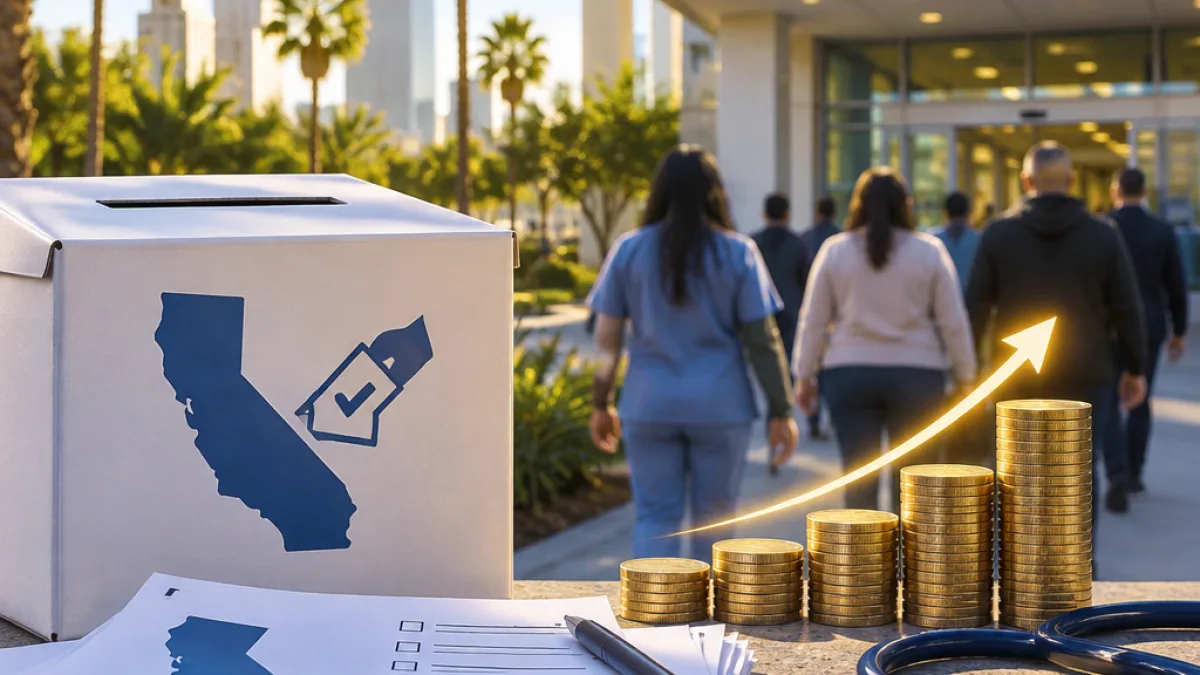
California voters are deciding Tuesday whether to impose a one-time tax on billionaires to help fund the state’s health care system, placing an unusually direct question about wealth, taxation and public financing before voters in the nation’s most populous state.
The proposal is being presented as a major test of whether a state can use a targeted levy on the wealthiest individuals to support health care. The available details do not specify the proposed tax rate, the income or wealth threshold for affected taxpayers, or the precise distribution of the money within the health care system. Those unanswered details would be central to understanding the measure’s eventual financial impact.
A vote with national policy relevance
Although the measure is limited to California, its outcome could draw attention across the United States because it links two issues that remain central to national economic debate: how governments should raise revenue and how health care should be financed. A decision by voters to support the plan would put a one-time charge on billionaires at the center of that discussion. A rejection would leave the proposal as an example of the political difficulty involved in using a narrow tax base for a public program.
The ballot question also comes as policymakers and voters continue to examine how health care systems should be funded. The source material identifies the state’s health care system as the intended beneficiary, but it does not provide an estimated amount of revenue, a spending timetable or an explanation of which programs would receive the funds. Those limitations make the vote’s immediate fiscal consequences difficult to quantify from the information available.
- Proposal: a one-time tax on billionaires.
- Stated purpose: funding California’s health care system.
- Decision: California voters are casting ballots Tuesday.
Oil markets add a global backdrop
The California vote was featured alongside a sharp move in global oil markets. Brent crude and West Texas Intermediate, the two benchmarks cited in the report, each fell by about 8% on the eve of the U.S. midterm elections. The decline followed Iran’s statement that it was conducting intensive discussions through mediators toward possible peace negotiations.
Iran also indicated that it was prepared to reopen the Strait of Hormuz if the United States accepted its conditions. The waterway is a crucial point in the oil trade, making any signal about its accessibility important to energy markets. The source does not identify the specific conditions Iran presented or describe the extent of any disruption involving the strait. It does, however, connect the diplomatic signals with the steep decline in both major oil benchmarks.
Two economic questions in one news cycle
The developments illustrate how domestic policy decisions and international events can shape the business environment at the same time. In California, voters are weighing whether a narrowly targeted tax should be used to support a public service. In energy markets, traders responded to diplomatic developments involving a strategically important shipping route.
| Issue | Details reported |
|---|---|
| California ballot measure | One-time levy on billionaires for health care funding |
| Oil benchmarks | Brent and WTI declined by about 8% |
| Diplomatic development | Iran cited mediated talks and a possible reopening of the Strait of Hormuz |
The California decision will determine whether the proposed tax moves from campaign debate into policy. The oil market move, meanwhile, shows how quickly prices can react to changing expectations about geopolitical risk and energy transportation. Both stories were included in a Business program that aired Nov. 2 and was issued Nov. 3.