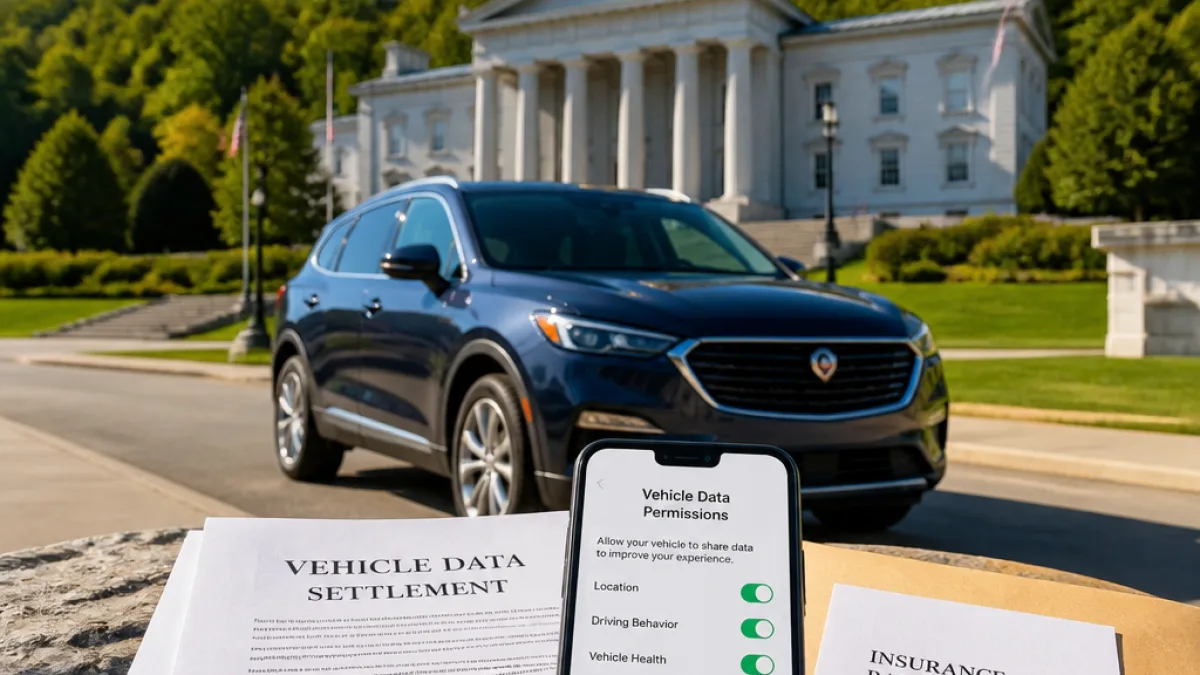
Vermont will receive $4.5 million from General Motors under a multistate settlement concerning the automaker’s collection and disclosure of connected-vehicle information, Attorney General Charity Clark announced Thursday.
Clark said the agreement addresses data from tens of thousands of Vermonters. Some of that information, she said, reached insurance companies that increased rates, while customers were not aware their information was being shared. The settlement requires GM to change how it handles the data and contributes to Vermont’s general fund.
A multistate agreement
Thirty-five other states joined Vermont in the investigation. General Motors will pay $220 million in total, with Vermont receiving a portion of that amount. The state’s payment is notably larger than it would ordinarily receive based solely on its population, according to Clark.
“As a result of our very early involvement in this investigation, Vermont is getting a lot more money than we normally would have based on our population,” Clark said.
The settlement gives Vermont a direct financial benefit, but its broader significance is the set of privacy rules imposed on the automaker. GM must now obtain express consent from customers before collecting or disclosing their data. The agreement also restricts the amount of information the company may gather.
| Settlement detail | Amount or requirement |
|---|---|
| Total GM payment | $220 million |
| Vermont’s share | $4.5 million |
| States involved besides Vermont | 35 |
| Customer consent | Required before covered data collection or disclosure |
What the agreement changes
Connected vehicles can generate information tied to how a vehicle is used. In this case, the state’s concerns focused on the handling of that information and whether customers understood what was being collected or where it could go. Under the settlement, GM’s future practices must give customers a clearer choice before the company gathers or shares covered data.
The agreement also places a limit on the volume of customer information GM can collect. That requirement goes beyond simply telling customers about a privacy practice: It addresses both permission and the scope of the information gathered.
Clark’s announcement did not say that the $4.5 million would be distributed directly to individual Vermont customers. The money is designated for the state’s general fund. The settlement information also did not identify specific insurance companies or provide details about individual rate increases.
GM’s response
General Motors said the agreement concerns Smart Driver, a product the company discontinued in 2024. A GM spokesman said the automaker has already taken steps to strengthen its privacy practices and framed connected-vehicle data as useful for safety, convenience and personalized services.
“This agreement addresses Smart Driver, a product we ended in 2024, and reinforces steps we’ve taken to strengthen our privacy practices,” a GM spokesman said.
The company also said it is committed to explaining what information is used, how it is protected and what choices customers have about sharing it. That position contrasts with the concern raised by Vermont officials that affected customers did not know their information was being disclosed.
Why the Vermont share matters
For Vermont, the settlement reflects the state’s early participation in the investigation as well as the number of residents whose information was potentially involved. Clark said that early involvement helped Vermont secure a payment larger than its population-based share would ordinarily produce.
The case also places data privacy in a practical consumer context. The information at issue was not described only as abstract digital records; according to Clark, some of it was used by insurers in ways that affected rates. The settlement therefore connects the privacy question to household expenses and to the choices consumers make when using connected products.
The agreement does not eliminate connected-vehicle data collection. Instead, it establishes conditions for how GM may continue those practices: customers must give express permission, and the company must limit the amount of data it collects. GM’s response indicates that the company continues to view vehicle data as part of safety and personalized features, while the settlement requires greater disclosure and control for customers.
- Vermont’s general fund will receive $4.5 million.
- GM’s total multistate payment is $220 million.
- The company must obtain express customer consent before covered data collection or disclosure.
- The settlement limits the amount of customer data GM may collect.
The announcement comes as state and federal policymakers continue to confront how information generated by everyday products is collected and shared. In Vermont’s case, the attorney general’s office said the investigation resulted in financial relief for the state and new obligations for a major automaker. The settlement’s requirements now make customer consent and data minimization central conditions of GM’s covered privacy practices.