
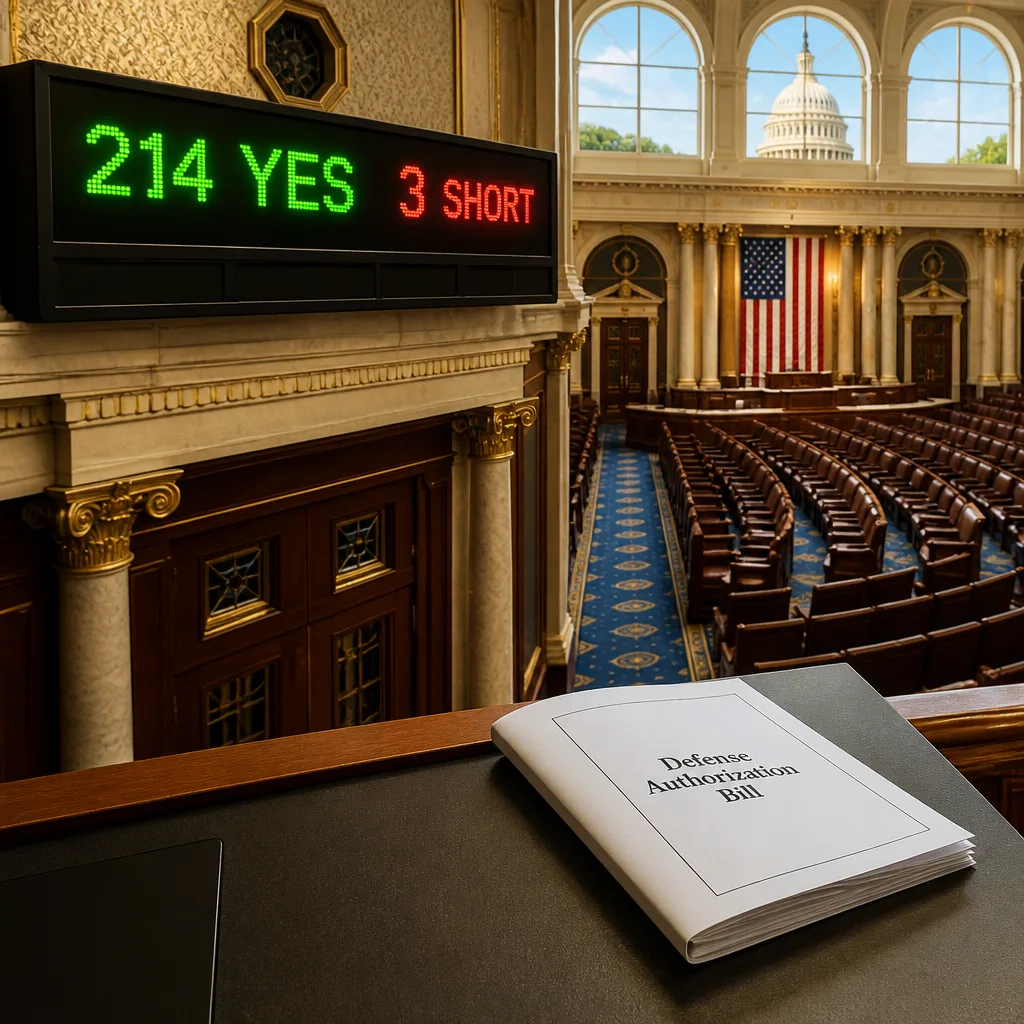
WASHINGTON — A measure to create a pilot program offering financial assistance to military families seeking alternatives to their local public schools failed to pass the House by three votes, even after initial backing from 214 members and a White House endorsement.
Amendment to NDAA stalls
The amendment, known as Amendment 257 to the 2027 National Defense Authorization Act, was proposed by Rep. Addison McDowell, R-N.C. Proponents argued the program would expand education options for servicemembers’ children — permitting funds to be used for private schools, charter schools, homeschooling and other alternatives.
Supporters framed the proposal as a targeted pilot rather than a full-scale Education Savings Account (ESA). Unlike an ESA, the amendment would not have allowed families to roll unused funds forward into future expenses such as workforce training or college tuition.
"If you choose to serve in the U.S. military, you should also be able to choose the best education for your children."
The amendment received the backing of 214 House members during the vote but ultimately failed to secure the margin needed to pass, falling short by three votes.
White House support and family sentiment
The proposal had the support of the executive branch: President Donald Trump signed an executive order last year endorsing a similar approach to expanding educational options for military families.
Advocates cited polling showing broad support among military parents: 74% of military families surveyed said they favor implementing education savings accounts for their children. They also expressed strong backing for charter schools and open-enrollment policies as means to increase choice.
Supporters and some military advocates have emphasized the hardships unique to service members — frequent relocations, deployments and reassignments — and contend that greater portability or choice in education would help maintain continuity for children and ease family stresses while serving.
What the pilot would — and would not — do
Key aspects of the proposed pilot included:
- Provision of direct financial assistance to eligible servicemembers to use toward alternative education options.
- Eligibility to use funds for private schools, charter schools, homeschooling and other nontraditional options.
- Structure as a pilot program rather than a permanent, nationwide ESA policy.
But the amendment explicitly fell short of establishing a full ESA model: it did not permit unused funds to be saved and applied later for higher education or workforce training expenses — a feature advocates say is important to long-term flexibility for families.
| Figure | Value |
|---|---|
| Children with access to some school choice | 22 million (about 40% of K‑12 students) |
| House members who supported Amendment 257 | 214 |
| Votes short of passage | 3 |
Implications and next steps
With the amendment failing in the House vote, advocates may press for renewed efforts in future NDAA debates or pursue standalone legislation. Opponents of broad school-choice measures have historically raised concerns about accountability, the impact on public-school funding and whether federal military benefits should be used for private education.
Proponents argue the pilot could help with recruitment and retention by addressing a top concern for military families: the education of their children. Polling cited by supporters also notes that many military children receive tutoring, which proponents believe could be covered by flexible education funding.
The outcome leaves the issue unresolved for the 2027 NDAA cycle. Lawmakers and advocates on both sides are likely to continue weighing how best to balance educational choice, fiscal oversight and the needs of military families in future legislative efforts.
— Education desk














