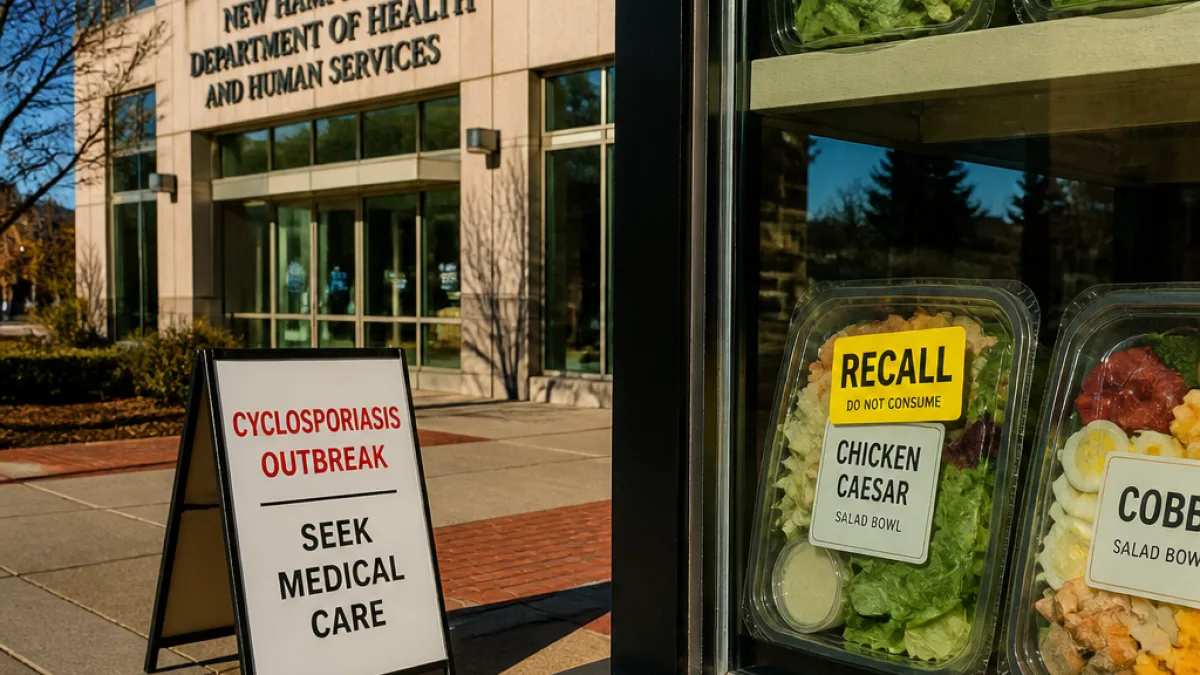
Manchester, N.H. — State health officials say the number of confirmed cyclosporiasis infections in New Hampshire has climbed to 79 this year, an increase of 10 cases from last week, prompting renewed warnings for anyone experiencing persistent gastrointestinal symptoms to seek medical attention.
What the state reported
The New Hampshire Department of Health and Human Services (DHHS) provided the latest case totals, noting that of the 79 confirmed infections, six involved people who recently traveled outside the United States. Of the remaining cases, 38 patients reported consuming a product later identified in a recall associated with the outbreak.
| Category | Number |
|---|---|
| Total confirmed cases (year-to-date) | 79 |
| Reported travel outside U.S. | 6 |
| Reported eating recalled product | 38 |
Symptoms and when to contact a provider
Cyclospora is a single-celled parasite that can cause prolonged gastrointestinal illness. Health officials described common complaints that should prompt a call to a medical provider and notification to New Hampshire’s Division of Public Health:
- Frequent, watery diarrhea
- Nausea and loss of appetite
- Stomach cramps and bloating
- Fatigue and unintended weight loss in prolonged cases
DHHS officials stressed that untreated cyclosporiasis can lead to more severe or prolonged symptoms, particularly for people with weakened immune systems.
Public-health response and consumer guidance
State health authorities are continuing routine investigations to identify common exposures and potential sources. Investigators ask patients and clinicians to report suspected cases to the Division of Public Health so patterns can be tracked and control measures implemented.
Officials also reiterated the importance of paying attention to product recalls and consuming only items from trusted, unaffected sources. If you believe you consumed an item that has been recalled in connection with this outbreak, contact your health-care provider and the Division of Public Health.
How cyclospora spreads and prevention tips
Cyclospora is typically transmitted by ingesting food or water contaminated with fecal matter containing the parasite. Because the organism does not multiply on food, contamination is usually linked to a single point of exposure such as a contaminated ingredient or water source.
- Follow recall notices from retailers and the U.S. Food and Drug Administration.
- Wash fresh produce thoroughly under running water; however, washing may not remove all contamination in every case.
- Practice careful hand hygiene, especially after using the bathroom and before handling food.
- Seek medical care if you develop persistent diarrhea or other digestive symptoms.
Laboratory testing is required to confirm cyclosporiasis, and treatment typically involves prescribed antiparasitic medication. Health-care providers can order appropriate testing and begin therapy when indicated.
Local impact and next steps
The surge in reported infections this week reflects ongoing surveillance and case finding by state public-health staff. While most reported illnesses appear linked to a recalled product, the presence of travel-related cases indicates multiple potential exposures. Health officials continue to monitor laboratory reports and patient interviews to pinpoint sources and limit further spread.
Residents with questions about recalls or symptoms can visit the New Hampshire DHHS website or contact the Division of Public Health for guidance on reporting and testing. Timely reporting helps public-health investigators connect cases and prevent additional illnesses.
As the state tracks this outbreak, officials urged vigilance: check recall notices, seek medical care for persistent gastrointestinal symptoms, and report suspected cases so investigators can keep communities safer.