
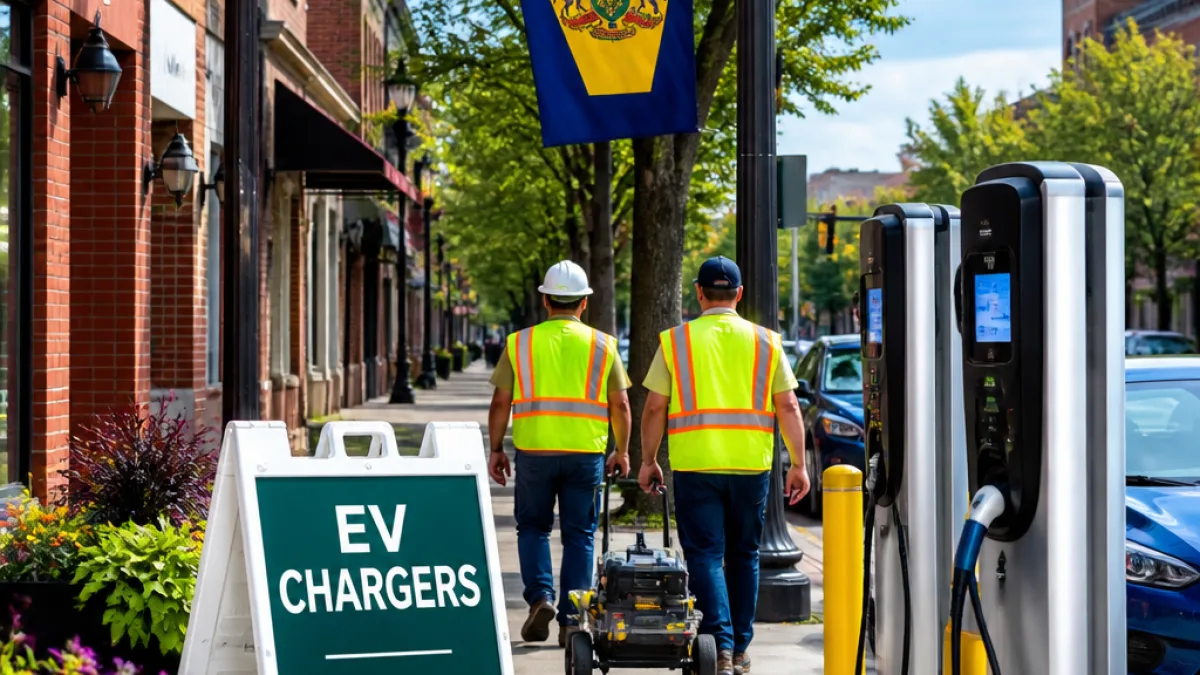
HARRISBURG — Pennsylvania communities are preparing to use federal funds to place electric vehicle chargers in small towns, an effort state and regional planners say could expand charging access while drawing visitors into downtown shopping districts.
State and local officials say the latest tranche of money is part of a larger federal program intended to build out charging infrastructure across the country. While an earlier phase focused on interstates and major corridors, this round prioritizes community-based sites intended to serve residents, shoppers and local businesses.
Local planning aims to tie chargers to economic development
Transportation planners working with local chambers and community groups say carefully sited chargers can become economic assets. Steve Herman, transportation planning program director for SEDA-COG — the regional economic development organization serving eight central Pennsylvania counties — has spent the past year consulting with towns about where chargers should go.
“People can let their vehicles sit for a bit and walk the stores downtown and grab food,” Herman said. “They’ll serve folks who are living here but also draw in visitors.”
Herman told Spotlight PA he has held workshops, collected public input and even created an online tool that allows residents to drop pins on a map to recommend potential locations. He reported those findings to PennDOT, which has been coordinating with numerous local planning councils across the commonwealth.
Money, scale and prior investments
The community charging initiative is part of a $5 billion federal program established under the Biden administration. Pennsylvania is slated to receive a total of $171 million under the program once it is fully distributed. Officials said previous work under the program placed chargers along interstates; the new funding focuses on local access.
So far, Pennsylvania has installed at least three dozen community chargers — the most of any state — and used roughly one-third of its allocation. State planners reported an average installed cost of about $163,000 per charging port, reflecting equipment, site work and electrical upgrades required in many towns.
| Item | Figure |
|---|---|
| Federal program total | $5 billion |
| Pennsylvania allocation | $171 million |
| Installed chargers so far in PA | At least 36 |
| Approx. cost per port | $163,000 |
Practical challenges for small towns
Officials say locating chargers in smaller municipalities poses different challenges than siting along highways. Many rural and suburban downtowns have limited electrical capacity and older infrastructure, creating potential costs for utility upgrades. Site selection also must balance visibility and convenience with available parking and safe access to nearby businesses.
Community leaders hope to leverage the chargers to lengthen visits to downtowns and support local merchants. Herman and economic development partners argue that if drivers plug in at a town center, they are more likely to explore restaurants and shops during charging sessions.
- Regional planners have held workshops and public surveys to guide siting decisions.
- PennDOT is consulting with dozens of local planning councils on project priorities.
- Towns must consider electrical upgrades, parking, permitting and maintenance plans.
Clean energy and transportation specialists advising the program emphasize that community chargers complement highway stations, filling gaps in neighborhood-level access and supporting drivers without home charging options. For some municipalities, the stations also represent an opportunity to market themselves as visitor-friendly destinations for travelers using EVs.
As Pennsylvania moves from planning to implementation, local governments, utilities and business groups will need to coordinate on funding details, site readiness and long-term maintenance. Officials say public engagement — like the mapping tool and workshops used by SEDA-COG — will remain central to identifying sites that balance technical feasibility with local economic goals.
Staff at PennDOT and regional planning organizations are expected to provide additional guidance and solicitations for project proposals as the state disburses its remaining allocation under the federal program.
Gregory Halloran is the WE NEWS state correspondent covering transportation and economic development in Pennsylvania.


















