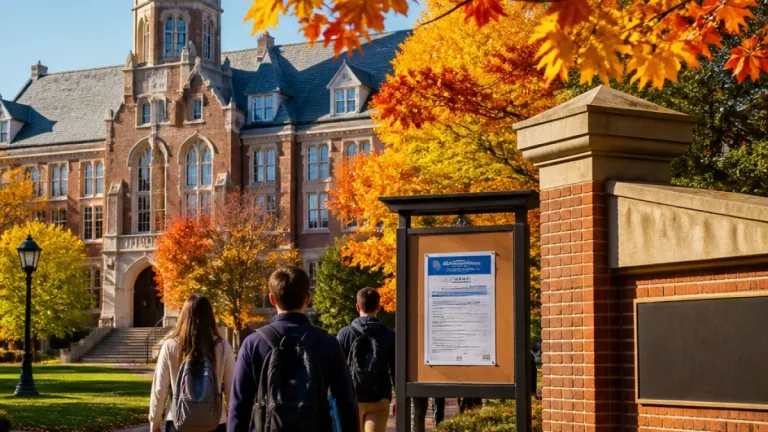

Clayton Public Schools continues a decades-old tradition of introducing newly hired employees to the community by taking them on a guided bus tour of the town ahead of the school year. The exercise, organized by district leaders alongside veteran staff and union representatives, aims to give educators and support personnel a deeper understanding of the neighborhoods where their students live.
Orientation beyond the classroom
The bus tour stops at key locations across the municipality to highlight local history, notable residents and points of interest. Organizers say the experience is intended to strengthen relationships between school staff and families by helping employees appreciate students’ lived environments.
Participants ride with experienced staff members, district administrators and union officials who point out community landmarks and explain local accomplishments. The goal is to provide a context for students’ lives so new employees can build more meaningful connections in the classroom and beyond.
Local context as professional development
By centering orientation on the town itself, the district emphasizes that understanding students’ communities can be a form of professional preparation. The tour supplements other onboarding activities by offering a visual, place-based complement to administrative briefings and classroom training.
- Who participates: newly hired teachers, support staff, administrators and union leaders
- What the tour covers: local history, community landmarks and notable accomplishments
- Purpose: build stronger connections between staff and students’ communities
Why community knowledge matters
Educators who are familiar with students’ neighborhoods and community resources may be better positioned to create culturally responsive lessons, communicate effectively with families and connect students to local supports. The Clayton bus tour is one concrete example of a district-level effort to embed that local knowledge into early career experiences.
While many districts focus orientation on curriculum, district policies and classroom procedures, Clayton’s approach foregrounds environmental context — what children see, hear and experience outside of school. Organizers say this perspective helps staff form relationships that extend beyond routine school interactions.
| Aspect | Focus |
|---|---|
| Participants | New employees and experienced staff |
| Content | Community history and landmarks |
| Primary goal | Stronger staff-student-family connections |
Beyond strengthening relationships, the tour may also help new staff navigate the social and cultural dynamics that affect student learning. Knowledge about a community’s history and notable features can inform classroom examples, outreach strategies and sensitivity to local issues.
As districts nationwide grapple with teacher retention and the need for meaningful professional support, orientation practices that emphasize local engagement are gaining attention. Clayton’s practice demonstrates one way to integrate community familiarity into staff onboarding without adding extensive formal training modules.
School and union leaders who participate on the tours serve as guides, sharing institutional memory and local knowledge that might not be conveyed during standard orientation sessions. That peer-to-peer element can reinforce informal learning and collegial relationships at the outset of a new hire’s tenure.
The district’s online information notes the longevity of the tradition, describing it as a routine part of the lead-up to the first day of classes. Officials frame it as a way to prepare staff not only for classroom tasks but also for the broader social context their students inhabit.
By taking staff out of the school building and into the community, Clayton’s bus tour provides a visual and narrative orientation that supplements policy briefings and instructional training. It is a local practice that speaks to a larger question in education: how best to prepare educators to meet students’ academic needs while understanding the contexts that shape their lives.