
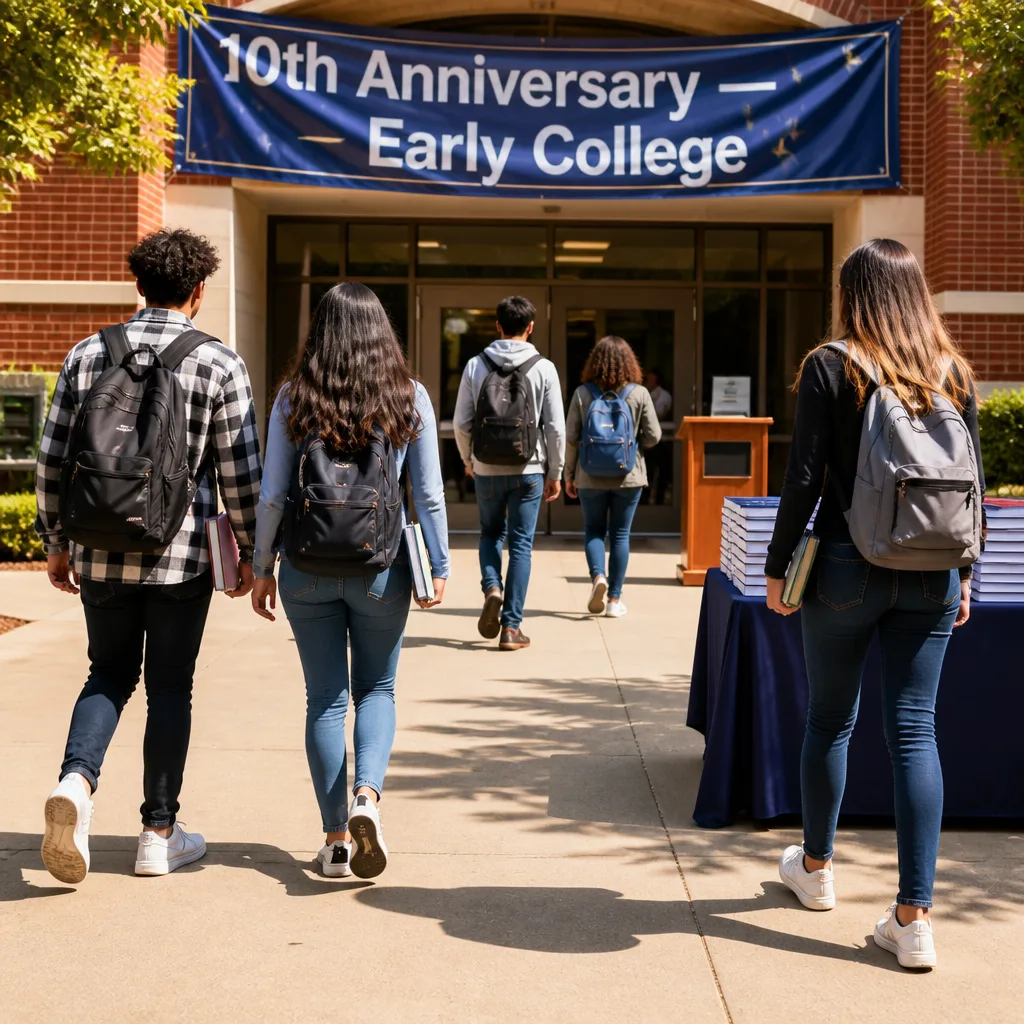
New Heights Charter Public School in Brockton celebrated its 10th anniversary as the school year began Aug. 31, highlighting a model that integrates college coursework into the secondary school experience and aims to accelerate college attainment for its students.
Early college blueprint for middle and high school
The charter, founded in 2016 as the state’s first early college charter school, serves students in grades 6 through 12 and operates a wall-to-wall early college program. Students may begin taking college-level classes as early as ninth grade and progressively increase college course loads through formal partnerships with Massasoit Community College and Bridgewater State University.
School leaders say the design is intended to strengthen academic skills and demystify higher education by letting students experience college-level expectations while still in high school.
"Our scholars have opportunities to experience college-level coursework, earn transferable college credits, and see themselves as college students long before they graduate from high school," Principal Ondrea Johnston said.
Credit expectations and partnership structure
The school’s curriculum is structured so that every student is positioned to graduate high school with at least 12 college credits. Officials reported that most students finish their high school careers having accumulated more than 60 transferable college credits, with upperclassmen sometimes taking a full college course load through the school’s higher education partners.
Executive Director and co-founder Omari Walker described the program as a daily responsibility to families to provide the foundation, supports and resources needed for success in both high school and college.
- Grades served: 6–12
- Minimum college credits at graduation: 12
- Typical credits earned by most students: more than 60
- Higher education partners: Massasoit Community College and Bridgewater State University
| Program element | Detail |
|---|---|
| Grades | 6–12 |
| Starting grade for college courses | 9th grade |
| Minimum college credits | 12 credits |
| Typical credits earned | More than 60 credits |
Implications for college readiness and access
By embedding college coursework into the high school program, New Heights aims to give students both the academic preparation and the lived experience of being college students earlier than traditional timelines allow. School officials emphasized that the model is about more than credit accumulation: it is designed to build confidence and reduce barriers to postsecondary success.
Students who progress into heavier college course loads through partner institutions may enter college with a significant portion of general education requirements already completed, a concept proponents say can lower overall cost and shorten time to degree completion. The school framed these outcomes as part of a broader commitment to families: providing academic foundation, supports and opportunities that prepare students "in high school, in college, and beyond," according to Walker.
As New Heights begins its second decade, the program adds to a growing set of examples nationwide of high schools seeking to align secondary and postsecondary pathways. The school’s steady emphasis on early exposure to higher education—paired with institutional partnerships—positions its graduates to make college transition choices from a place of direct experience rather than conjecture.
Officials credited collaboration with local colleges as central to the program’s capacity to offer transferable credits and to enable students to undertake serious college-level study while completing their high school diplomas.
With the school marking 10 years of operation, district and charter conversations about scalability and replication of early college models are likely to continue, particularly as educators and policymakers evaluate approaches to increasing college readiness and reducing barriers to completion.














